Disinformation has become a central tool in the United States and Russia’s expanding information war.
ORIGINAL LINK

Seeking Truth in a World of Propaganda. Links do not necessarily indicate agreement with stories or perspectives.
“Those who are able to see beyond the shadows and lies of their culture will never be understood, let alone believed, by the masses.” - Plato

The World Health Organization on Friday held an emergency meeting to discuss the outbreak of monkeypox after more than 100 cases were reported across 12 countries, as a report surfaced showing the Gates Foundation, WHO and Pharma execs in March 2021 conducted a monkeypox pandemic “simulation.”

The World Health Organization (WHO) on Friday held an emergency meeting to discuss the outbreak of monkeypox after more than 100 cases were reported across 12 countries.
Days before the WHO convened, the Biden administration placed a $119 million order for monkeypox vaccines after the Centers for Disease Control and Prevention (CDC) confirmed six people in the U.S. were being monitored for the viral infection, and one person had tested positive.
Belgium on Sunday became the first country to introduce a compulsory 21-day quarantine for monkeypox patients after reporting four cases of the disease in the last week, Politico reported.
The 100 newly reported cases, or suspected cases, garnered attention because many of them do not appear to be linked to travel to Africa, where in some regions, monkeypox is endemic.
Cases were reported in Australia, Austria, Belgium, Canada, Denmark, France, Germany, Greece, Israel, Italy, the Netherlands, Portugal, Spain, Sweden, Switzerland and the U.K. No deaths are reported as of yet.
The number of identified cases in Europe is a record, described by Germany’s armed forces medical services as “the largest and most widespread outbreak … ever seen in Europe,” while its spread in the U.K. was described as “unprecedented.”
U.K. public health officials warned more monkeypox cases are being detected “on a daily basis” and that there “could be really significant numbers over the next two or three weeks,” though they did not specify what “numbers” would be considered “really significant.”
The manner in which monkeypox may have spread — through sexual health services and sexual contact between men — also may have helped to heap attention on this new outbreak.
Many of the recent cases were traced to two “superspreader” events that involved situations in which men came into close physical contact, including 30 monkeypox cases in Spain traced to a single adult sauna in Madrid.
Monkeypox cases reported in Belgium appear to be connected to a recent gay “fetish festival.”
For some, these developments may bring to mind the early onset of HIV, which at the time was connected to sexual contact among males, and to remarks by Dr. Anthony Fauci that he visited gay saunas and bars during the early years of the HIV outbreak to understand how the virus was spreading.
WHO Europe regional director Hans Kluge last week expressed concerns about transmission at “mass gatherings, festivals, and parties.”
However, other public health professionals said there is a low risk to the public and a low likelihood that the epidemic will last long.
Meanwhile, questions are popping up about the similarity between a March 2021 tabletop “simulation” of a monkeypox outbreak and a similar simulation in 2019 — Event 201 — which correctly “predicted” the COVID-19 pandemic
Monkeypox was first discovered in 1958 in monkeys, although they are not the source of the virus. It was first identified in humans in 1970.
The virus is particularly prevalent in Central and West Africa and is considered a rare zoonotic disease, which means that it is caused by germs that spread between animals and people.
Monkeypox typically is spread by wild animals, such as in instances when a human is bitten or comes into contact with animal blood or bodily fluids. However, human-to-human transmission, while rare, is possible.
The virus is known to enter the human body through broken skin, the respiratory tract, or the eyes, nose or mouth, for instance through large respiratory droplets or through contact — including sexual contact — with bodily fluids or lesions, or indirectly through contaminated clothing or linens.
However, “common household disinfectants can kill it.”
A prior outbreak — the first to occur outside of the African continent — occurred in the U.S. in 2003, linked to animals shipped to Texas from Ghana.
And in July 2021, monkeypox was confirmed in a Texas individual who had returned to Dallas from Nigeria, according to the CDC.
Symptoms of monkeypox infection tend to be mild, and include fever, rash and swollen lymph nodes, and occasionally intense headache, back pain, muscle aches, lack of energy and skin eruptions which can cause painful lesions, scabs or crusts.
There are two strains of monkeypox: the West African and Central African strains. The latter is known as the deadlier of the two, but the cases identified in the recent outbreak all appear to have been caused by the milder West African strain.
In October 2019, just weeks before the outbreak of COVID-19, the Johns Hopkins Center for Health Security, along with the World Economic Forum (WEF) and the Bill & Melinda Gates Foundation, organized “Event 201,” a “high-level pandemic exercise” that mirrored what later followed with COVID-19 pandemic.
In March 2021, the Nuclear Threat Initiative (NTI), in conjunction with the Munich Security Conference, held a “tabletop exercise on reducing high-consequence biological threats.”
This “fictional exercise scenario” involved the simulation of “a deadly, global pandemic involving an unusual strain of monkeypox virus that first emerged in the fictional nation of Brinia and spread globally over 18 months.”
According to NTI, this exercise, which was “[d]eveloped in consultation with technical and policy experts,” brought together “19 senior leaders and experts from across Africa, the Americas, Asia, and Europe with decades of combined experience in public health, biotechnology industry, international security, and philanthropy.”
The exercise culminated in a report, published November 2021, titled “Strengthening Global Systems to Prevent and Respond to High-Consequence Biological Threats: Results from the 2021 Tabletop Exercise Conducted in Partnership with the Munich Security Conference.”
This report contains key findings from the exercise, as well as “actionable recommendations for the international community.”
The outcome of this “exercise scenario” found the fictional pandemic, “caused by a terrorist attack using a pathogen engineered in a laboratory with inadequate biosafety and biosecurity provisions and weak oversight,” led to “more than three billion cases and 270 million fatalities worldwide.”
The fictional start date of the monkeypox pandemic in this exercise was May 15, 2022. The first European case of monkeypox was identified on May 7, 2022.
Key findings from the report included:
Key recommendations included:
The above recommendations were borne out in practice during the simulated monkeypox pandemic scenario.
As stated in the report:
“In national pandemic response plans, specific readiness measures would be ‘triggered’ based on factors related to the potential severity of the outbreak, expected delays in situational awareness, and the time it would take to implement response measures and see results.”
What would be “triggered” bears a remarkable similarity to the COVID-19-related measures of the past two-plus years.
The report states:
“Although triggered actions would vary depending upon the particular needs of the country, in most cases the goals are the same: slow the spread of disease to buy time and flatten the epidemiological curve, while using that time to scale up public health and medical systems to keep up with growing caseloads and save lives.
“NPIs [non-pharmaceutical interventions] such as mask mandates and ceasing mass gatherings were deemed to be critical for blocking chains of disease transmission.
“Participants generally did not endorse travel restrictions such as border closures, but travel health screening measures [i.e., vaccine passports] were viewed as valuable.”
According to the results of the simulated scenario, the fictional countries that “prioritized keeping their economies open, undertaking little-to-no NPIs, and downplaying the virus and its potential impacts … have experienced much worse outcomes in terms of illness and mortality” than those fictional countries that “promptly adopted aggressive measures to slow virus transmission,” such as “shutting down mass gatherings, imposing social-distancing measures, and implementing mask mandates,” in addition to establishing “large-scale testing and contact-tracing operations.”
Who took part in the NTI’s monkeypox pandemic simulation?
Key participants included:
Several of the participants listed above also “participated” in Event 201.
The authors of the report also stand out for their background.
For example, Dr. Jaime M. Yassif, vice president of NTI global biological policy and programs, holds a Ph.D. in biophysics from the University of California-Berkeley and a master’s degree in science and security from the King’s College, London, war studies department.
Yassif previously led the initiative on biosecurity and pandemic preparedness at the Open Philanthropy Project, including the management of nearly $40 million in biosecurity grants, the “initiation of new biosecurity work in China and India,” and “establishment of the Global Health Security Index.”
She also previously advised the U.S. Department of Defense on science and technology policy and worked on the Global Health Security Agenda at the U.S. Department of Health and Human Services.
Co-author Chris Isaac, program officer for NTI’s Global Biological Policy and Programs team, “has been involved with synthetic biology through the Internationally Genetically Engineered Machines Competition since the start of his scientific career” and “is an alumnus of the Emerging Leaders in Biosecurity Fellowship at the Johns Hopkins Center for Health Security.”
The report is the product of a partnership between NTI, co-founded by Nunn and Ted Turner, and the Munich Security Conference.
Both NTI ($3.5 million, for “vaccine development”) and the Munich Security conference ($1.2 million) received funding from the Gates Foundation.
The report itself was funded by the Open Philanthropy project, one of whose main funders is Dustin Moscovitz, co-founder of Facebook along with Mark Zuckerberg.
Open Philanthropy, over the past decade, has provided donations and grants to the following entities and for the following purposes:
NTI and the Munich Security Conference are not new to “tabletop exercises” — their report highlights previous simulations, including a 2019 report titled “A Spreading Plague,” and a 2020 report titled “Preventing Global Catastrophic Biological Risks.”
Other simulations in the recent past, in addition to Event 201, include:
The common denominator among all of these simulations? The Johns Hopkins Center for Health Security, which published a document titled “The SPARS Pandemic 2025-2028,” comprising “a futuristic scenario that illustrates communication dilemmas concerning medical countermeasures (MCMs) that could plausibly emerge in the not-so-distant future.”
Predictions for the future don’t end there, however. For instance, in September 2017, NTI and the WEF organized a roundtable discussion on the current state of biological risks presented by technology advancement in light of the Fourth Industrial Revolution.
And in January 2020, NTI and the WEF again joined forces, issuing a report titled “Biosecurity Innovation and Risk Reduction: A Global Framework for Accessible, Safe and Secure DNA Synthesis.”
According to the report:
“Rapid advancements in commercially available DNA synthesis technologies — used for example to artificially create gene sequences for clinical diagnosis and treatment — pose growing risks, with the potential to cause a catastrophic biological security threat if accidentally or deliberately misused.”
Merck, whose head of corporate affairs participated in the monkeypox simulation, was the subject of an FBI and CDC investigation in November 2021 regarding 15 suspicious vials labeled “smallpox” at a Merck facility in Philadelphia.
Bill Gates has himself been remarkably prescient with his predictions of future events.
Here are some of Gates’ predictions:
Ed Dowd joins Steve Bannon again with some hair-raising financial bombshells about the imminent end of the monetary system as we know it.
He says credit markets and equity markets are unhinged and it’s going to accelerate: “We’re going into a recession and we’re going in hard.”
He sees the rise in the commodities market as not wholly a monetary phenomenon and mostly an energy policy phenomenon, with the Biden Regime’s stoppage of US energy independence, the EU’s Green policies and China’s port closures causing much of the current problem.
“It’s a supply chain issue, it’s an energy policy issue, it’s this ESG nonsense…I think we’re going to see an absolute collapse of credit and the economy…the tyranny of the bond math is such that they can’t raise interest rates without collapsing the whole system.”
Bannon adds, “You have asset deflation at the same time you have runaway – maybe even getting into hyperinflation…on top of a supply chain…collapse that’s been brought about by policies over 40 years…On top of it, you’ve got this radical Green New Deal thing that they’ve killed energy.
“Those four converging forces are what makes this unique. I gave a speech the other day and laid this out, I told these people, I said, ‘Look, the scale of this problem has never been addressed anywhere. This is going to make 1932 look like a church picnic.'”
Dowd agrees and says the Fed can’t raise rates and that’s why a new monetary system’s coming and everything else is just “smoke and mirrors”.
Bannon says, “We’ve had the managed decline of the nation by our elites. What they have turned out to get wrong, as they’ve consolidated wealth was these policies and how these policies work against each other.”
Bannon says that in the imminent collapse, it is we who will be the collateral damage. “This is why economic populism [Trumpism] is the only solution for the nation. There’s not another solution…This is why 50% of the Hispanics want to join us, 33% of the African-Americans are going to join us. They’re going to join us because they understand that we actually have an economic program that’s not going to leave the American People as the collateral damage.”
Dowd says, “Obviously, they’re setting the stage for a new monetary system, all this talk about Central Bank Digital Currencies – China’s trying to launch one. So, there’s a new system coming. We have another Bretton Woods coming ahead of us. The question is, who controls how that is formed and shaped?
“And I suspect that all this monkeypox nonsense and all these ‘variants’ we’re going to see into the fall elections are going to be designed to provide cover for the economic collapse…
“There’s all sorts of shenanigans going on and we need to take charge of what’s going to form on the other side…
“You just have to understand that the central bankers and politicians have bankrupted the world and a lot of the things you’ll see in the media are distractions to cover that and COVID was a convenient excuse to cover the implosion of the credit system…
“This recent monkeypox nonsense…I suspect they’re going to try to lock down the economy right before the elections…
“You have to think about the vaccines and the excess mortality. A lot of people, if the GOP takes power, are going to go to jail and if you’re a criminal, you’re not going to let the elections go off without giving it a shot, to rig them.”

I have given up on being able to properly pronounce the last name of today’s guest writer. But anytime I see the byline William Deresiewicz I make sure to read very carefully. He first came on my radar through friends who raved about him as a professor at Yale. But Deresiewicz separated himself from that herd when he wrote the book “Excellent Sheep: The Miseducation of the American Elite and the Way to a Meaningful Life,” which presaged so much of what we see today—and what he writes about, in part, in the essay below.
Keep an eye peeled for Deresiewicz’s new book, “The End of Solitude: Selected Essays on Culture and Society,” which will be out this August. — BW
Common Sense is a reader-supported publication. Help make our work possible by becoming a subscriber today:
I taught English at Yale University for ten years. I had some vivid, idiosyncratic students—people who went on to write novels, devote themselves to their church, or just wander the world for a few years. But mostly I taught what one of them herself called “excellent sheep.”
These students were excellent, technically speaking. They were smart, focused, and ferociously hard-working.
But they were also sheep: stunted in their sense of purpose, waiting meekly for direction, frequently anxious and lost.
I was so struck by this—that our “best and brightest” students are so often as helpless as children—that I wrote a book about it. It came out in 2014, not long before my former colleague Nicholas Christakis was surrounded and browbeaten by a crowd of undergraduates for failing to make them feel coddled and safe—an early indication of the rise of what we now call wokeness.
How to reconcile the two phenomena, I started to wonder. Does wokeness, with its protests and pugnacity, represent an end to sheephood, a new birth of independence and self-assertion, of countercultural revolt? To listen to its radical-sounding sloganeering—about tearing down systems and doing away with anyone and anything deemed incorrect—it sure sounded like it.
But indications suggest otherwise. Elite college graduates are still herding toward the same five vocational destinations—law, medicine, finance, consulting, and tech—in overwhelming numbers. High-achieving high school students, equally woke, are still crowding toward the same 12 or 20 schools, whose application numbers continue to rise. This year, for example, Yale received some 50,000 applications, more than twice as many as 10 years ago, of which the university accepted less than 4.5%.
Eventually, I recognized the deeper continuities at work. Excellent sheephood, like wokeness, is a species of conformity. As a friend who works at an elite private university recently remarked, if the kids who get into such schools are experts at anything, it is, as he put it, “hacking the meritocracy.” The process is imitative: You do what you see the adults you aspire to be like doing. If that means making woke-talk (on your college application; in class, so professors will like you), then that is what you do.
But wokeness also serves a deeper psychic purpose. Excellent sheephood is inherently competitive. Its purpose is to vault you into the ranks of society’s winners, to make sure that you end up with more stuff—more wealth, status, power, access, comfort, freedom—than most other people. This is not a pretty project, when you look it in the face. Wokeness functions as an alibi, a moral fig leaf. If you can tell yourself that you are really doing it to “make the world a better place” (the ubiquitous campus cliché), then the whole thing goes down a lot easier.
All this helps explain the conspicuous absence of protest against what seem like obviously outrageous facts of life on campus these days: the continuing increases to already stratospheric tuition, the insulting wages paid to adjunct professors, universities’ investment in China (possibly the most problematic country on earth), the draconian restrictions implemented during the pandemic.
Yes, there have been plenty of protests, under the aegis of wokeness, in recent years: against statues, speakers, emails about Halloween costumes, dining hall banh mi. But those, of course, have been anything but countercultural. Students have merely been expressing more extreme versions of the views their elders share. In fact, of the views that their elders have taught them: in the private and upscale public high schools that have long been dominated by the new religion, in courses in gender studies, African-American studies, sociology, English lit.
In that sense, the protesters have only been demonstrating what apt pupils they are. Which is why their institutions have responded, by and large, with pats on the head. After the Christakis incident, two of the students who had most flagrantly attacked the professor went on to be given awards (for “provid[ing] exemplary leadership in enhancing race and/or ethnic relations at Yale College”) when they graduated two years later.
The truth is that campus protests, not just in recent years but going back for decades now, bear only a cosmetic resemblance to those of the 1960s. The latter represented a rejection of the authority of adults. They challenged the very legitimacy of the institutions at which they were directed, and which they sought to utterly remake. They were undertaken, at a time when colleges and universities were still regarded as acting in loco parentis, by students who insisted on being treated as adults, as equals. Who rejected the forms of life that society had put on offer. Who were engaged, at considerable risk—to their financial prospects, often to their physical safety—in a project of self-authoring.
I was involved in the anti-apartheid protests at Columbia in 1985. Already, by then, the actions had an edge of unreality, of play, as if the situation were surrounded by quotation marks. It was, in other words, a kind of reenactment. Student protest had achieved the status of convention, something that you understood you were supposed to do, on your way to the things that you’d already planned to do, like going to Wall Street. It was clear that no adverse consequences would be suffered for defying the administration, nor were any genuinely risked. Instead of occupying Hamilton Hall, the main college classroom building, as students had in 1968, we blocked the front door. Students were able to get to their classes the back way, and most of them did (including me and, I would venture to say, most of those who joined the protests). “We’ll get B’s!” our charismatic leader reassured us, and himself—meaning, don’t worry, we’ll wrap this up in time for finals (which is exactly what happened). The first time as tragedy, the second time as farce.
And so it’s been since then: the third, fourth, tenth, fiftieth time. In a recent column, Freddie deBoer remarked, in a different context, that for the young progressive elite, “raised in comfortable and affluent homes by helicopter parents,” “[t]here was always some authority they could demand justice from.” That is the precise form that campus protests have taken in the age of woke: appeals to authority, not defiance of it. Today’s elite college students still regard themselves as children, and are still treated as such. The most infamous moment to emerge from the Christakis incident, captured on a video the world would later see, exemplifies this perfectly. Christakis’s job as the head of a residential college, a young woman (one could more justly say, a girl) shriek-cried at him, “is not about creating an intellectual space! It is not! Do you understand that? It’s about creating a home!”
We are back to in loco parentis, in fact if not in law. College is now regarded as the last stage of childhood, not the first of adulthood. But one of the pitfalls of regarding college as the last stage of childhood is that if you do so then it very well might not be. The nature of woke protests, the absence of Covid and other protests, the whole phenomenon of excellent sheephood: all of them speak to the central dilemma of contemporary youth, which is that society has not given them any way to grow up—not financially, not psychologically, not morally.
The problem, at least with respect to the last two, stems from the nature of the authority, parental as well as institutional, that the young are now facing. It is an authority that does not believe in authority, that does not believe in itself. That wants to be liked, that wants to be your friend, that wants to be thought of as cool. That will never draw a line, that will always ultimately yield.
Children can’t be children if adults are not adults, but children also can’t become adults. They need something solid: to lean on when they’re young, to define themselves against as they grow older. Children become adults—autonomous individuals—by separating from their parents: by rebelling, by rejecting, by, at the very least, asserting. But how do you rebel against parents who regard themselves as rebels? How do you reject them when they accept your rejection, understand it, sympathize with it, join it?
The 1960s broke authority, and it has never been repaired. It discredited adulthood, and adulthood has never recovered. The attributes of adulthood—responsibility, maturity, self-sacrifice, self-control—are no longer valued, and frequently no longer modeled. So children are stuck: they want to be adults, but they don’t know how. They want to be adults, but it’s easier to remain children. Like children, they can only play at being adults.
So here is my commencement message to the class of 2022. Beware of prepackaged rebellions; that protest march that you’re about to join may be a herd. Your parents aren’t your friends; be skeptical of any authority that claims to have your interests at heart. Your friends may turn out to be your enemies; as one of mine once said, the worst thing you can do to friends is not be the person they want you to be. Self-authoring is hard. If it isn’t uncomfortable, it isn’t independence. Childhood is over. Dare to grow up.
Authored by Jack Phillips via The Epoch Times,
The Centers for Disease Control and Prevention (CDC) is recommending that all domestic travelers undergo COVID-19 testing before and after they travel - regardless of vaccination status.
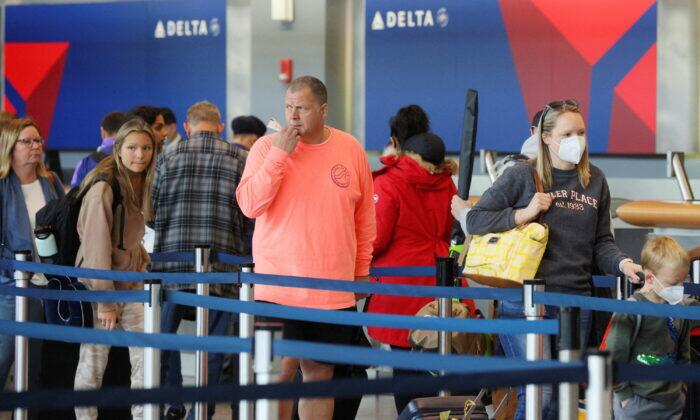
In an update on the agency’s website, anyone traveling within the United States may want to consider “getting tested as close to the time of departure as possible,” and no more than three days before a flight. It previously only recommended testing for people who have not received COVID-19 vaccines or up-to-date booster shots.
The CDC update is also recommending that people take a test before or after a trip if they went to crowded spaces “while not wearing a well-fitting mask or respirator.”
In April, a Florida federal judge struck down the CDC mandate that required people to wear masks inside airports or on airplanes. Justice Department officials have signaled they will challenge the rule, implemented after President Joe Biden took office in early 2021, in court.
A spokesperson for the agency told AFAR Magazine on May 19 that “COVID-19 vaccines are effective at preventing severe disease and death,” but added, “since vaccines are not 100 percent effective at preventing infection, some people who are up to date can still get COVID-19.”
“People who are up to date with their COVID-19 vaccines may feel well and not have symptoms but still can be infected and spread the virus to others,” the spokesperson said.
In January of this year, the CDC also implemented a change to its international travel rule, requiring plane passengers aged 2 and older to show a negative COVID-19 test from no more than a day before boarding a flight or proof of recovery from COVID-19 within the previous 90 days. Foreign nationals have to show proof of COVID-19 vaccination as well.
Neither the CDC nor the White House has given any public indication of when the mandatory testing rule for international travelers will be relaxed. Travel groups have pushed for that rule to be removed for months now.
In a letter to the White House, a group representing more than 250 organizations called for an end to the rule, saying it’s only caused “slow economic recovery of the business and international travel sectors.”
After the federal judge’s order was handed down last month, the CDC issued a new recommendation that people inside airports and airplanes wear masks, despite nearly all major airliners having scrapped enforcement.
And during a news briefing last week, CDC Director Rochelle Walensky, who has been criticized for her agency’s messaging during the COVID-19 pandemic, said that people living in counties that the agency deems to have high COVID-19 transmission should wear masks in indoor settings.

Hillary Clinton at the American Federation of Teachers Union on July 13, 2018 (Video screenshot)
The revelation by a former Hillary Clinton campaign manager that the 2016 Democratic presidential candidate agreed to feed to media the false claim that Donald Trump had a secret channel of communication with Vladimir Putin "adds to a damning record on how the Clinton campaign was behind arguably the most successful disinformation campaign in American political history."
That's the conclusion of constitutional scholar Jonathan Turley, a lifelong Democrat, after the testimony of Robbie Mook in the trial of former Clinton campaign lawyer Michael Sussmann.
Sussmann is charged in a case brought by special counsel John Durham with concealing his connection to the Clinton campaign from the FBI when he reported to the bureau the bogus claim that the Trump campaign had a back-channel of communication through the Kremlin-linked Alfa Bank.
"Ironically, despite Sussmann's efforts to conceal his connections to Clinton in the FBI meeting, it was his counsel who effectively outed Clinton in the scandal," Turley wrote on his website. "Former Clinton Campaign manager Robby Mook then violated the Eleventh Commandment of Democrats: Thou shalt not name a Clinton in a scandal."
On Sunday, Sen. Ron Johnson, R-Wis., said the revelations from Mook laid bare the level of corruption in Clinton's 2016 presidential campaign as well as in the Washington establishment and the media.
"We've known for quite some time that the Hillary Clinton campaign paid for the Steele dossier. But now we are finding out that the whole Alfa Bank hoax ... was all made up," said Johnson in an interview with John Catsimatidis on WABC in New York.
The Steele dossier was the Clinton campaign-funded compendium of salacious claims against Donald Trump – derived from Russian propaganda – that was largely debunked by Robert Mueller's special counsel investigation. Despite never being vetted, the document was used by the Obama administration to obtain warrants to spy on the Trump campaign and expand the Trump-Russia investigation that is now the target of Durham's criminal probe.
For 25 years, WND has boldly brought you the news that really matters. If you appreciate our Christian journalists and their uniquely truthful reporting and analysis, please help us by becoming a WND Insider!
If you like WND, get the news that matters most delivered directly to your inbox – for FREE!
Johnson said the Clinton campaign used "individuals who had contracts with our Defense Department to mine this data and develop some kind of inference that Trump was colluding with Russia so that they could report that to the FBI [which could then] ... report that to the American public as an October surprise."
Durham has said in court documents that his case against Sussmann outlines a "major scandal."
Johnson said the "fact that the Hillary Clinton campaign manufactured this entire Russian collusion hoax and the FBI ... concluded that this is preposterous — it's BS."
And yet, the Wisconsin senator said, the hoax led to the Mueller probe, which found "insufficient evidence" to support the claims of "Trump-Russia conclusion."
"What is being revealed to the American public is the corruption at the highest levels of, A: the Hillary Clinton campaign, and B: the FBI and the Department of Justice," Johnson said.
The senator said the government's law enforcement agencies "knew the Clinton campaign was up to this, and yet they put America through this ... four-year political turmoil, which is all based on a lie developed by Hillary Clinton."
Johnson said the media are complicit for spreading Clinton’s campaign hoax and for getting Joe Biden elected.
"Hillary Clinton on the issue of Alfa Bank said, 'I just heard about this on the news.' No! Their campaign planted it in the news, and, of course, those news outlets that had the story," he told WABC.
"They knew that what Hillary Clinton was saying was a lie. And yet they continued with this story, this hoax. Why? Because they are not journalists. They are advocates for the radical left," Johnson said. "They did not want Donald Trump to get elected."
Content created by the WND News Center is available for re-publication without charge to any eligible news publisher that can provide a large audience. For licensing opportunities of our original content, please contact licensing@wndnewscenter.org.
SUPPORT TRUTHFUL JOURNALISM. MAKE A DONATION TO THE NONPROFIT WND NEWS CENTER. THANK YOU!
The post Hillary led 'most successful disinformation campaign' in U.S. history appeared first on WND.



The head of the World Health Organisation has described monkeypox as a new “formidable” challenge to the global community alongside the Covid-19 pandemic and the invasion of Ukraine, as the agency warned of rising cases of the virus.
Addressing the UN’s World Health Assembly in Geneva, Tedros Adhanom Ghebreyesus said the Covid pandemic is not the only crisis in the world and warned of a “formidable convergence” of disease and other natural calamities fuelled by climate change and geopolitics.
The global health agency confirmed that there are 92 confirmed cases of monkeypox around the world and another 28 suspected infections, with the countries affected including the US, the UK, Canada, Australia and at least nine EU nations. The WHO list did not include Israel, Switzerland and Austria, which have since confirmed their own cases.
The UK Health Security Agency (UKHSA) has confirmed 20 cases of the disease in the UK alone.
Meanwhile, in his first public comments on the disease, Joe Biden said the rising cases of monkeypox were something “to be concerned about”. The US health authorities said they are investigating a third possible case of the virus.