Thursday, October 13, 2016

An Inside Look At Two "Unrelated" Banker Suicides Reveals A Fascinating Rabbit Hole

ORIGINAL LINK

It has been nearly four years since one of the most infamous, and still largely unexplained, banker "suicides" took place, the first in a series of many: we are talking about the death of the director of communications at Monte dei Paschi di Siena, David Rossi, who allegedly jumped to his death on March 6, 2013.

Since this event has largely faded away from the public consciousness here is a quick recap: David Rossi, who was the head of communications for Monte dei Paschi di Siena bank, which was founded in 1472 and which is currently seeking to finalize its third bailout since the financial crisis, died after falling - or being pushed - from a third floor window of the bank's headquarters in a 14th century palazzo in the Tuscan city of Siena.

david%20rossi.jpg

His death in March 2013 came at a time when the bank was pushed close to the brink of collapse over a scandal involving the loss of hundreds of millions of euros through risky investments.

While a quickly cobbled together post-mortem found that Rossi, 51, had killed himself, his family strongly suspected that he was murdered because he knew too much about the bank’s shady financial deals. As a result, earlier this year, prosecutors in Siena, where the bank is based, ordered his body to be exhumed and for the trajectory of his fall to be simulated, in an attempt to discover exactly how he died.

The death itself was suspicious: while Rossi fell, or was pushed, from his office at exactly 7:59:23 pm on March 6, 2013, and landed in a darkened alleyway, he did not die immediately – he was alive for 22 minutes, investigators believe.

suicide%20rossi_0.jpg

What made Rossi's death even more puzzling is that security camera footage, released years after his death, showed two shadowy figures appear at the end of the alley, apparently checking that there was no chance he would survive.

The scandalous video emerged in public this June, when the Post's Michael Gray used it as the basis for an article asking "Why are so many bankers committing suicide?" For those who have not seen the 4 minute clip, we present it below in its entirety.

Among the oddities revealed at the site of the alleged suicide is that the executive had bruises and scratches on his arms and wrists which suggested that he may have been gripped forcibly by one or two assailants before being pushed out of the window. On the back of his head was a deep, L-shaped gash suggesting he may have been hit with a blunt object before falling from the window.

Three apparent suicide notes were found crumpled in a bin in his study, but Antonella Tognazzi, his widow, said they contained phrases that her husband would never have used. One of them said: “Ciao, Toni, my love. I’m sorry.”

“He never called me Toni, he always called me Antonella,” his widow, who has long contended that her husband did not kill himself but was murdered, said. The recent reopening

A handwriting expert who analyzed the notes said they seemed to have been written under duress. Another unexplained element is the fact that 33 minutes after Mr Rossi fell from his office window, a call was made on his mobile phone.

At exactly the same moment, the CCTV footage showed an object falling onto the ground and landing a few feet from the body; it was later found to be Mr Rossi’s watch, minus the strap.

To be sure, the recent emergence of the video has somehwat placated Rossi's widow, Antonella Tognazzi, who got her wish for a re-examination into the circumstances surrounding Rossi's death:  “We’ve been waiting a long time for the investigation to be reopened,” said Ms Tognazzi early this year quoted by the Telegraph. “It’s what we had been hoping for – it’s an important sign on the part of the judiciary. I have never believed he committed suicide.”

The plot thickens when one digs into the details revealed by the footage captured on the surveillance video.

The footage shows the three-story fall didn’t kill Rossi instantly. For almost 20 minutes, the banker lay on the dimly lit cobblestones, occasionally moving an arm and leg. As he lay dying, two murky figures appear. Two men appear and one walks over to gaze at the banker. He offers no aid or comfort and doesn’t call for help before turning around and calmly walking out of the alley.

rossi%20background_0.jpg

Two minutes into the clip, Gray also notes that "Italian authorities have yet to identify these two men."

Following the Post article, there was a scramble by the Italian press to explain that the two men had indeed been identified, and to suggest that the local police knew, all along who they were. In a statement, the prosecutor of Siena said that the video on the fall of David Rossi “being circulated on the internet corresponds to the one already acquired during the investigation”. Moreover, the two men seen near Rossi’s body in the video footage were already interviewed in the first phase of the investigation.

“For final confirmation and to avoid any further speculation, we have decided to re-interview the two men in the video as part of the new investigation,” wrote the prosecutor. The two people in question are Giancarlo Filippone and Bernardo Mingrone. "The first, seen wearing a padded jacket, was a colleague and friend of David Rossi, while Mingrone, who is wearing a coat and remains in the background, was at the time a senior executive in the MPS finance department."

Courtesy of the police inquest into the suicide can confirm the two individuals seen in the back alley where Rossi died, were indeed his former coworkers Giancarlo Filippone a manager at Monte Paschi and a friend of Rossi, and Bernardo Mingrone, the CFO of Monte Paschi.

mingrone_0.jpg

The police report notes the following testimony from Filippone, as recounted by Il Fatto Quotidiano: "I came from work at 18 and later I was contacted by the wife of Rossi who had not heard from her husband and begged me to go and call him. I sent him a text message at 19:41 (...) and got no response, so after waiting a bit I went to the office at 20:30 and when I entered the room I saw the window open, I looked below and saw David's lifeless body."

Mingrone's testimony was also recorded: "At 20:40 on my way out I was talking on the phone, and just as I was in the hallway on the ground floor of the building heading towards the main exit, I met another man (Filippone) gesticulating dramatically and confused. The concierge mouthed the following words: "David Rossi" then "window", then after hanging up the phone i met with Rossi's colleague (Filippone, ed) who told me that David Rossi was thrown from the window. I asked the two where Rossi's office was located and to accompany me there asking if they had called an ambulance. I entered the office and I looked out the window seeing the body on the ground; at that point I called 118 (emergency sevices) since I had been told that no one had called previously."

That's the official version; the actual video evidence demonstrates no panic, and no distressed among the two individuals, who calmly walk up to the dying body and then calmly walk away. The public prosector found little in the circumstances suspect, and as he detailed on June 17, there was no mystery as to the presence of the two men in the alley, where Rossi was either pushed or had jumped on his own.

Where some confusion does emerge, however, is that according to a different recount of events that night, Rossi did in fact speak to his wife Antonella whom he called at 19:02, one hour prior to the deadly fall, in which he did not speak as like someone who is going to commit suicide. To the contrary they were making dinner plans: "I will be home at 19.30. I already bought everything you need. But first I need to take the meatballs that I ordered for dinner. See you later." He would never make it home as he was dead shortly after. Adding to the confusion is that after his death a number was typed on his cell: 409909 which, according to his lawyer, may have been a computer access code. It is unclear what was being accessed or who typed in the code.

But the question about the presence of the Monte Paschi CFO at the crime (or suicide) scene, is just one part of the mystery.

Two days prior to Rossi's death, the communications director sent a cryptic
email to the bank’s CEO, Fabrizio Viola according to Rossi's wife. “I want guarantees of not being overwhelmed by this thing,” he wrote. “We would have to do right away, before tomorrow. Can you help me?” As the post previously asked,"it remains a mystery what specifically Rossi thought could “overwhelm” him just before his death, but many have speculated that he was referring to Monte Paschi’s troubled financial position."

Incidentally, Fabrizio Viola stepped down as Monte Paschi CEO just one month ago, as the bank was deep in the middle of its latest, third, bailout process which however according to press reports has met substantial procedural hurdles and may not be completed, with speculation a debt for equity swap may be required to facilitate the bank's rescue.

Furthermore, Rossi was a close confidant of former bank Chairman, Joseph Mussari, who was the driving force behind Monte Paschi’s 2008 $13 billion purchase of Banca Antonveneta from Spain's Santander. Many banking analysts agreed at the time that Monte Paschi had overpaid for the acqusition, which incidentally was financed by Deutsche Bank.

musari_0.jpg
Giuseppe Mussari poses at the ABI headquarters in Rome July 27, 2010

Adding to the mystery, in October 2014, an Italian court sentenced Mussari to three years and six months in jail for misleading regulators in relation to a 2009 derivative trade with Nomura that prosecutors said was used to conceal losses. The court in Siena, where Italy's third-biggest lender is based, also sentenced former chief executive Antonio Vigni and ex-finance boss Gianluca Baldassarri to the same jail term. Prosecutors had asked for a seven-year jail sentence for Mussari and six years for Vigni and Baldassarri.

Prosecutors had accused Mussari, Vigni and Baldassarri of hiding a document known as a mandate agreement, which prosecutors and regulators said made clear that the derivative, called Alexandria, was linked to the acquisition of 3 billion euros worth of long-term Italian government bonds by Monte dei Paschi. The link between the two trades meant they should have received different accounting treatment, which would have shown heavy losses. Alexandria and two other derivatives trades ultimately forced Monte Paschi to restate its accounts and book a loss of 730 million euros on its 2012 results.

New management at the bank, now working on a plan to fill the 2.1-billion-euro capital hole, has said it only discovered the existence of the mandate agreement when it was found in a safe in Vigni's former office in October 2012, more than three years after it was signed.

If so far this all appears very confusing, is because it indeed is.

Where it gets even more confusing is that in January of this year, three executives from Deutsche Bank, which as we now know was very intimately involved with some of the illegal derivative transactions undertaken by Monte Pasci, were also implicated civilly, including Michele Faissola, the head of Private & Asset Wealth Management at Deutsche Bank— charged by Italian authorities with colluding with the troubled Monte Paschi in falsifying accounts, manipulating the market and obstructing justice.

Prosecutors have been reconstructing how Monte Paschi’s former managers misrepresented the lender’s finances in the years before it sought a government bailout. The misrepresentation first came to light in January 2013 when Bloomberg reported that Monte Paschi used a transaction with Deutsche Bank, the infamous Santorini (profiled here), to mask losses from an earlier derivative contract. The bank the same year had to restate its accounts

Faissola denied the charges.

faissola_0.jpg
Michele Faissola, head of Private & Asset Wealth Management

Faissola, whose roles included overseeing rates and commodities, was put in charge of Deutsche Bank’s combined asset and wealth management division in 2012 when Anshu Jain and Juergen Fitschen took over as co-chief executive officers of the Frankfurt-based lender. Deutsche Bank on Oct. 18 said Faissola would leave after a transition period; his departure came just a few months after the sudden resignation of Co-CEOs Anshu Jain and Jurgen Fitschen in June 2015; it is said that Faissola was their close protege.

As a reminder, earlier this month, the recently troubled Deutsche Bank was itself charged by Italy for market manipulation and creating false accounts. Additionally, the name Faissole emerged once again, when as Bloomberg reported, six current and former managers of Deutsche Bank, including Michele Faissola, Michele Foresti and Ivor Dunbar, were charged in Milan for colluding to falsify the accounts of Italy’s third-biggest bank, Monte Paschi and manipulate the market.

Here is where things get interesting.

Michele Faissola was a coworker of one William S. Broeksmit. By way of background, Broeksmit had two stints at Frankfurt-based Deutsche Bank, first from 1996 to 2001, then from 2008 until his retirement in September 2013, having previously worked at Merrill Lynch. When he rejoined the bank in 2008 it was in a newly created position, head of portfolio risk optimization. In 2012, as Jain and Fitschen prepared to take over as CEOs, the duo advanced Broeksmit’s name to become the new chief risk officer. The bank retreated on his nomination after German financial regulator BaFin raised concerns that Broeksmit’s lack of experience managing a large number of employees.

Broeksmit worked as a consultant from his retriement until Janury 28, 2014... when the body of the 58 year old was found hanging in his London flat from a dog leash tied to the top of a door. He had just commited suicide..

As we reported at the time, financial papers had been strewn about the scene of his suicide, and on a dog bed near the body were a number of notes to family and friends. One was addressed to Deutsche Bank CEO Anshu Jain, with an apology. That note offered no clue as to the reason he was sorry.

And this is where the story gets even more fascinating: the abovementioned Michele Faissola, who was instrumental in helping Monte Paschi arrange its various derivative deals with Deutsche Bank, was the first to arrive at the gruesome scene of Broeksmit's suicide in 2014.

 When he arrived at the South Kensington home, he immediately began going through the bank papers and read the suicide notes.

broeksmit%20home_0.jpg
The west London home of William S. Broeksmit where he was found dead in 2014

We know all this because it was recounted to us by Val Broeksmit, the son of the deceased high-ranking Deutsche Bank banker. Val also who provided us the police report of David Rossi's death, and various other key notes as he has tried to piece together over the years how and why his father committed suicide.

While there is no evidence Faissola was involved in any misconduct related to Broeksmit’s death, Val wonders what, if anything, Faissola had been searching for.

So do we.

The reason why this story, which has seen bits and pieces float around over the past 3 years, is reemerging is because now that both the insolvent Monte Paschi is in the news for its ongoing third bailout, not to mention the significantly troubled Deutsche Bank is also a daily source of market stress, the fact that two bankers who were intimately familiar and certainly involved in many of the transactions between Deutsche Bank and Monte Paschi, and which have been deemed illegal and are being prosecuted by the Italian state, have committed suicide, is worth bringing to the public's attention.

* * *

What is fascinating, is not only how interconnected the fates of Deutsche Bank and Monte Paschi have been over the years - two banks that have each seen a dramatic, high ranking suicide in recent years - but also how far the political process has pushed to preserving a cone of silence surrounding these events: recall that on September 1, Milan prosecutors filed a request to shelve a probe for alleged market manipulation and false accounting against the chief executive of Monte Paschi, Fabrizio Viola, and the bank's former chairman, Alesandro Profumo; a probe that was launched just several weeks prior. As noted above, Viola quietly resigned from his post shortly after the announcement.

Most importantly, while investigators on both the UK and Italian side have been quick to dismiss the banker deaths as open and shut cases of suicide, courtesy of Broeksmit's son we have access to certain documents which we are confident will reveal not just how deep the rabbit hole truly goes, linking the oldest and biggest European banks through two still largely unexplained suicides, but also what is hidden behind Deutsche Bank's mirrored facade.


via IFTTT

How Refined Sugar Is Made & Why It’s Not Vegan-Friendly

ORIGINAL LINK

A growing amount of the global population is reducing their meat intake. Whether it is for health, religious, environmental, or moral reasons, plant-based diets are on the rise. However, eating a cruelty-free diet may not be as easy as you’d think. I stopped eating meat about four years ago, and since then, I’ve learned that many animal products are often hidden in consumer items. From gummy bears to pharmaceuticals, animal products are so heavily embedded into society that they’re no longer always easily recognizable. One item that is often mistaken as vegan is refined sugar.

How Sugar Is Refined Using Animal Bones 

Refined sugar can be made from either sugar cane or sugar beets, both common in North America. Although they taste identical to one another, there is a significant difference between the refining processes. The pulp from sugar cane stalks is separated from the juice, then the juice is processed and heated until it crystallizes. The next step involved is where animal lovers may shudder: to obtain the sugar’s bright white colour, it must be filtered and bleached using bone char, a de-ashing and whitening agent made from the skull or spine of a cow. The bones are heated at a high temperature and reduced to carbon. The cattle is usually slaughtered in foreign countries, sold to traders, and then sold to American sugar companies (source).

Though the sugar you buy may not actually contain animal bones, they are still often involved in the production process. Some white sugar made from sugar cane is considered vegan, as processing alternatives to bone char exist, such as granular carbon. To be safe, you’re better off using sugar made from beets or sugar that is certified organic, because they cannot be filtered using bone char. Don’t be fooled by brown sugar, either; it’s simply white sugar with molasses added to it, so the refining process is the same. And confectioner’s sugar, otherwise known as “powdered sugar,” is just white sugar that has been pulverized into a very fine powder and sifted.

It’s important to note that there are still numerous health risks associated with consuming refined sugar, including cancer and obesity, so I am in no way advocating you eat refined sugar of any kind. If you’re interested in reading about the harmful effects sugar has on the body, you can read our article here.

According to PETA, the following sugar companies do not use bone-char filters:

  • Michigan Sugar Company
  • Florida Crystals Corporation
  • SuperValu
  • Western Sugar
  • Wholesome!
  • C&H Sugar Company
  • Savannah Foods
  • Tate & Lyle North American Sugars Inc.
  • Imperial Sugar
  • Refined Sugars Inc. (source)

Alternatives to White Sugar

Refined sugar has been associated with numerous health issues including cancer, heart and brain damage, obesity, and more. Instead of using refined white sugar, try substituting it with these healthier alternatives (preferably all organic):

  • Dates
  • Coconut sugar
  • Pure maple syrup
  • Raw honey (not vegan-friendly)
  • Stevia
  • Organic sugars (raw cane sugar, real brown sugar, etc.)
  • Unsweetened applesauce
  • Bananas 

Final Thoughts

I don’t think a concrete definition of veganism exists. What I do know is that being vegan isn’t about achieving perfection; it’s just about making compassionate choices. Regardless of your stance on refined sugar and whether or not it’s considered vegan, by doing your best to follow a plant-based lifestyle, you’re still saving numerous animals’ lives and reducing your environmental footprint. Even if you’re not vegan or this article didn’t resonate with you, refined white sugar is still terrible for your body and you should do your best to avoid consuming it!

Related CE Articles:

Sugar Identified As Top Cause For Obesity & Cancer Surge

New Study Reveals What Added Sugars Are Doing To The Brain

How Sugar Destroys Your Health & Literally Makes You Stupid

After Watching How Gummy Candies Are Really Made, You’ll Never Eat Them Again (Disturbing & Graphic)


via IFTTT

Study: ADHD Drugs Fail to Help Kids Complete Homework

ORIGINAL LINK

By Dr. Mercola

Drugs prescribed for attention deficit hyperactivity disorder (ADHD) are among the most controversial on the market. Such drugs are the most common psychotropic drugs used by children (tied for first place with antidepressants),1 yet they have questionable benefits and serious risks.

Medicating children with ADHD is in itself controversial, especially because there is no laboratory test or objective method to determine which children have ADHD.

Some may be labeled as such by parents or teachers, and even those diagnosed by a mental health professional may be displaying symptoms that could be attributed to other causes.

Many of the symptoms, such as being easily distracted, squirming and fidgeting, are seen in virtually all children at some point or another and, should they become problematic, may be better dealt with via lifestyle changes and psychotherapy than powerful stimulant drugs.

Any parent considering drug treatment for a child with ADHD must carefully weigh the benefits versus the risks, and new research suggests the purported benefits do not extend to improvements in school.

ADHD Drugs Don’t Help Kids Get Better Grades

A major concern of parents of children with ADHD is how it might affect their schoolwork. Worried that their child may fall behind other students or struggle with poor grades, some parents resort to drug treatment, believing it will help. Some drug companies even advertise their treatments as helping to improve homework time.

“Evidence indicates that children with Attention Deficit Hyperactivity Disorder (ADHD) experience acute and prolonged academic impairment and underachievement including marked difficulty with completing homework,” researchers wrote in a new study.2

It’s the first to examine the effects of drug versus behavioral treatment on homework performance in children with ADHD.

Seventy-five children between the ages of 5 and 12 participated. One group was assigned to receive either a stimulant drug or a placebo for three weeks, then switched. Another group received behavioral therapy.

The drug treatment led to no significant improvements in homework completion or accuracy compared to placebo. The behavioral therapy, however, led to children finishing up to 13 percent more homework problems and increased accuracy by 8 percent.

This homework boost could be the difference between a child receiving a passing “C” grade or failing a class, the researchers noted, adding:3

Behavioral treatment focused on homework problems results in clear benefits for children's homework completion and accuracy (the difference between passing and failing, on average), whereas long-acting stimulant medication resulted in limited and largely nonsignificant acute effects on homework performance.”

Expectations of Benefit From ADHD Drugs Are ‘Greater Than They Should Be’

Many people assume that giving a child with ADHD drug treatment will make the symptoms disappear, but research reveals such expectations may be unrealistic.

Research published in The Cochrane Database of Systematic Reviews found the drug methylphenidate (brand names Ritalin, Concerta, Medikinet and Equasym) may lead to modest improvements in symptoms, general behavior and quality of life.4

However, the modest benefit was based on poor-quality studies, leading the researchers to caution against using the drug without careful consideration. Study author Morris Zwi, a clinician and consultant for child and adolescent psychiatry, said:5

"Our expectations of this treatment are probably greater than they should be … Whilst our review shows some evidence of benefit, we should bear in mind that this finding was based on very low-quality evidence. What we still need are large, well-conducted trials to clarify the risks versus the benefits."

Side Effects of ADHD Drugs: Sleep Problems and More

The Cochrane Database of Systematic Reviews study also found methylphenidate is associated with an increased risk of sleep problems and appetite loss.

Overall, those taking methylphenidate had a 29 percent increased risk of experiencing a non-serious adverse event, the most common of which were sleep problems and decreased appetite.

Among children taking the drug, the risks were especially pronounced. Compared to the control group, children taking methylphenidate had a 60 percent greater risk for trouble sleeping/sleep problems and a 266 percent greater risk for decreased appetite.

A separate study published in Pediatrics also found that stimulant medications such as Ritalin may harm children’s sleep.6

Although the drugs have stimulant effects, they may have a calming effect on children with ADHD, and some have suggested the drugs may improve sleep by reducing bedtime-resistant behaviors.

However, this research, which reviewed nine individual studies, found that in general children taking stimulant drugs:

  • Took longer to fall asleep than others (with the time lengthening as the dose increased)
  • Had shorter sleep duration
  • Had worse sleep efficiency, which is the ratio of time spent asleep to the time spent in bed

The effect is particularly troublesome because lack of sleep makes ADHD symptoms worse, with researchers noting, “sleep adverse effects could undermine the benefits of stimulant medications in some cases.”7

Why Is ADHD on the Rise?

Approximately 11 percent of U.S. children between the ages of 4 and 17 years (6.4 million) have been diagnosed with ADHD,8 and no one really knows what’s causing this condition. Many factors are likely involved, including poor nutrition and environmental toxins.

Children with higher levels of the endocrine-disrupting chemical bisphenol-A (BPA), for instance, are more likely to be diagnosed with ADHD.9

Pesticide exposure, including pyrethroids,10 has also been linked to ADHD. Children exposed to higher levels of organophosphate pesticides may have a twofold to threefold increased risk of being diagnosed with ADHD.11 Exposure to tobacco smoke in utero is also associated with ADHD.12

Nutritionally speaking, a number of factors have been linked to ADHD and/or similar behavioral problems in children. One study even suggested that eating an unhealthy diet during pregnancy may increase ADHD symptoms in youth.13 In addition:

  • Drinking sugar-sweetened beverages like soda is associated with ADHD14
  • Gluten sensitivity may be common in children with ADHD. According to a 2011 study, celiac disease is "markedly overrepresented among patients presenting with ADHD,"15 and a gluten-free diet has been shown to significantly improve behavior in kids.
  • Artificial food coloring and other food additives, such as preservatives, are associated with increased hyperactivity in children16

Exercise May Improve Schoolwork and Other Symptoms in Children With ADHD

While the featured study found no benefit to homework among children taking drugs to treat ADHD, there are other options, namely exercise.

Research published in the journal Pediatrics found that kids who engaged in a regular physical activity program had an improvement in executive control, which is the ability to maintain focus, working memory and cognitive flexibility (or switching between tasks).17

Executive functioning is often impaired in children with ADHD, which means exercise may directly help to improve symptoms. Further, exercise is well known to boost test scores and academic performance in children, and this association is particularly strong among kids with ADHD.

One study found, for instance, that a before- and after-school physical activity program reduced inattention and moodiness among young children at risk of ADHD, as well as improved math and reading test scores.18 Other research revealed that 26 minutes of physical activity each day helped to significantly reduce ADHD symptoms in grade-schoolers.19

In a TED talk from 2012, John Ratey, an associate professor of psychiatry at Harvard, suggested that exercise be viewed as medication for ADHD, as it triggers your brain to release dopamine and serotonin, which improve mood and boost cognitive performance. You can view that talk below.

Natural Methods to Help Overcome ADHD-Like Symptoms

If your child struggles with behavioral difficulties or other ADHD-like symptoms, behavioral therapy may help. However, whether he or she has been diagnosed with ADHD or not, I strongly recommend addressing the following factors in addition to such therapy:

Too much sugar. High-sugar foods and starchy carbohydrates lead to excessive insulin release, which can cause falling blood sugar levels, or hypoglycemia. Hypoglycemia, in turn, causes your brain to secrete glutamate in levels that can cause agitation, depression, anger, anxiety and panic attacks.

Besides that, sugar promotes chronic inflammation in your body, and many studies have demonstrated the connection between a high-sugar diet and worsened mental health.

An unhealthy gut. As explained by Dr. Natasha Campbell-McBride, a medical doctor with a postgraduate degree in neurology, toxicity in your gut can flow throughout your body and into your brain, where it can cause symptoms of autism, ADHD, dyslexia, dyspraxia, depression, schizophrenia and other mental disorders.

Reducing gut inflammation is imperative when addressing mental health issues, so optimizing your child's gut flora is a critical step.

This includes not only avoiding processed, refined foods but also eating traditionally fermented foods. Fermented vegetables are excellent, although many kids enjoy fermented dairy products like kefir, especially if you blend them into healthy smoothies.

If you cannot get your child to eat fermented foods on a regular basis, a high-quality probiotic supplement may be highly beneficial in correcting abnormal gut flora that may contribute to brain dysfunction and behavioral issues.

Animal-sourced omega-3 deficiency. Research has shown that kids low in omega-3 fats are significantly more likely to be hyperactive, struggle with learning disorders and display behavioral problems. Omega-3 deficiencies have also been tied to dyslexia, violence and depression. A clinical study published in 2007 examined the effects of krill oil on adults diagnosed with ADHD.20

In that study, patients improved their ability to concentrate by an average of over 60 percent after taking a daily 500-milligram (mg) dose of krill oil for six months. They also reported a 50 percent improvement in planning skills and a close to 49 percent improvement in social skills.

Food additives and GMO ingredients. A number of food additives are thought to worsen ADHD, and many have subsequently been banned in Europe. Potential culprits to avoid include Blue #1 and #2 food coloring; Green #3; Orange B; Red #3 and #40; Yellow #5 and #6; and sodium benzoate, a preservative.

Additional Factors to Help Relieve ADHD Symptoms

Along with addressing your child's nutrition and activity levels, I also recommend implementing the following strategies:

  • Clear your house of dangerous pesticides and other synthetic chemicals.
  • EMF. Limit exposure to radiofrequency microwave radiation, cell and portable phones and electro-pollution. This is especially true for the sleeping environment where rest and repair occurs. It should be as electrically neutral as possible.
  • Avoid commercial washing detergents and cleaning products used on clothes and around your home and replace them with naturally derived cleaning products free of added perfumes and softeners.
  • Spend more time in nature. Researchers have found that exposing ADHD children to nature is an affordable, healthy way of controlling symptoms.
  • Investigate sensory therapy and emotional wellness tools. Energy psychology tools such as the Emotional Freedom Techniques (EFT) may help improve emotional coping and healing.


Sources:


Related Articles:

 Comments (5)


via IFTTT

Wednesday, October 12, 2016

For Disaster Recovery, the Best Knowledge Is Local Knowledge

ORIGINAL LINK

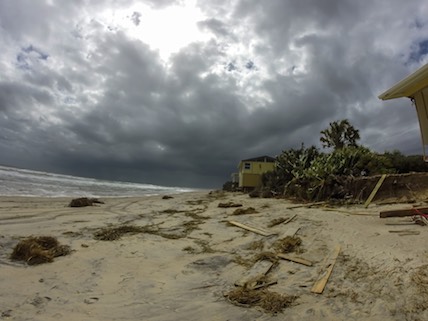
HurricaneAs residents all along the Southeastern coast start to put their lives back together after a devastating visit by Hurricane Matthew, these communities will face unique challenges. Not surprisingly, the calls for billions of dollars in federal government aid are already coming out loud and clear. In states affected by storms, government is often thought of as the only answer to reconstruction. However, research on the aftermath of natural disasters reveals that more often than not, local residents are better-suited to efficiently address these challenges than government on the local, state and federal levels.

Even if the federal government could increase the funding to help these communities above and beyond the $5 billion available in FEMA's disaster relief fund, the money would have to come from an omnibus bill passed by Congress in a lame-duck session, meaning it could be months before they receive an increase in funds. Even if Congress were to approve unlimited funds for rebuilding, it would most likely be surrounded by the type of bureaucracy that benefits a few while undermining true recovery of getting people back into their homes and communities.

Take a recent investigation by PBS' Frontline and NPR into flood insurance and aid distribution in the aftermath of Superstorm Sandy. They found that disaster victims' flood insurance claims were systematically underpaid, while the insurance companies selected by the feds to handle these claims were busy finding ways to increase their profits and limit payouts. Meanwhile, aid programs were slow to distribute funds while punishing homeowners with mountains of red tape and unqualified contractors, which ultimately prevented them from returning to their homes and communities.

Brad Gair, a disaster recovery manager in New York, said during the Frontline episode: "Did we put a bunch of money out? Yes. Is everybody mad? Yes. Did people get what they needed to get back into a home? No." These horrifying stories were unfortunately a repeat of previous governmental responses to disasters—for example, after Hurricane Katrina and Hurricane Andrew.

In a recent book titled Community Revival in the Wake of Disaster, three of my colleagues at the Mercatus Center—Virgil Henry Storr, Stefanie Haeffele-Balch and Laura E. Grube—explain in detail why we shouldn't be surprised that governmental responses to disasters lead to high administrative overhead costs and little relief to those who need it the most. They also show how entrepreneurs, "conceived broadly as individuals who recognize and act on opportunities to promote social change," end up filling this critical role.

They reveal how in general, these entrepreneurs promote community recovery by providing necessary goods and services and restoring and replacing disrupted social networks. The entrepreneurs also provide signals to indicate that a community is rebounding. These signals are essential to incentivize people and businesses to stay in the community or, in the event they deserted it during or after the hurricane, come back.

Just as importantly, they argue that creating space for entrepreneurs to act after disasters is essential for promoting recovery and fostering resilient communities. They tell many uplifting stories of communities that didn't wait for the various government agencies to rescue them and instead took matters into their own hands, finding ways to obtain funding, clean up and rebuild—which resulted in getting people back into their homes faster.

Storr and his co-authors link the success of these local entrepreneurs to people's knowledge of one another's needs, which allows them to find creative ways to overcome adversity. As opposed to the top-down approach of a distant government bureaucracy, the best knowledge is local knowledge. Those who have lived and worked in these communities know them best and are paramount to revival.

When it comes to the recovery after Hurricane Matthew, policymakers should remember that when social networks are broken by disasters, local knowledge is particularly powerful and holds an even bigger advantage over bureaucrats than usual, no matter how well-intentioned the public officials are. In fact, bureaucratic red tape will only cause more people more pain.

COPYRIGHT 2016 CREATORS.COM


via IFTTT

Interfaith Group Asks US Government to Reject Report that Stigmatizes Religious Americans

ORIGINAL LINK
SALT LAKE CITY | Wednesday, 12 October 2016 |

The following letter has been sent to President Barack Obama, Sen. Orrin Hatch and House Speaker Paul Ryan in response to a report issued by the U.S. Commission on Civil Rights. The letter is signed by a diverse group of faith leaders (including Presiding Bishop Gérald Caussé of The Church of Jesus Christ of Latter-day Saints), representing tens of millions of Americans.


via IFTTT

Leaked Email Proves DNC Rigged Primary Debates

ORIGINAL LINK

dws-wikileaks-750x500.png

A new batch of emails released by Wikileaks from Clinton campaign chairman John Podesta have confirmed what many long suspected about the Democratic Party primary debates: that they were rigged to protect and support former Secretary of State Hillary Clinton’s presidential candidacy.

On April 27th, 2015, Podesta received an email titled, “Revised debate memo,” written by Clinton campaign chief administrative officer Charlie Baker. The memo explained how the Clinton campaign wanted the debates to be setup to help their candidate.

The revised memo, which was also sent to Clinton campaign manager Robby Mook and longtime Clinton advisor Ronald Klain, details the objectives of the Clinton campaign regarding debates. It discusses how they had worked with the DNC to get what they wanted and box out Clinton’s primary opponents.

Through internal discussions, we concluded that it was in our interest to: 1) limit the number of debates (and the number in each state); 2) start the debates as late as possible; 3) keep debates out of the busy window between February 1 and February 27, 2016 (Iowa to South Carolina); 4) create a schedule that would allow the later debates to be cancelled if the race is for practical purposes over; 5) encourage an emphasis on local issues and local media participants in the debate formats; and 6) ensure a format that provides equal time for all candidates and does not give the moderator any discretion to focus on one candidate.

Baker says these objectives, to limit the debates and keep them out of the public eye as much as possible, have been part of discussion with the DNC. Baker also notes that the DNC was on board and working with the Clinton campaign to jam her opponents’ attempts to get both more and more visible debates.

Through discussion of these goals with the DNC their current plan is to begin a debate schedule that would commence in early October, with one debate a month, one each in the early primary and caucus states, and the remaining 2 post South Carolina (we will need to push them to post March 1 and then the later 2 debates would be cancelled if the race ends). The DNC’s current plan is to release the attached press release (which lacks this specificity but confirms the number and start window for the debates). The other campaigns have advocated (not surprisingly) for more debates and for the schedule to start significantly earlier. Mo and Anita believe that this announcement prior to the actual entry into the race of other candidates will strengthen their hand as they lock a schedule in with local media partners and state parties.

That’s right, coordination right down to a Clinton campaign pre-approved press release. The game was over before it began.

It should be recognized that most observers understood the DNC was not playing fair. Senator Bernie Sanders and many of his supporters explicitly accused the DNC of rigging the debates on behalf of Hillary Clinton. As we now know, that accusation was right on the money.

Then-DNC Chairwoman Debbie Wasserman-Schultz pushed back on the accusation by Sanders and others, saying, “I did my best to make sure, along with my staff and along with our debate partners, to come up with a schedule that we felt was going to maximize the opportunity for voters to see our candidates.”

Wasserman-Schultz was later forced to resign as DNC Chair after emails from the DNC, also leaked by Wikileaks, showed her plotting behind the scenes to sabotage Sanders’ campaign. The DNC Chair, Donna Brazile, has also been implicated in sabotaging Sanders’ campaign while working at CNN.

The post Leaked Email Proves DNC Rigged Primary Debates appeared first on Shadowproof.


via IFTTT

Judge Rules Architects of CIA Torture Program Must Testify in Court

ORIGINAL LINK
tortureDespite the CIA's best efforts to block it from happening.

via IFTTT

“Do Not Resist”: The Police Militarization Documentary Everyone Should See

ORIGINAL LINK

On a sunny afternoon last summer, Craig Atkinson, a New York City-based filmmaker, stood in a front yard in South Carolina surrounded by several heavily armed police officers.

The officers, members of the Richland County Sheriff’s Department tactical team, were descending on a modest one-story house looking for drugs and guns. The team smashed through the windows of the home with iron pikes, then stormed the front door with rifles raised.

Inside, they found a terrified family of four, including an infant. As the family members were pulled outside, Atkinson’s camera captured a scene that plays out with startling regularity in cities and towns across the country, one of many included in his new documentary, “Do Not Resist,” an examination of police militarization in the United States.

The police begin rooting through the trash. “Where the fuck is the weed?” one officer asks, as the team ransacks a car parked in the driveway. “Boy that was sweet,” another says, commenting on the speed of the raid. One officer finds a backpack, which yields a bit of marijuana — it’s not enough to roll a joint, but it’s something.

The officer in charge questions the owner of the backpack, a young African-American man. In a conversation captured on Atkinson’s microphone, the young man, a local community college student, tells the officer he runs a small landscaping business.

Knowing he’s being taken into custody, with his hands cuffed in front of him, he asks the officer for a favor: Can he remove the $876 in his pocket set aside for new lawn-care equipment and give it to one of his employees to go to the hardware store?

Instead of handing the cash to the arrestee’s co-worker, the tactical team seizes the money.

“I never one time said you’re a bad person,” the officer tells the young man before he’s led off. “I just have a job to do, and you happen to be in the middle of it.”

The pernicious practice of civil asset forfeiture, which allows law enforcement to grab cash or property during the course of raids, then requires people to prove the assets were not related to criminal activity in order to get them back — and allows police to keep the assets if they fail to do so — has been well documented.

What’s less common is to see one of those interactions play out on camera. Capturing those kinds of moments is what “Do Not Resist” is all about.

Trailer for “Do Not Resist,” a new documentary examining police militarization in the United States.


Atkinson’s directorial debut has already taken home this year’s prize for best documentary at the Tribeca Film Festival and is currently making the rounds in select cities around the country. Radley Balko, author of “Rise of the Warrior Cop: The Militarization of America’s Police Forces,” has called the film “terrifying,” “powerful,” and “important.”

Based on substantial on-the-ground reporting, “Do Not Resist” is both unsettling to watch and necessary to see. The film begins in Ferguson, Missouri, on a rainy night of protest in August 2014 that erupted into a melee of tear gas and screaming. It then quickly moves to a seminar with Dave Grossman, a law enforcement guru who gives trainings on lethal force and the application of a warrior mentality in the name of the law.

“The policeman is the man of the city,” Grossman begins, before explaining that cops he’s spoken to routinely describe their first on-the-job kill as a prelude to the best sex of their lives. “Both partners are very invested in some very intense sex,” Grossman says. “There’s not a whole lot of perks that come with this job. You find one, relax and enjoy it.”

Grossman believes that a violent reckoning between law enforcement and critics of police militarization is fast approaching. “We are at war,” Grossman tells the crowd, “and you are the front-line troops in this war.”

The language reflects a theme that runs throughout “Do Not Resist.”

Atkinson began the project three years ago in the wake of the Boston Marathon bombings. The images of armored cars and commando cops in the streets resonated for him on a personal level. Atkinson’s father spent 29 years as a police officer outside Detroit — 13 of them on a SWAT team, where he held the rank of commander. Atkinson and his brother would take part in their dad’s training, playing the part of hostages when they were little and mock shooters when they were big enough to handle weapons.

Watching the footage from Boston, it was obvious to Atkinson that something profound had shifted since his dad’s days on the force. He set out to create a film that would capture that shift. The “Do Not Resist” crew attended expos and trade shows, community meetings and federal hearings, training seminars and SWAT contests. All told, the team traveled to 19 states, went on roughly 20 police ride-a-longs, observed half a dozen raids, and interacted with hundreds of police officers.

The hope was to be on-hand for an incident in which a SWAT team’s use of heavy weapons would be unquestionably warranted. “I thought the whole time I would be able to show something that would kind of reflect the entire scope of what a SWAT officer might go through sometimes, where you actually do need the equipment,” Atkinson explained.

Instead, the filmmaker repeatedly found himself watching police with military-grade weaponry executing dubious search warrants. The frequency of the raids was particularly shocking, with one of the officers in the film claiming his team does 200 such operations a year. By comparison, Atkinson notes, his father performed a total of 29 search warrant raids over his entire 13 years in SWAT — according to some estimates, SWAT teams now carry out between 50,000 to 80,000 raids across the country annually.

“The search warrants, we’re told, are always used for massive drug dealers and kingpins, and then we run in these homes and we never found anything,” Atkinson said.

Beyond the day-to-day breaking down of doors, “Do Not Resist” explores the growing role of private surveillance companies in local policing, and law enforcement’s thirst for technology that can predict crimes before they happen.

An analyst inspects video feeds of a wide-scale aerial surveillance system being utilized by local police departments.

Photo: VANISH Films

The film highlights Persistence Surveillance Systems, a company offering low-cost aerial surveillance honed in Fallujah to domestic law enforcement. “We’re not out to watch the whole world, just all the world that’s got crime,” Ross McNutt, the president of the company, insists.

“That’s the next wave in the militarization of police,” Atkinson told The Intercept in an interview. “What we found was a whole slew of retired military officers now in the private sector now selling the exact same surveillance technology that they just got back from Iraq and Afghanistan with to local law enforcement for small money on the dollar.”

The intent of “Do Not Resist,” Atkinson said, is to provide a glimpse inside the realities of American policing, challenge the policing-for-profit model that has caused departments in economically depressed communities to treat their citizens as walking ATM machines, call out a warrior culture that divides law enforcement from the public they’re sworn to serve, and flag the dangers of war-zone technologies being applied domestically.

For the most part, the reaction from law enforcement has been positive, Atkinson said.

“I’ve had a lot of law enforcement really respond well to the film and say that it reflects these issues that a lot of them have been working on themselves,” he said.

As for his father, Atkinson said, watching the film stirs up uncomfortable feelings.

“His major reaction was just disappointment in seeing how far the mission creep had actually gone,” he said. “It’s obviously disappointing to see something that you were dedicating your life to so completely, evolve into something that you would never want to be a part of.”

Top photo: A military surplus armored vehicle, acquired for free by local police departments, tours the streets of Juneau County, Wisconsin.

The post “Do Not Resist”: The Police Militarization Documentary Everyone Should See appeared first on The Intercept.


via IFTTT

Hillary: Deceit, Debt, & Delusions (Part 2)

ORIGINAL LINK

Submitted by Jim Quinn via The Burning Platform blog,

In Part One of this article I addressed the deceit of Hillary Clinton and politicians of all stripes as they promise goodies they can never pay for, in order to buy votes and expand their power and control over our lives.

I created the chart below for an article I wrote in 2011 when the national debt stood at $14.8 trillion, with my projection of its growth over the next eight years. I predicted the national debt would reach $20 trillion in 2016 and was ridiculed by arrogant Keynesians who guaranteed their “stimulus” (aka pork) would supercharge the economy and result in huge tax inflows and drastically reduced deficits. As of today, the national debt stands at $19.7 trillion and is poised to reach $20 trillion by the time “The Hope & Change Savior” leaves office on January 20, 2017. I guess I wasn’t really a crazed pessimist after all. I guarantee the debt will reach $25 trillion by the end of the next presidential term, unless the Ponzi scheme collapses into financial depression and World War 3 (a strong probability).

US-National-Debt-1980-2019-Chart.jpg

The total disregard for the most perilous issue confronting the nation by politicians of all stripes is a national disgrace, proving beyond a doubt the elite ruling class has no conscience, no sense of morality, and no loyalty to the common people or future generations. The sociopaths who act as if they are in control addressed the 2008 global debt meltdown by adding tens of trillions in new debt to an already unsustainable system, setting the world on a course towards total financial collapse and world war.

There is no denying Wall Street, through the greatest control fraud in history, purposely generated trillions in bad mortgage products, bundled them in packages of indecipherable derivatives, bribed and threatened the rating agencies for fake AAA ratings, sold them to unsuspecting clients, while simultaneously shorting them, and proceeded to destroy the global financial system in the process.

The national debt at the outset of this crisis was $10 trillion, with total US credit market debt of $54.5 trillion. The debt was too damned high. A massive deleveraging needed to take place, wiping out the bad debt and those banks who gambled and lost. But, those who would have lost were establishment Wall Street bankers, billionaires and politically connected players. The establishment circled the wagons, instructed their puppets at the Federal Reserve to do whatever necessary to save Wall Street, rolled out trillions of Keynesian claptrap spending schemes, and threw Main Street and specifically senior citizens under the bus.

Eight years later the national debt stands at $19.7 trillion and total credit market debt has leaped to over $64 trillion. The Fed has conspired with other central banks around the world (specifically the ECB and JCB) to follow suite, driving global debt to an all-time high of $152 trillion – 225% of a rapidly slowing world GDP. And this doesn’t include the trillions of bad debt within the financial sector, as insolvent banks like Deutsche Bank, all Greek, Italian and Spanish banks, and Citigroup teeter on the edge. Rogoff and Reinhart proved when the debt to GDP ratio in countries exceeds 90%, financial catastrophe isn’t far behind. What does that say about our global economy?

IMF%20debt_0.jpg

We have the greatest debt bubble in world history and neither presidential candidate thinks it worthy of 30 seconds during two 90 minute debates. Instead they focus on the important stuff like pussy, bimbo eruptions, emails, and mean talk. The proposals of both candidates would turbocharge already skyrocketing deficits. The people of this country should be scared shitless about the debt. But instead they are focused like a laser beam on Kim Kardashian’s latest escapade, twitter wars, facebook pictures of a distant cousin’s toe fungus, and the latest adventures of the Housewives of NY, NJ, OC, or Atlanta.

All honest borrowers know debt must be repaid. The U.S. government is not an honest borrower. With the national debt rising by $2.8 billion per day, one needs to question whether the U.S. government is an honest borrower. With annual deficits guaranteed to exceed $1 trillion per year for as far as the eye can see, how will the debt ever be repaid?

The Keynesian acolytes like Summers, Krugman, Bernanke and Zandi seem to forget Keynes promoted deficit spending during economic downturns, to be offset by surpluses during economic upturns. They are paid well by the establishment to forget. Hazlitt had to deal with superficial men of a similar ilk during his time. They care only for whatever cockamamie economic squandering idea they are paid to sell as the latest government salvation plan. The idiotic ideas never change, only the names of the foolhardy fanboys selling the idiocy to a disinterested and distracted populace.

“There are men regarded today as brilliant economists, who deprecate saving and recommend squandering on a national scale as the way of economic salvation; and when anyone points to what the consequences of these policies will be in the long run, they reply flippantly, as might the prodigal son of a warning father: “In the long run we are all dead.” And such shallow wisecracks pass as devastating epigrams and the ripest wisdom.” ? Henry Hazlitt, Economics in One Lesson

These pretentious so called economists always promote some scheme such as Cash for Clunkers, first time home buyer credits, national infrastructure rebuilding, war, and other broken window fallacy programs designed to get something for nothing. They declare haughtily the government can spend without limit and pile up trillions of debt because we owe it to ourselves. These are nothing but falsehoods built upon flawed logic and sold to a gullible public by media mouthpieces, crooked politicians, and dishonest bankers.

An honest man, not beholden to the establishment, like Ray Dalio, founder of Bridgewater Associates, who manages $150 billion, knows a debt bubble when he sees it. The world is approaching the limits of debt expansion. He also understands the issuers of the debt, holders of the debt and taxpayers cannot possibly all be satisfied in the long run. It’s the common working stiff who will be screwed again.

“Debt is fundamentally a liability even though it is treated as an asset by those who “own” it. As a result, holders of debt believe that they are holding an asset that they can sell for money to use to buy things, so they believe that they will have that spending power without having to work. Similarly, retirees expect that they will get the retirement and health care benefits that they were promised without working. So, all of these people expect to get a huge amount of spending power without producing anything. At the same time, workers expect to get spending power that is equal in value to what they are giving. They all can’t be satisfied.”

The Federal Reserve, in their frantic and illegal endeavor to prop up their insolvent benefactors on Wall Street and crooked politicians in Washington D.C., have destroyed the free market system based upon saving, investing, risk, failure and creative destruction. They have created a stagnant zombie economy dependent upon zero bound interest rates and rigged stock markets to maintain the appearance of normalcy.

Their zero interest rate policy has destroyed the lives of millions of senior citizens (with 3.6 million turning 65 every year for the next two decades), guaranteed the bankruptcy of pension plans across the country, and signaled to corporate CEOs that it is smarter to borrow billions and buyback their stock than to invest in capital, equipment or people. They have sapped the life out of the real economy, making it impossible to ever achieve 3% GDP growth again. The wave of Boomers retiring will be an anchor as former providers of taxes become users of healthcare and pension benefits.

The national debt is poised to reach $25 trillion by the end of the next presidential term. This would push the debt to GDP to 120%, up from 106% today. Remember, when this level has exceeded 90% throughout history stagnation and economic collapse was not far behind. This brings us back to the so called economic gurus of our time who condescendingly declare Japan’s debt to GDP ratio of 230% as proof deficits and debt don’t matter.

They fail to mention Japan has been in a three decade long recessionary death spiral with their stock market is still 57% below its 1990 peak. The predictable nonsense emanating from bloviating windbags for the establishment about the ever growing jenga tower of debt not being an issue is no different than their blather about the fraudulent housing bubble not being a problem in 2005 because it hadn’t burst yet.

The fact is the Fed has artificially suppressed interest rates for the last eight years in a failed attempt to make their warped academic theories work in the real world. Emergency level rates may have been necessary in 2008 and 2009, but keeping them at 0% for eight years reveals their complete capture by Wall Street and the establishment politicos. Now they are trapped. They can never allow free markets to regain control of our economy, as the slightest uptick in rates will now blow the global economy sky high.

The feeble minded politicians that pass for leaders believe the $10 trillion increase in debt since 2008 is no problem because interest on the debt is less today than it was in 2008. For the fiscal year just ended the interest on the debt was a mere $433 billion. That is based on an average interest rate of about 2.3%. The average rate in 2008 was about 4.5%. Ray Dalio, our smart hedge fund manager, points out an inconvenient fact for the mathematically challenged dimwits running this shitshow.

“It would only take a 100 basis point rise in Treasury bond yields to trigger the worst price decline in bonds since the 1981 bond market crash. And since those interest rates are embedded in the pricing of all investment assets that would send them all much lower.”

What the politicians ignoring the 20 trillion pound elephant in the room fail to tell the American public is a 1% increase in the average interest rate would cause interest on the debt to soar to $660 billion, a 52% increase over the FY16 level. A similar increase around the globe would blow a $1.5 trillion hole in governmental budgets. At the end of the next presidential term when the national debt will be $25 trillion or more, a 3.3% average rate across all bond durations would yield annual interest expense of $825 billion, almost double the current level.

Only a brain dead Keynesian, Ivy League educated economist, mainstream media spokesmodel, or bought off political flunky cannot see the inevitable financial Armageddon approaching unless we reverse course now. But there is absolutely no one within the deep state establishment with the moral fiber or courage to stand up and do the right thing. The plan seems to be to pretend the debt is not a problem, increase taxes and use the most vicious form of taxation – hidden inflation on those least able to pay – to make the unpayable debt less burdensome and screw the bondholders with guaranteed losses. Hazlitt had their number 70 years ago.

“Here we shall have to say simply that all government expenditures must eventually be paid out of the proceeds of taxation; that inflation itself is merely a form, and a particularly vicious form, of taxation. It is perhaps the worst possible form, which usually bears hardest on those least able to pay.” ? Henry Hazlitt, Economics in One Lesson

Politicians and central bankers play both sides of the fence when lying about inflation. Bernanke and Yellen have set a magical level of 2% inflation, which is somehow supposed to promote full employment and stable prices. Why 2%? Why not 1.8956723%? It’s just as outlandish in its conception. Over the last eight years we’ve listened to these highly educated boobs lie about raising rates as soon as inflation hit 2% or when unemployment dropped to 6.5%.

Inflation has been over 2% during these eight years and according to the BLS bullshit spreaders, unemployment is currently 5% – still no rate increase. We are lost in a blizzard of Fed lies. They are now trapped by their own lies. Normalization of interest rates will never ever happen. Negative real rates have been in effect and negative nominal rates are in our future. How Yellen and her fellow banker cronies sleep at night knowing they have destroyed and continue to destroy the lives of senior citizens, the middle class and the millennial generation is beyond me.

Here’s the game being played behind the curtain, never to be revealed by Hillary, Yellen, the captured dying legacy media, or anyone beholden to the establishment for their paycheck or bribe:

(1) You keep the lower classes trapped in ghettos, dependent upon welfare scraps provided by the state for their sustenance.


(2) You keep the masses dumbed down and socially stunted through government indoctrination in public schools.


(3) You tax the working class heavily while convincing them piling up consumer debt is the path to happiness.


(4) You bastardize, manipulate and fraudulently reduce the reported level of inflation in order to screw senior citizens out of their Social Security benefits.


(5) You run up the national debt to astronomical levels while making $200 trillion of unfunded welfare promises to future generations.


(6) Since the debt is unpayable, you generate man made real inflation exceeding 5% per year in order to inflate away the debt.


(7) You never speak of this plan while paying your media mouthpieces to distract the populace with electronic bread & circuses.


(8) As a last resort you start World War III to divert attention away from your traitorous actions.

As we come down the home stretch of this election, the stakes have never been higher. The future of the country is at stake. Do we believe in liberty? Do we believe in the truth? Do we care whether this country survives the next decade? Do we care about future generations? Then it’s time to stand up and be heard. It’s time to fight. It’s time for the putrid, corrupt, evil establishment to be eradicated like filthy roaches in your basement. Hazlitt sums it up nicely:

“The times call for courage. The times call for hard work. But if the demands are high, it is because the stakes are even higher. They are nothing less than the future of liberty, which means the future of civilization.”

In Part Three of this article I will dismantle Hillary Clinton’s pie in the sky delusional economic proposals with facts, logic, and a cold dose of reality. Feeble minded mathematically deficient ideologues need not read it. Their heads would explode.


via IFTTT

The Total Amount Of Debt In The World Just Hit A Record $152,000,000,000,000 (152 Trillion)

ORIGINAL LINK

globe-on-the-brink-of-disaster-public-domainIf anyone ever asks you how much debt there is in the world, now you will know the answer.  According to the IMF, the total amount of debt around the globe has now hit a staggering 152 trillion dollars.  That is an amount of money that is almost unimaginable, and the IMF says that it is equivalent to 225 percent of global GDP.  It is the biggest debt bubble in the history of the planet, and it is rising at an extremely alarming pace.  Experts all over the world agree that when this debt bubble finally bursts, it is going to create an economic crisis on a scale that humanity has never seen before.

When I first saw this number I was absolutely astounded at how reckless we all have become, and I was also amazed that there was hardly anything about this announcement in the mainstream media in the United States.  The following excerpt comes from a story in a major British news source

The International Monetary Fund has urged governments to take action to tackle a record $152tn debt mountain before it triggers a fresh global financial and economic crisis.

Warning that debt levels were not just high but rising, the IMF said it was vital to intervene early in order to mitigate the risks of a repeat of the damaging events that began with the collapse of the US sub-prime housing bubble almost a decade ago.

It said that new research in its half-yearly fiscal monitor covering 113 countries had shown that debt was currently 225% of global GDP, with the private sector responsible for two-thirds of the total.

Right now the mainstream media in the United States is so obsessed with Trump and Clinton that almost every other important story is pushed to the side, but it boggles my mind how this cannot be major front page news.

When we borrow money, consumption is transferred from the future to the present.  For example, if you put a 70 inch television on your credit card today, the quality of your lifestyle will immediately go up, but you won’t have that money to spend at some point in the future.  In fact, you are ultimately going to pay back significantly more money than you originally spent for the television.

So when we go into debt, we are literally destroying the future one dollar at a time.

On a national scale, what we are doing to our children, our grandchildren and all future generations of Americans is beyond criminal.  Thomas Jefferson and other founding fathers warned that government debt was simply thievery from future generations, and they were exactly right.  If future generations get the chance, they will look back and curse us for what we have done to them.

Earlier today I looked up our national debt, and it is currently sitting at $19,688,773,606,117.54.  That means that Barack Obama has officially become “the 9 trillion dollar man”.

When Barack Obama entered the White House, the U.S. government was 10.6 trillion dollars in debt, and now we are 19.6 trillion dollars in debt, and there is a very good chance that we could hit 20 trillion dollars by the time he leaves the White House on January 20th, 2017.

In a just society, the politicians that have done this to future generations of Americans would be going to jail, but instead we put them up on pedestals.

It is truly hard to grasp how much money “a trillion dollars” represents.

For instance, if you were alive when Jesus Christ was born, and you had spent a million dollars every single day since that time, you still would not have spent a trillion dollars by now.

Since Barack Obama entered the White House, we have been stealing more than 100 million dollars from future generations of Americans every single hour of every single day, and as Obama’s second term draws to a close the pace of that theft is accelerating according to Simon Black

In fact, for the 2016 fiscal year that ends in just ten more days, the US government’s debt growth of $1.36 trillion is on track to be the third biggest annual increase ever.

The only two years in all of US history that posted higher US debt growth were 2010 and 2011– the peak of the financial crisis.

Even more acutely, last month the US federal debt grew by $151.5 billion.

Not counting the financial crisis, and a few anomalous months following a debt ceiling reset, August 2016 was the single biggest expansion of US debt EVER.

How could we do this?

And I know that I have pointed the finger at Barack Obama a lot in this article, but the truth is that Republicans are highly to blame as well.

The Tea Party revolution of 2010 gave the Republicans control of the House of Representatives, and since that time they have also gained control of the Senate.  Without Republican approval, Barack Obama would not be able to spend a single penny.  The American people were counting on the Republicans to put a lid on the wild spending of Barack Obama and the Democrats, and the Republicans in Congress have completely failed.

Nobody wants to end the party.  Because without a doubt, cutting back on our wild borrowing and spending would seriously damage the economy in the present, and nobody wants to be responsible for that.

So now the only thing to do is to keep the party going for as long as possible until it ends in a horrible, fiery crash.

Overall, the total amount of debt in the United States is now roughly equivalent to 350 percent of U.S. GDP, and a day of reckoning is rapidly approaching.  Just consider what Charles Schwab’s chief investment strategist, Liz Ann Sonders, recently told Business Insider

Sonders noted that total debt — public, private, nonfinancial, and financial — had become 350% of gross domestic product, and that is already causing problems for the economy.

The question I get all the time is: When are we going to hit the wall? When are we going to hit the debt wall?” Sonders said. “I think we hit the debt wall in ’08, which unleashed a big round one of what I think will be a rolling set of crises — and not just in the US but globally.

And I very much agree with her.

We definitely “hit a wall” in 2008, but it was just “round one” of our problems.

The coming rounds are going to be even more painful, but most Americans don’t understand this.

Most Americans seem to believe that our debt-fueled standard of living can be sustained indefinitely and that there is nothing to be concerned about.

Unfortunately, the laws of economics cannot be defied forever, and eventually the American people are going to experience economic and financial pain on a scale that we have never seen before in our entire history.


via IFTTT