
Thursday, September 6, 2018

Dorsey Admits Twitter "Unfairly" Shadowbanned 600,000 Accounts

ORIGINAL LINK

Apparently Twitter CEO Jack Dorsey is growing tired of insisting that Twitter's algorithm is purely "impartial" and doesn't discriminate against conservative voices.

Dorsey

As the controversy surrounding Twitter's blatant shadow-banning of conservative voices continues to rage, Dorsey admitted to lawmakers that his platform "unfairly" reduced the visibility of 600,000 accounts, including some members of Congress. But he refused to say whether a majority of them were Democrats or Republicans, only saying that the issues were remedied in late July.

Mr Dorsey told senators that the platform used "hundreds of signals" to decide "what to show, down-rank and filter."

"We do not shadow-ban anyone based on political ideology," he said.

"It was unfair," said Mr Dorsey. "We corrected it."

Dorsey told Senators that the platform used "hundreds of signals" to decide "what to show, down-rank and filter".

"Twitter does not use political ideology to make any decisions, whether related to ranking content on our service or how we enforce our rules," said Mr Dorsey.

Apparently, the market wasn't thrilled with his response as Twitter shares tanked, weighing on the Nasdaq for a second straight day on Thursday.

Meanwhile on Wednesday, the DOJ said it would investigate "growing concern that these companies may be hurting competition and intentionally stifling the free exchange of ideas on their platforms."

Twitter

As the BBC points out, the allegations of censorship were fueled when Twitter added a "quality filter" to the platform and its search results. And then President Trump blew the issue wide open when he tweeted about it last month.

Twitter “SHADOW BANNING” prominent Republicans. Not good. We will look into this discriminatory and illegal practice at once! Many complaints.

— Donald J. Trump (@realDonaldTrump) July 26, 2018

Here's a highlight of Dorsey's comments from the hearing (courtesy of the BBC):

  • Democrat Eliot Engel asked why Twitter did not require people to verify their identity when registering an account. Mr Dorsey said the platform had systems to detect bots and had prevented half a million fake accounts from even being used
  • Asked why Twitter relied on its users to report inappropriate content, Mr Dorsey said it was a "matter of scale" but that it responded quickly to reports based on their severity
  • Mr Pallone asked how many human moderators Twitter had in the US and how much they were paid. Mr Dorsey was unable to answer
  • Republican Fred Upton asked how Twitter determined whether somebody was trying to manipulate a conversation. Mr Dorsey said the platform was focused on "conversation health", with factors such as "shared attention" taken into account
  • Asked whether Twitter's rules were clear, Mr Dorsey said he accepted they were difficult to understand and needed to be "more approachable"
  • Republican Adam Kinzinger asked whether Twitter stored user data in Russia. Mr Dorsey replied that Twitter did not have servers in Russia
  • Republican Michael Doyle asked explicitly whether Twitter had taken action to censor conservatives. "No," replied Mr Dorsey

* * *

Of course, in Dorsey's mind, these shadowbanning slip ups (and myriad other actions to repress conservative voices) don't mean twitter isn't "fair and balanced"...

Twitter

Twitter


via IFTTT

Wednesday, September 5, 2018

Goldman's Bear Market Indicator Shows Crash Dead Ahead, Asks "Should We Be Worried?"

ORIGINAL LINK

One year ago, we reported that in its attempt to calculate the likelihood, and timing, of the next bear market, Goldman Sachs created a proprietary "Bear Market Risk Indicator" which at the time had shot up to 67% - a level last seen just before the 2000 and 2007 crashes - prompting Goldman to ask, rhetorically, "should we be worried now?"

While Goldman's answer was a muted yes, nothing dramatic happened in the months that followed - the result of Trump's $1.5 trillion fiscal stimulus which pushed the US economy into a temporary, sugar-high overdrive - aside from the near correction in February which was promptly digested by the market on its path to new all time highs (here one has to exclude the rolling bear markets that have hit everything from emerging markets, to China, to commodities to European banks).

At the time, Goldman wrote that it examined over 40 data variables (among macro, market and technical data) and looked at their behaviour around major market turning points (bull and bear markets). Most, individually, did not work as leading indicators on a consistent basis, or they provided too many false positives to be useful predictors. So the bank developed a Bear Market Risk Indicator based on five factors, in combination, that do provide a reasonable guide to bear market risk – or at least the risk of low returns: valuation, ISM (growth momentum), unemployment, inflation and the yield curve.

And, as Goldman's Peter Oppenheimer explained, while no single indicator is reliable on its own, the combination of these five seems to provide a reasonable signal for future bear market risk.

All of these variables are related. Tight labour markets are typically associated with higher inflation expectations. These, in turn, tend to tighten policy and weaken expectations of future growth. High valuations, at the same time, leave equities vulnerable to de-rating if growth expectations deteriorate or the discount rate rises, or, worse still, both of these occur together.

To aggregate these variables in a signal indicator, we took each variable and calculated
its percentile relative to its history since 1948. For the yield curve and unemployment
we took the lowest percentiles relative to history, while for the other indicators we took
the highest. We then took the average of these.

Fast forward to today, when one year later Goldman has redone the analysis (and after what may have been some prodding from clients and/or compliance, renamed its "Bear Market Risk Indicator" to "Bull/Bear Market Risk Indicator") where it finds that the risk of a bear market - based on its indicator - is now not only nearly 10% higher than a year ago, but well above where it was just before the last two market crashes, putting the subjective odds of a crash at roughly 75%, well in the "red line" zone, and just shy of all time highs.

Or as Goldman puts it, "Our Bull/Bear market indicator is flashing red."

While one can argue with the subjective interpretation of this heuristic, a tangential analysis shows that Goldman's indicator is inversely correlated with future returns, and as of this moment, Goldman is effectively forecasting a negative return from now until 2023.

Here even Goldman's Oppenheimer admits that "the indicator is at levels which have historically preceded a bear market. Should we take this seriously? It’s always risky to argue that this time is different but there are two most likely scenarios when we think of equity returns over the next 3-5 years."

Or, in other words, "how worried should we be about a bear market?"

Goldman's answer is two-fold, laying out two possible outcomes from here, either a sharp, "cathartic" bear market, or just a period of slower, grinding low returns for the foreseeable future. Naturally, Goldman is more inclined to believe in the latter:

  1. A cathartic bear market across financial markets. This has been the typical pattern when this indicator has reached such lofty levels in the past. It would be most likely triggered by rising interest rates (and higher inflation), reversing the common factor that has fuelled financial asset valuations and returns over recent years or a sharper than expected decline in growth. Such a bear market could then ‘re-base’ valuations to a level where a new strong recovery cycle can emerge.
  2. A long period of relatively low returns across financial assets. This would imply a period of low returns without a clear trend in the market.

With retail investors still rushing to buy whatever institutional investors have left of offload in the very late innings of the longest bull market in history (and with Fidelity's zero cost ETFs making it especially easy to do that), Goldman does not want to spook its clients into selling, and writes that "several factors suggest that a flatter return for longer may be more likely." They are as follows:

i) Valuation is currently the most stretched of the factors in the Indicator – other factors such as inflation appear more reasonable. This is largely a function of very loose monetary policy and bond yields (see Exhibit 45)."


ii) Inflation and, therefore, interest rate rises have played an important part in rising bear market risks in past cycles. Structural factors may be keeping inflation lower than in the past, and central bank forward guidance is reducing interest rate volatility and the term premium. Without monetary policy tightening much, concerns about a looming recession – and therefore risks of a ‘cyclical’ bear market – are lower. So long as the Phillips curve remains as flat as it is now, strong labour markets can continue without the risk of a recession triggered by a tightening of interest rates. While this has not happened before in the US (and hence the economic cycle has not lasted more than 10 years), there have been examples of other economies experiencing very long economic cycles where the unemployment rate moved roughly sideways for many years.

Our economists have shown that there are good examples of long expansions, such as in Australia from 1992 to the present, the UK from 1992 to 2008, Canada from 1992 to 2008 and Japan from 1975 to 1992. Typically they find that a flatter Phillips curve, stronger financial regulation and a lack of financial imbalances are all good indicators that a long cycle is more likely.  On this later point, the signs are quite positive.


In the case of the US, our economists point out that a passive fiscal tightening, tighter financial conditions and supply constraints are likely to leave growth at 1.6% in 2020, below potential, leaving a greater risk of at least a technical recession in 2020-2021. But this is not their base case and their model (which uses economic and financial data from 20 advanced economies to estimate recession odds) puts the probability of a US recession at under 10% over the next year and just over 20% over the next two years, below the historical average.

iii) Aligned to this point, we can see that inflation targeting and independent central banks have both contributed to lower macro volatility and longer expansion phases in economic cycles since the 1980s.

So on the surface, while admitting we are overdue for a crash, Goldman spins the narrative into positioning what happens next not as a crash, but as a period of lower returns, adding that a sharp bear market in the absence of a recession is unlikely, and that generally equities rise when economic growth is positive:

... using US equity market data, the probability of negative annual equity returns falls dramatically as real GDP (lagged by 2Q) rises. So, for example, the probability of negative year-on-year returns when real GDP is between 1% and 2.5% is just 31%.


Or, in other words, "the absence of a trigger for a sharp economic downturn suggests that, while this cycle may have been the weakest in the post-war period, it is likely to be the longest. This, together with lower private sector imbalances, may reduce the prospect of a sharp bear market anytime soon."

That's the good news. The not so good news, is that as Goldman admits, with monetary and fiscal policy having thrown everything at the 2008 global financial crisis, "even if the next economic downturn turns out to be mild, it may prove difficult to reverse." As a result, we may go back to an environment dominated by concerns over secular stagnation, for which Goldman lists two reasons:

  1. The US has already expanded fiscal policy and its debt levels and budget deficit are rising, which could make it difficult to find room for significant easing. The federal deficit will increase from $825bn (4.1% of GDP) to $1,250bn (5.5% of GDP) by 2021. By 2028, it is expected to rise to $2.05 trillion (7.0% of GDP). This would leave federal debt at 105% of GDP in ten years, 9pp higher than CBO’s latest projections.
  2. There may be room for US interest rates to be cut in the next downturn but less so than in other downturns. Also, European interest rates may still be at or close to zero when the next US downturn hits. The same would be true for Japan.

In other words, while Goldman's indicators suggest a crash is imminent, the bank redirects the discussion to a period of low returns and secular stagnation, which while eliminating the threat of an imminent collapse presents even greater concerns about investing in the current market.

Most ominously, the bank admits that "the combination of constrained fiscal policy headroom in the US and limited room to cut interest rates in Japan and Europe may well dampen the ability to generate a strong coordinated policy response to any downturn, and also make it harder to get out of such a downturn."

Said otherwise, whether the next crash is sharp and "cathartic" or slow and extended, the problem is what happens next, because as even Goldman now admits, the ammo to kickstart the US and global economy has already been used up.


via IFTTT

JPMorgan says next crisis will feature flash crashes and social unrest

JPMorgan says next crisis will feature flash crashes and social unrest https://www.cnbc.com/2018/09/04/jpmorgan-says-next-crisis-will-feature-flash-crashes-and-social-unrest.html

Tuesday, September 4, 2018

Hersh: Children sodomized at Abu Ghraib, on tape

ORIGINAL LINK

After Donald Rumsfeld testified on the Hill about Abu Ghraib in May, there was talk of more photos and video in the Pentagon's custody more horrific than anything made public so far. "If these are released to the public, obviously it's going to make matters worse," Rumsfeld said. Since then, the Washington Post has disclosed some new details and images of abuse at the prison. But if Seymour Hersh is right, it all gets much worse.


via IFTTT

How To Own Life Like A Fucking Wizard

ORIGINAL LINK

Hey! Want to know a secret? A secret that people have used to overtake those who don’t know it and rise to the top of civilizations for as long as there have been civilizations?

I’ll tell you the secret in a second, but first let me ask you a question. Have you ever noticed how unambiguous and unequivocal the pundits and reporters on the corporate news media are? How confident and assertive their voices are? How little emphasis is ever placed on the many, many unknown factors of a given situation, or how dismissed and ignored dissenting narratives are?

Wait, hang on, that’s too vague. Let me try something more specific: Bill Maher.

Have you ever watched Bill Maher? I wouldn’t blame you if you avoid it; watching him can be a viscerally uncomfortable experience for anyone who doesn’t share his mainstream corporate liberal worldview. If you agree with him, watching him feels extremely validating and comforting, but if you don’t it can feel as psychologically uncomfortable as being reprimanded by your boss in front of the whole office. And there’s a reason for that.

Bill Maher, as near as I can tell, has no redeeming characteristics of any kind. As far as talent, looks and personality goes, there’s no good reason for him to be famous, or for anyone to know his name at all. And yet he is, and we do.

The reason Bill Maher is famous is the same as the reason he’s uncomfortable to listen to when you don’t agree with him: his voice. You’ve never heard a more assertive, condescending, “I know what’s true and you don’t” voice in your life. He has perfected the voice of authority, and he uses it with such forcefulness that it can cause a lot of cognitive dissonance in people who don’t agree with what he’s saying. But when you’re on his side it feels powerfully rewarding and validating, which is why he’s famous; listening to him triggers the reward center of the corporate liberal brain, and they want more.

Which takes us to the secret I promised to tell you. Are you ready? Here it is:

Nobody knows what the fuck is going on. We’re a bunch of hairless apes on a spinning rock in space, and we only know the stories that we’ve been told by the people who got here before us. We come out as clueless little babies, then when we get bigger we learn some fancy words and how to open a bag of chips, but underneath all the data we add on top of our fresh baby minds there’s still the same cluelessness we started out with. The process of sorting out the true and useful data from the false and unhelpful is confusing, difficult, and prone to error. So people tend to just listen to the most confident-sounding voice in the room; the one who steps forward and says “I know what’s going on, follow me.”

Confidence is everything. So much of the machine is held in place by the confident-sounding assertions of pundits and politicians; they're believed because we're all a bunch of apes on a space rock and no one knows what the fuck is going on. But you can speak with confidence too.

 — @caitoz

This is how those confident-sounding pundits and politicians have been able to control the dominant narratives about world events and keep a huge majority of the population in alignment with the narrow Overton window of acceptable ideas. It isn’t because they have better ideas or more truthful narratives (I just made myself laugh typing that), it’s because the people who get hired and promoted by the plutocrat-owned media are the ones who can speak lies and half-truths with the confident voice of authority.

Thing is, there’s no trademark on the voice of authority. Nobody owns it; it’s just a trade secret whose importance nobody who knows it talks about publicly. Which means there’s nothing stopping you from using it, too.

Because here’s the thing: since society is made of narrative, and since nobody knows what the fuck is going on, you can pretty much arrange the narratives around you in a way that suits you just by declaring confidently, consistently and assertively what it is that’s happening. People will adjust their ideas about what’s going on to accommodate your ownership of the narrative, and before you know it you’re being uplifted by society and supported toward whatever goals you’ve got in mind. Decide you’re a leader, they’ll make you a leader. Decide you’re successful, they’ll make you successful. Decide you now what’s happening, they’ll believe you. Say what you want like it’s going to happen, and if it’s a want that society can fulfill, they will.

Society Is Made Of Narrative. Realizing This Is Awakening From The Matrix. This is the clearest I've been able to sum it all up so far. https://t.co/JqbZMKn7ov

 — @caitoz

It’s like being a wizard. Just by becoming confident and assertive, you can control social narratives and ride them wherever you want to go. It’s immensely powerful once you get the hang of it, so it’s in the highest interest to only use this power for the good of society. I’ve been strongly advocating a grassroots information rebellion in which the public seizes control of the dominant narrative about what’s going on instead of remaining subject to the authorized official stories being promulgated by confident-sounding pundits and politicians. We can use the confident voice of authority to override the voice of the establishment propaganda machine.

But to be clear, people are already using this power; the only problem is that only the wrong sorts of people are using it. The social engineers have been promoting strong-voiced establishment loyalists in the mass media for generations, and sociopaths also quickly learn how to master it without ever being taught due to a lack of investment in truth or compassion. If you’re clever and you’re only interested in success at any cost, it doesn’t take long to figure out that you can manipulate your way to the top using confident-sounding assertions for the purpose of social narrative control.

So I don’t feel worried about showing people this secret, and I plan on highlighting it often, because otherwise it’s the equivalent of sociopaths being the only people in the world who have weapons. The problems of our world are due to the fact that selfish, oafish, amoral people speak with unequivocal self-confidence, while compassionate, insightful people wait their turn, use mitigated speech, stay as boringly objective as possible, and treat establishment voices with the same respect which they themselves want to be treated. The fact that the sociopaths and manipulators are constantly firing all their weapons on full auto while we’re politely nudging at the problem with one finger has created a power disparity which explains why the worst among us are in charge.
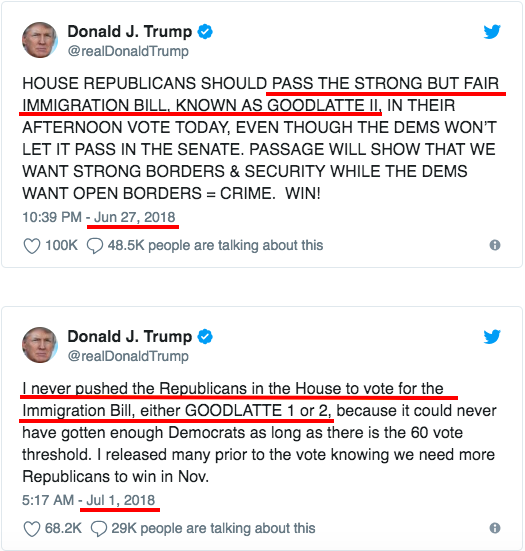
Trump. Perfect example. A rich man with a rich father and nothing going for him personality-wise other than massive confidence and a rock-solid understanding of the power of assertive narrative control. The man can say something, then days later confidently assert that he never said it knowing full well his comments are on the record, and still get half the country saying “Yeah, fair enough, that sounds about right.” He was able to beat down both Bush and Clinton dynasties and take the White House by sheer force of entitlement and self-confidence.

Imagine a world where it wasn’t only powerful plutocrats doing that. Imagine if all truth-tellers began speaking with the same forceful authoritative confidence of the manipulators at the top. The social engineers would have no way of keeping their authorized narratives in control and manufacturing consent for war, ecocide and exploitative oppression, because Chris Cuomo’s voice wouldn’t have any more force behind it than anyone else’s. Whoever controls the narrative controls the world, and putting that control in the hands of the people is vastly better than leaving it in the hands of a few sociopathic elites.

So get confident and take control. Say your truth and say it like you’re right, because you know you are. Your own best guess about what’s happening in the world is infinitely better than what you’re told to believe by mass media manipulators who you know for a fact are paid to deceive you, so say what you reckon is happening in the world with unmitigated, full-throated authority. When it looks like they’re lying to get a new war or more internet censorship or whatever, voice your own best guess about what’s really happening, and don’t be shy about doing whatever it takes to get it heard by as many people as possible. You have as much a right to speak as the sociopathic manipulators do; more even, since your intentions are not self-serving but world-serving.

How To Get Your Dissident Ideas Heard In The New Media Environment People have been asking me for some advice on how to get started doing what I do and building an audience, so here are a few tips I've picked up on this weird and wonderful journey. https://t.co/UsgCGKiF6E

 — @caitoz

If we don’t control the narrative, only omnicidal, ecocidal sociopaths will control the narrative. I repeat: if we don’t control the narrative, only sociopaths will control the narrative. So take control, using every tool in the toolbox. Take their weapons from them, and use them.

Be big. Be bold. Step way outside the rank they have assigned you. Speak way above your station. Do not let anyone shame you into equivocation or meekness, and don’t let them bully you into the usual dull academic recitation of objective data. Fight the propagandists with the same loud, aggressive assertiveness that they are using, and bulldoze over anyone who tries to admonish you for being impolite about it.

It’s life or death at this point, and our choices are fight, flight or freeze. Near as I can tell, freezing means death and we’ve got no other world we can flee to, so we’ve got to fight. If we’re going to fight we should fight, not with one hand tied behind our backs while they manipulate our species into consenting to its own extinction via war or ecocide, but with full force like our lives depend on it. Because they do.

So take control. Grab the narrative by the balls and own it. Because it’s better you than them.

_______________________

The best way to get around the internet censors and make sure you see the stuff I publish is to subscribe to the mailing list for my website, which will get you an email notification for everything I publish. My articles are entirely reader-supported, so if you enjoyed this piece please consider sharing it around, liking me on Facebook, following my antics on Twitter, checking out my podcast, throwing some money into my hat on Patreon or Paypal, or buying my book Woke: A Field Guide for Utopia Preppers.
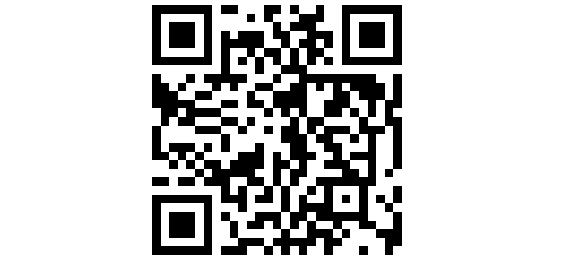
Bitcoin donations:1Ac7PCQXoQoLA9Sh8fhAgiU3PHA2EX5Zm2

stat?event=post.clientViewed&referrerSou

via IFTTT

John McCain: The View from the Middle East

ORIGINAL LINK

Al_Nouri_Mosque-1028x684.jpg

Being on the deadly end of his policies, many Arabs view John McCain in a very different way than the U.S. mass media has presented him.   By As`ad AbuKhalil Special to Consortium News It is not unusual that Arabs and Americans…Read more →

via IFTTT

"It's A Mystery": Jack Dorsey "Frustrating" Twitter With Unpredictable Decrees Over Censorship

ORIGINAL LINK

Twitter CEO Jack Dorsey has been causing some internal strife at the company's San Francisco headquarters with last minute decisions on who gets censored from the social media platform, reports the Wall Street Journalciting people familiar with the matter. 

Just who decides whether a user gets kicked off the site?

To some Twitter users—and even some employees—it is a mystery.

In policing content on the site and punishing bad actors, Twitter relies primarily on its users to report abuses and has a consistent set of policies so that decisions aren’t made by just one person, its executives say.

Yet, in some cases, Mr. Dorsey has weighed in on content decisions at the last minute or after they were made, sometimes resulting in changes and frustrating other executives and employees, according to people familiar with the matter. -WSJ

Key among Dorsey's "frustrating" decisions was his alleged call not to ban Infowars founder Alex Jones - overruling a decision by Twitter employees amid a seemingly coordinated multi-platform shunning of the controversial host. Twitter disputes this account, and says Dorsey wasn't involved in those discussions. 

According to the Journal's sources, Dorsey weighs in "on the most high-profile cases," while the company says he participates in discussions about accounts but isn't the final word. 

Any suggestion that Jack made or overruled any of these decisions is completely and totally false,” Twitter’s chief legal officer, Vijaya Gadde, said in a statement. “Our service can only operate fairly if it’s run through consistent application of our rules, rather than the personal views of any executive, including our CEO.” -WSJ

Dorsey will appear on Wednesday alongside Facebook COO Sheryl Sandberg and, upon last report, a "Google representative," to discuss how the social media giants police "bad actors" (we presume means "deplorables" and "WikiLeaks supporters" among others). The companies will also discuss how "foreign actors can use the social-media platforms to spread misinformation and propaganda." 

Later Wednesday, Dorsey will be questioned alone over whether Twitter is silencing conservatives. Several users have noted that the ubiquitous "QFD" shadowbans seemingly only applied to right-wing voices have recently been lifted - suggesting it was done ahead of Dorsey's appearance. Perhaps an FEC complaint brought by Rep. Matt Gaetz (R-FL) also had something to do with it. 

BREAKING: It appears Twitter has removed the QFD shadow ban from most conservative accounts.

This appears to be a coordinated effort by Twitter to cover up any wrongdoing before testifying in front of Congress. #QFDBanLifted pic.twitter.com/t8B8QEfsoX

— Mike Tokes (@MikeTokes) September 1, 2018

With just days till @Jack testifies in DC many people are reporting their shadowbans have been lifted.

Is Twitter preparing for something or is it a coincidence they decided to remove QFD bans from people?https://t.co/ZRzme4xcLQ

— Tim Pool (@Timcast) September 2, 2018

As the Journal reports, Twitter has taken a different approach than Facebook in policing "hateful" content. While Facebook has hired thousands of people to review content in the last couple of years, Twitter has far less staff and relies mostly on automation - typically only investigating harassment and abuse reported by users. Some have suggested this makes Twitter's platform far easier to game by coordinated groups of political ideologues. 

After a user flags a tweet, the company says a user-services team first decides whether to elevate a complaint to Twitter’s trust and safety team. The company doesn’t disclose how many of its more than 3,500 employees are on each team or the number of contractors it hires to moderate content. On a case-by-case basis, the trust and safety team may ask Ms. Gadde to participate. -WSJ

Over the next few weeks, Twitter will begin showing a picture of a tombstone in place of tweets which have been taken down, as a way to signal that company policy has been violated and the user censored. 

Dorsey, meanwhile, has been promising that his company will do a better job of policing content. "We moved too slow. We are fixing," he told one Twitter user in January. 

@JShahryar yes you did and thank you. We moved too slow. We are fixing. It will take time. And we will be more transparent

— jack (@jack) January 4, 2017

In October of that year, he tweeted: “We decided to take a more aggressive stance in our rules and how we enforce them.”

And then last month: “Truth is we’ve been terrible at explaining our decisions in the past. We’re fixing that.”  -WSJ

Frustrating employees

Several current and former employees tell the Journal that Dorsey's "philosophical, arm's-length leadership styler" has "at times complicated decision-making," as he splits his time between Twitter and Square Inc., the payments company he founded. 

He generally delegates to his subordinates, but at times projects stall because either no one knows what he thinks or he doesn’t pull the trigger, according to people familiar with the matter. For example, Twitter took almost two years to decide how to expand beyond its 140-character limit for tweets, a delay many employees attribute to Mr. Dorsey’s indecision.  -WSJ

Twitter CFO Ned Seagal admitted that decision-making is one of the company's weak points, telling analysts in May that Twitter is "getting better amongst ourselves at both making decisions and executing on them." 

Following the Alex Jones incident, Twitter VP of global communications, Brandon Borrman, along with other executives said that Dorsey wasn't involved in any of the decision-making since there really wasn't one to make. Apparently nobody had flagged Jones's account as inappropriate, despite having "posted hate-speech posts to other social media sites." Borrman says he notified Dorsey in a text message that the company wasn't planning to ban Jones (only to give him a seven-day suspension on August 14 after CNN flagged several tweets to the company. Several Twitter employees saw that has a "half measure" and complained that they hadn't taken more decisive action against Jones. 

When Dorsey reinstated one of the accounts linked to White Nationalist Richard Spencer, several employees were upset about the decision. 

After Twitter reinstated one of Mr. Spencer’s accounts at Mr. Dorsey’s insistence the following month, many employees were upset about the decision, according to a person involved in the decision. At the company’s next all-hands meeting known as “Tea Time,” one employee asked about it. Mr. Dorsey instead turned the question over to Ms. Gadde, that person said.

In an interview, Mr. Spencer says he doesn’t recall being told by Twitter why his accounts had been shut down until Twitter offered to reinstate one of them. He said he found their reasoning “a bit incredible,” but “I went with it because it’s a public space, it’s the way everyone can issue their own little press release.” -WSJ

Perhaps Dorsey will expound on his thought process Wednesday. In the meantime, we'll sadly be deprived of Zuckbot clips since he apparently didn't have the balls to show up. And to think he was considering a run for President...


via IFTTT

Monday, September 3, 2018

Japan has the Lowest Infant Mortality Rate Following Ban on Mandatory Vaccinations

http://vaccineimpact.com/2018/japan-has-the-lowest-infant-mortality-rate-following-ban-on-mandatory-vaccinations/

The American Dream Is Getting Smaller, And The Reason Why Is Painfully Obvious…

ORIGINAL LINK

Over the past decade, an unprecedented stock market boom has created thousands upon thousands of new millionaires, and yet the middle class in America has continued to shrink.  How is that even possible?  At one time the United States had the largest and most vibrant middle class in the history of the planet, but now the gap between the wealthy and the poor is the largest that it has been since the 1920s.  Our economy has been creating lots of new millionaires, but at the exact same time we have seen homelessness spiral out of control in our major cities.  Today, being part of the middle class is like playing a really bizarre game of musical chairs.  Each month when the music stops playing, those of us still in the middle class desperately hope that we are not among the ones that slip out of the middle class and into poverty.  Well over 100 million Americans receive money or benefits from the federal government each month, and that includes approximately 40 percent of all families with children.  We are losing our ability to take care of ourselves, and that has frightening implications for the future of our society.

One of the primary reasons why our system doesn’t work for everyone is because virtually everything has been financialized.  In other words, from the cradle to the grave the entire system has been designed to get you into debt so that the fruits of your labor can be funneled to the top of the pyramid and make somebody else wealthier.  The following comes from an excellent Marketwatch article entitled “The American Dream is getting smaller”

More worrying, perhaps: 33% of those surveyed said they think that dream is disappearing. Why? They have too much debt. “Americans believe financial security is at the core of the American Dream, but it is alarming that so many think it is beyond their reach,” said Mike Fanning, head of MassMutual U.S.

Almost everyone that will read this article will have debt.  In America today, we are trained to go into debt for just about everything.

If you want a college education, you go into debt.

If you want a vehicle, you go into debt.

If you want a home, you go into debt.

If you want that nice new pair of shoes, you don’t have to wait for it.  Just go into more debt.

As a result, most Americans are currently up to their necks in red ink

Some 64% of those surveyed said they have a mortgage, 56% said they had credit-card debt and 26% said they have student-loan debt. Many surveyed said they don’t feel financially secure. More than a quarter said they wish they had better control of their finances.

You would have thought that we would have learned from the very hard lessons that the crisis of 2008 taught us.

But instead, we have been on the greatest debt binge in American history in recent years.  Here is more from the Marketwatch article

It makes sense that debt is on Americans’ minds. Collectively, Americans have more than $1 trillion in credit-card debt, according to the Federal Reserve. They have another $1.5 trillion in student loans, up from $1.1 trillion in 2013. Motor vehicle loans are now topping $1.1 trillion, up from $878.5 billion in 2013. And they have another nearly $15 trillion in mortgage debt outstanding.

That is one huge pile of debt.

We criticize the federal government for running up 21 trillion dollars in debt, and rightly so, but American consumers have been almost as irresponsible on an individual basis.

As long as you are drowning in debt, you will never become wealthy.  In order to build wealth, you have got to spend less than you earn, but most Americans never learn basic fundamentals such as this in our rapidly failing system of public education.

Many Americans long to become financially independent, but they don’t understand that our system is rigged against them.  The entire game is all about keeping consumers on that debt wheel endlessly chasing that piece of proverbial cheese until it is too late.

Getting out of debt is one of the biggest steps that you can take to give yourself more freedom, and hopefully this article will inspire many to do just that.

To end this article today, I would like to share 14 facts about how the middle class in America is shrinking that I shared in a previous article

#1 78 million Americans are participating in the “gig economy” because full-time jobs just don’t pay enough to make ends meet these days.

#2 In 2011, the average home price was 3.56 times the average yearly salary in the United States.  But by the time 2017 was finished, the average home price was 4.73 times the average yearly salary in the United States.

#3 In 1980, the average American worker’s debt was 1.96 times larger than his or her monthly salary.  Today, that number has ballooned to 5.00.

#4 In the United States today, 66 percent of all jobs pay less than 20 dollars an hour.

#5 102 million working age Americans do not have a job right now.  That number is higher than it was at any point during the last recession.

#6 Earnings for low-skill jobs have stayed very flat for the last 40 years.

#7 Americans have been spending more money than they make for 28 months in a row.

#8 In the United States today, the average young adult with student loan debt has a negative net worth.

#9 At this point, the average American household is nearly $140,000 in debt.

#10 Poverty rates in U.S. suburbs “have increased by 50 percent since 1990”.

#11 Almost 51 million U.S. households “can’t afford basics like rent and food”.

#12 The bottom 40 percent of all U.S. households bring home just 11.4 percent of all income.

#13 According to the Federal Reserve, 4 out of 10 Americans do not have enough money to cover an unexpected $400 expense without borrowing the money or selling something they own.

#14 22 percent of all Americans cannot pay all of their bills in a typical month.

This article originally appeared on The Economic Collapse Blog.  About the author: Michael Snyder is a nationally syndicated writer, media personality and political activist. He is publisher of The Most Important News and the author of four books including The Beginning Of The End and Living A Life That Really Matters.

The post The American Dream Is Getting Smaller, And The Reason Why Is Painfully Obvious… appeared first on The Economic Collapse.


via IFTTT

Sunday, September 2, 2018

"Anatomy Of A Fusion Smear": WSJ Exposes Dirty Tactics Of "Steele Dossier" Firm

ORIGINAL LINK

The Wall Street Journal editorial board has thrown one of their former journalists, Glenn Simpson, completely under the bus over his firm's political hit-jobs for hire - including feeding twice-demoted DOJ official Bruce Ohr damaging "misinformationin the Trump-Russia investigation. 

Now we’re learning how this misinformation got around, and the evidence points to Glenn Simpson of Fusion GPS, the outfit that financed the infamous Steele dossier. -WSJ

***

Via the WSJ Editorial Board

Anatomy of a Fusion Smear

Democrats and their media friends made false claims about a lawyer.

Cleta Mitchell is a top campaign-finance lawyer in Washington, D.C. This year she’s also been the target of a political and media smear that reveals some of the nastiness at work in the allegations of collusion between the Trump campaign and Russia.

Cleta Mitchell, a partner at Foley & Lardner in Washington, D.C., Feb. 6, 2014. PHOTO: PABLO MARTINEZ MONSIVAIS/ASSOCIATED PRESS

A partner at Foley & Lardner, Ms. Mitchell was astonished to find herself dragged into the Russia investigation on March 13 when Democrats on the House Intelligence Committee issued an interim report. They wrote that they still wanted to interview “key witnesses,” including Ms. Mitchell, who they claimed was “involved in or may have knowledge of third-party political outreach from the Kremlin to the Trump campaign, including persons linked to the National Rifle Association (NRA).”

Two days later the McClatchy news service published a story with the headline “NRA lawyer expressed concerns about group’s Russia ties, investigators told.” The story cited two anonymous sources claiming Congress was investigating Ms. Mitchell’s worries that the NRA had been “channeling Russia funds into the 2016 elections to help Donald Trump.”

Ms. Mitchell says none of this is true. She hadn’t done legal work for the NRA in at least a decade, had zero contact with it in 2016, and had spoken to no one about its actions. She says she told this to McClatchy, which published the story anyway.

Now we’re learning how this misinformation got around, and the evidence points to Glenn Simpson of Fusion GPS, the outfit that financed the infamous Steele dossier. New documents provided to Congress show that Mr. Simpson, a Fusion co-founder, was feeding information to Justice Department official Bruce Ohr. In an interview with House investigators this week, Mr. Ohr confirmed he had known Mr. Simpson for some time, and passed at least some of his information along to the FBI.

In handwritten notes dated Dec. 10, 2016 that the Department of Justice provided to Congress and were transcribed for us by a source, Mr. Ohr discusses allegations that Mr. Simpson made to him in a conversation. The notes read: “A Russian senator (& mobster) . . . [our ellipsis] may have been involved in funneling Russian money to the NRA to use in the campaign. An NRA lawyer named Cleta Mitchell found out about the money pipeline and was very upset, but the election was over.”

A spokesman for Adam Schiff, ranking Democrat on the House Intelligence Committee, says the “Minority did not speak with Mr. Simpson or Fusion GPS about this,” though he declined to disclose who named Ms. Mitchell. Our sources say they can’t remember Ms. Mitchell coming up in any of the documents collected or witness interviews conducted for the investigation. So how did Mr. Schiff get his tip? Fusion’s media friends? Mr. Ohr? The FBI? Fusion GPS and Mr. Simpson did not answer a request for comment.

Ms. Mitchell says the fallout for her goes beyond inconvenience and a false allegation. Mr. Schiff’s team in May sent her a letter demanding testimony and documents, though no one in Mr. Schiff’s office alerted her before naming her in an official document.

She received similar demands from Senate Intelligence Chairman Richard Burr, who wanted Ms. Mitchell to turn over records related to “the transfer of money, or anything of value” between her and several Russians. After Ms. Mitchell in May responded that she had no information related to any of those Russians and accused the committee of being duped by “Glenn Simpson & Co.,” she heard nothing more.

But social media attacks on her haven’t ended. “That allegation impugns my ethical integrity and professional reputation,” she says, one reason she’s calling for Mr. Simpson to be prosecuted for lying to a federal official.

The Russian collusion accusations ginned up by Fusion at the behest of a law firm working for the Clinton campaign haven’t been corroborated despite two years of investigations. But no one should forget the smears that they and their media mouthpieces peddled along the way.


via IFTTT