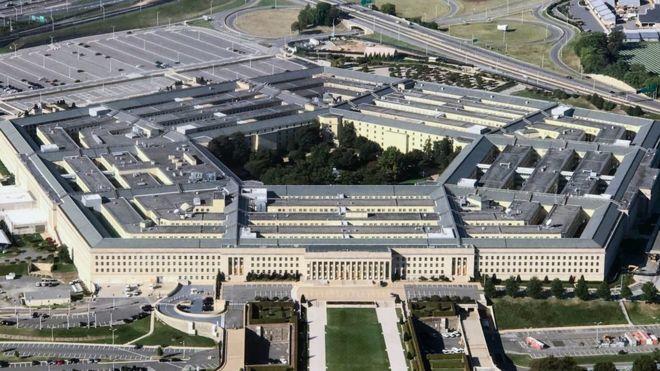
Wednesday, December 11, 2019

The Kosher Grocery Store Shooting and the Murder of Liberty

ORIGINAL LINK

While many people want to know the motive behind a shootout at a Jersey City kosher grocery store, The New York Times conflated the fatal incident with a larger antisemitism narrative. We might not know the names or be allowed to view the social media accounts of the alleged shooters, but we know they hated Jews, according to a narrative-peddling corporate media. 

An assailant involved in a prolonged firefight in Jersey City, N.J., that left six people dead, including one police officer, had published anti-Semitic and anti-police posts online and investigators believe the attack was motivated by those sentiments, a law enforcement official familiar with the case said on Wednesday.

This is how it now works. If you’re an antisemite involved in murder, you leave behind a “rambling manifesto,” either posted on social media or left on the backseat of your car. 

It looks like the Times is on the inside track, same as they were when Judith Miller peddled neocon lies about Saddam Hussein. 

Within hours, both the media and government were telling us the attack targeted Jews.  Jersey City Mayor Steven Fulop, who is Jewish, said the suspects specifically targeted the grocery store. New York Mayor Bill de Blasio tweeted:

This tragically confirms that a growing pattern of violent anti-Semitism has now turned into a crisis for our nation. And now this threat has reached the doorstep of New York City.

— Mayor Bill de Blasio (@NYCMayor) December 11, 2019

Statements issued by the state need a theatrical element in order to send the message to a largely indifferent public, so de Blasio announced the nation’s largest city is now locked in a “state of high alert.”

Although there is no credible or specific threat directed against New York City, I have directed the NYPD to assume a state of high alert.

Tonight, NYPD assets are being redeployed to protect key locations in the Jewish community. Tomorrow, we will announce additional measures.

— Mayor Bill de Blasio (@NYCMayor) December 11, 2019

On Wednesday, the shooters were supposedly identified.

BREAKING: Gunmen who stormed kosher store in Jersey City identified as David Anderson and Francine Graham. Anderson was a follower of the Black Hebrew Israelite movement. There were postings connected to Anderson's social page with anti-police and anti-Jewish writings – WNBC

— Breaking911 (@Breaking911) December 11, 2019

David Anderson is supposedly a member of the “Black Hebrew Israelite” movement.

The Black Jew aspect of this story is an interesting side note. Anthropologist James E. Landing, in his book Black Judaism: Story of an American Movement, writes that Jews and Christians reject the assertion Blacks were the original Hebrew Jews. 

Black Judaism is … a form of institutionalized (congregational) religious expression in which black persons identify themselves as Jews, Israelites, or Hebrews … in a manner that seems unacceptable to the “whites” of the world’s Jewish community, primarily because Jews take issue with the various justifications set forth by Black Jews in establishing this identity. Thus “Black Judaism,” as defined here, stands distinctly apart from “black Judaism,” or that Judaic expression found among black persons that would be acceptable to the world’s Jewish community, such as conversion or birth from a recognized Jewish mother. “Black Judaism” has been a social movement; “black Judaism” has been an isolated social phenomenon.

This “extremist fringe of the Hebrew Israelite movement” was highlighted by the Southern Poverty Law Center as racist and supremacist. “Around the country, thousands of men and women have joined black supremacist groups on the extremist fringe of the Hebrew Israelite movement, a black nationalist theology that dates back to the 19th century,” the SPLC wrote more than a decade ago. 

Its doctrine asserts that African Americans are God’s true chosen people because they, not the people known to the world today as Jews, are the real descendants of the Hebrews of the Bible. Although most Hebrew Israelites are neither explicitly racist nor anti-Semitic and do not advocate violence, there is a rising extremist sector within the Hebrew Israelite movement whose adherents believe that Jews are devilish impostors and who openly condemn whites as evil personified, deserving only death or slavery.

The SPLC characterizes the movement as “the reversed-color mirror image of the Christian Identity theology embraced by many white supremacists, which holds that mainstream Jews are the descendants of Satan and that white people are the chosen ones, divinely endowed by God with superior status over ‘mud people,’ believers’ term for non-white individuals.”

African Hebrew Israelites emigrated to Israel in the 1960s where they endure racism to this day, not only by Jewish citizens but also the “apartheid” government (if Israel were truly an apartheid nation, it would establish Bantustans for Palestinians instead of engaging in slow-motion ethnic cleansing and the wholesale theft of Palestinian land).  

Black Hebrews, according to Haaretz, are “in appalling fashion… still viewed by some Israelis as outsiders to be scorned. They are regularly referred to as kushim—a racial slur for black people—on the street, in the Hebrew press, and even by government representatives who clearly should know better.”

Last November, the FBI, with the avid assistance of the Anti-Defamation League, reported an increase in “hate crimes” against Jews following the shooting at the Tree of Life synagogue in Pittsburgh. CBS News reported: 

Anti-Semitic crime spiked in New York City, home to the largest Jewish population outside Israel, in the weeks leading up to the Pittsburgh massacre, CBS News reported last week. There were 31 anti-Semitic hate crimes reported in the first 28 days of October in the city, compared to 9 for the same period in 2017, a New York Police Department spokesman said. The Anti-Defamation League also released a report that found social media harassment targeting Jewish Americans increased around the 2018 midterm elections and two-thirds of those online attacks were from people, not bots.

Notice how the corporate media conflates physical violence against Jews with politically incorrect thought crime posted on social media. 

The FBI says it will launch training for law enforcement officers on how to identify hate crimes and report the data to the federal government. The Department of Justice also launched a new hate crimes web site which has information for law enforcement about reporting hate incidents.

In August, the FBI said it will go after “white supremacists” and others involved in the dissemination of “conspiracy theories” on social media and the internet. The FBI states “individuals’ belief in hoaxes and conspiracy theories led to or could have led to violence. They included the Tree of Life synagogue shooting, the Pizzagate conspiracy, and the QAnon conspiracy,” Business Insider summarizes. 

In the bizarro world of staged and exploitable political events and a 24/7 stream of propaganda, timing is everything. Thus, President Trump will today sign an executive order “to interpret Judaism as a nationality and not just a religion, a move that the Trump administration believes will fight what they perceive as anti-Semitism on college campuses, a White House official said,” according to CNN.

It’s an order that would allow Trump to take further steps to combat anti-Israel sentiments and divestment movements on college campuses by requiring colleges and universities to treat those movements as discriminatory in order to keep their funding.

Trump will use the “federal Civil Rights Act of 1964 that requires educational institutions receiving federal funding to not discriminate based on national origin, according to senior administration officials.” 

Trump and his coterie of Israel-first neocons will further erode a seriously eroded First Amendment. They will force universities to single out and punish student Boycott, Divestment and Sanctions (BDS) activists, thus violating a key principle of the Bill of Rights (now pretty much reduced to a doormat). 

In Koontz v. Watson, the Supreme Court ruled that the First Amendment protects the right to participate in a boycott. “Broadly speaking, the court’s decision in this case is likelier to be cheered by those on the left, where most of the energy behind boycotts of Israel emanate, and to be jeered by the Republicans and conservative Democrats who’ve lately pressed ahead with multiple efforts to legislate against economic boycotts of Israel,” explains Conor Friedersdorf, writing for The Atlantic. 

The Jersey City shooting will claim its place in the expanding antisemitic threat narrative. BDS poses direct economic harm to Israel, so it must be equated with hatred, antisemitism, the Holocaust, and marching Nazis (and now Black Hebrews). 

Likewise any principled criticism of Israel, of its ethnic cleansing, political malfeasance, assassinations, illegal bombing raids against neighbors, the murder of medics and journalists, and its ongoing and largely successful effort to outlaw critics and undermine their natural right to speak their minds. 

creatdive commons by-sa_RGB-350x122


via IFTTT
InoreaderURL: SECONDARY LINK
The Most Significant Afghanistan Papers Revelation Is How Difficult They Were To Make Public


The Washington Post has published clear, undeniable evidence that US government officials have been lying to the public about the war in Afghanistan, a shocking revelation for anyone who has done no research whatsoever into the history of US interventionism.

ORIGINAL LINK

How China Exports Censorship into Corporate America

ORIGINAL LINK

I’m loving The Hated One – that’s the name of this YouTuber who makes these highly-intelligent videos with his unmistakably Slavic voiceover.

In this video, he shows how Chinese authoritarianism poses an existential threat to Western values via the large corporations that sacrifice those values in order to chase profits. He says, “If China’s power remains unchallenged, it will unrecognizably transform the future of human rights…

“China’s biggest export is censorship and it’s changing your everyday life. The way you enjoy video games, wear clothing or watch sports events is being shaped by the influence of the Chinese government.

“The Communist Party is able to use economic blackmail to coerce US companies to act as their political proxies. The stories of the NBA and [the video game company] Activision Blizzard are not anomalies, they are a window into the future, where China dictates corporate policies.”

The enormity of the Chinese population is helping to drive this shift. The entire Asia-Pacific region, which also includes the big gaming economies of Japan and South Korea makes up only 12% of Activision Blizzard’s total revenue, with the majority of its revenue still coming from Western gamers, primarily in North America, which currently makes up 55% of the market. However, the population of Chinese gamers is growing rapidly and is forecasted to reach 354 million by 2023, which is larger than the entire population of the United States.

China has by far the single biggest e-commerce market, with almost $2 trillion in sales; nearly 4 times greater than the United States’ and China has the world’s largest Internet population of over 700 million users.

“Companies that can’t resist Chinese revenue streams can choose to censor themselves or be denied access to China, altogether. This is a matter of pure corporate choice. Nobody’s forcing companies into China…

“Many don’t realize that it’s not just their integrity they are trading for profits. Placating Chinese censors legitimizes the country’s authoritarian regime that holds one million Muslims in indoctrination camps and subjects its population to atrocious surveillance and human rights abuses.

“Chinese censorship doesn’t just stay confined within the Chinese borders. As more and more corporations chase profits in Chinese markets, they find themselves blackmailed into complying with Chinese rules even outside of China’s jurisdiction. The latest NBA controversy is the loudest example of this reality.”

He recounts how a single tweet last October by Houston Rockets General Manager, Daryl Morey on his personal account in support of the Hong Kong anti-government protests was enough to cause the Chinese state-run broadcaster, CCTV to cancel all broadcasts of NBA pre-season games. CCTV issued a statement that freedom of speech doesn’t include “challenging a country’s national sovereignty.”

That tweet could result in the loss of 500 million viewers and it could cost the NBA $4 billion. “But it doesn’t end there,” he says.

“Even though the Houston Rockets and the NBA denounced the tweet, citing aims to bridge cultural divides, the Chinese Basketball Association suspended cooperation with Houston Rockets. The team’s merchandise was ordered to be pulled from several Nike stores in China and searches for all NBA sneakers on Alibaba and JV.com were removed from the results.

“This again put NBA into a lose-lose situation, as backlash hit back from the United States for pressing ahead with an exhibition game between Lakers and Brooklyn Nets in Shanghai.

The Chinese government is trying to suppress any speech that challenges the official narrative. Australian public-ethics professor Clive Hamilton whose publisher scrapped his upcoming book about China’s soft power out of concern about possible reprisals from Beijing says that what Western corporations are facing amounts to “economic blackmail.”

China is forcing foreign companies to accept their claims on territories in international disputes. Zara, Marriott and Delta Airlines had to update their websites with the “correct” version of the Chinese map that didn’t list Hong Kong and Taiwan as separate countries.

Apple, the iPhone maker removed the Taiwanese flag emoji from devices sold in Hong Kong and Macau and removed the HKmap.live app, used by Hong Kong citizens to stay safe during violent protests because Chinese state media claimed that protesters were using the app to attack the police.

He says, “In the United States, Apple portrays itself is the only company in Silicon Valley that values the privacy of their customers but in China, Apple banned all VPN apps from its App Store that could help Chinese users bypass the Great Firewall and avoid the potential abuse of their human rights by Chinese authorities.”

Alexandra Bruce

Contributed by Alexandra Bruce

Contact


via IFTTT
InoreaderURL: SECONDARY LINK

Australia’s PISA Shock

ORIGINAL LINK

Last week, the latest results from the Programme for International Student Assessment (PISA) were released. These were based on tests taken in 2018 in reading, mathematics and science by a sample of students from each of the relatively wealthy OECD member countries as well as a range of other partner countries. Importantly, PISA researchers also surveyed participants on everything from their social media use to classroom climate.

The results have rightly produced a great deal of comment in Australia because they are further evidence of the country’s long-term decline in education. Mathematics and science have both continued their relentless downward drift and although reading held steady since the last round of testing in 2015, it has slid a long way since the first round in 2000.

In the context of Australia’s PISA results, it is tempting to look to the results from other countries for ideas on how the country can get out of this rut. Over the last decade or so, the region most cited by educationalists as an example to follow is the small Northern European nation of Finland. This time, the focus is shifting to its even smaller neighbour, Estonia.

Finland was the darling of the early rounds of PISA. Plane loads of bureaucrats and educationalists arrived to have a good look at its magic mix of herbs and spices. Unfortunately, the spectacles they were wearing had leaden ideological lenses and they only saw what they wanted to see: Finland does not test students. Finland has no academic selection. Schools are free to teach how and what they like. All of these propositions do not bear close scrutiny.

Using a weird form of policy time travel, commentators have even pointed to newly introduced initiatives such as phenomenon-based learning—similar to the project-based learning that’s fashionable in Australia—and implied that these initiatives are somehow associated with Finland’s past success. It is important to note that PISA is an assessment of 15-year-olds, i.e. the products of around 10 years of schooling. If we want to know the causes of Finland’s phenomenal success in 2006, we therefore need to look at what they were doing before 2000.

Taking a long view is particularly important in the case of Finland because its results have significantly declined since 2006. That means that those noughties junkets inevitably gathered information about some practices that are associated with this decline.

Yet despite Finland’s drop in performance, educationalists have stayed loyal, perhaps because it offers a more ideologically palatable vision than high performers from East Asia with their explicit teaching, memorisation and textbooks. And yet, the latest Finnish slide in all three PISA subjects has prompted a certain amount of repositioning. Estonia is now being hailed as the example to follow and the myth-making has begun. Estonia has scored highly since it first entered PISA, but nobody really knows why, least of all the Estonians. And so a blank canvas awaits an astute educationalist on the make. Is it because Estonians have a ‘growth mindset,’ i.e. a belief that success is more the result of hard work than talent? Probably not, given that other nations have similar growth mindset scores in the latest PISA tests, despite performing far worse. However, such caveats have never dampened PISA speculation fever in the past.

And isn’t this all a little absurd? There are almost as many people living in Sydney as there are in the whole of Finland. And education systems vary on many other factors relevant to educational performance that aren’t under the control of education policy-makers. A non-exhaustive list would include relative wealth, the cultural value placed on education, the economic returns to being well educated, the prevalence of home tutoring, the homogeneity of the population, and the urban versus rural population mix. Get all these factors pointing in the right direction and you can ace PISA with relatively mediocre schools. This is why it is worth looking at trends within systems rather than relative position in an international league table.

Poland is on a roughly upward trajectory and so it might be worth looking at their recent policy changes. England is also improving in mathematics and there are tentative signs of progress in reading, even if science scores seems to have declined. This is particularly interesting because the U.K. is involved in a natural experiment with its four education systems (one for each of the constituent nations) embarking on very different reforms.

Scotland and Wales have both listened to progressive educationalists and developed high-level and aspirational policies focused on interdisciplinary learning and so-called 21st-century skills. Scotland is a little further down this rabbit hole than Wales and the signs from PISA are not encouraging, particularly for a country that has traditionally prided itself on the superiority of its education system over other parts of the U.K. Its science scores have slid further than in England and its maths scores have slipped while England’s have risen. The good news is an improvement in reading on its test scores in 2012 and 2015, although they are only back to where they were in 2009.

England’s approach has been quite different to Scotland’s and has mixed school autonomy and accountability policies with a focus on curriculum content, while importing some ideas about maths teaching from East Asia. England has also reformed the teaching of early reading by establishing a phonics screening check—knowledge of the relationships between letters and sounds is a critical component of learning to read. However, it’s probably too early for the effects of these approaches to show up yet in the PISA tests.

So What Should Australia Do?

One area where Australia stands out from the rest of the OECD is, unfortunately, the climate of its schools. In the PISA survey, Australian students reported very high levels of bullying and classroom disruption. Why this is a particular problem in Australia should be a cause of national introspection, but it is unlikely to move the educational establishment which suffers from an ideological blockage in this area. Australian experts tend to reject any focus on behaviour as a kind of wrongthink. What sort of monster wants students to be managed and controlled? The answer, of course, is the other kids in the class who are being bullied or having their education disrupted.

If a teacher cannot teach due to a lack of classroom order then it doesn’t really matter what or how they are trying to teach. So this is the first issue Australia must address.

Despite being only a few years old, England’s reforms at least have the advantage of being consistent with what we know from other education research and from cognitive science. Curriculum content is extremely important. We understand new concepts by relating them to concepts we already know. Knowledge is what we think with. Having sufficient knowledge in our long-term memories is a workaround for the fact that we have a highly constrained working memory—the thoughts we are conscious of at any given time. By focusing on exactly what we want students to learn and in what sequence, we give them a superpower to understand new knowledge when they read it, to solve problems, and to think critically.

Unfortunately, education experts tend to talk in abstract terms, as if qualities such as critical thinking are generic, transferable skills that can be developed in the same way we might exercise a muscle. This is not the case. This head-in-the-clouds approach is as much a systemic as ideological issue. Unlike other professions, education experts are often completely removed from practice. Abstract and vague proposals will continue to be a problem as long as educationalists continue to have no idea how to actually teach reading to a five-year-old or the particle theory of matter to a 12-year-old.

Reforming Australia’s national curriculum to make it more knowledge-rich, as has happened in England, would be a step in the right direction. However, rewriting a document on a government server is not enough. What matters is the enacted curriculum. At present, teachers are expected to design all of their own lessons and source all of their own materials. It is as if we insisted that surgeons, as a sign of their professionalism, should design all of their own surgical procedures. Instead, we need to put highly quality, curriculum-aligned teaching resources into teachers’ hands.

Only once we have solved the problem of what to teach does the problem of how to teach become relevant. This is an easy question to resolve. We have known since at least the 1960s that the most effective teachers take an explicit approach to teaching academic subjects. Concepts are fully explained in a fairly didactic way and lessons are highly interactive to retain children’s attention and to allow the teacher to address any misconceptions quickly. Unfortunately, despite being favoured by the high-performing East Asian education systems, such teaching is deeply unfashionable in Australia. Anti-authoritarian social constructivist ideology favours approaches where students have to figure things out for themselves, perhaps as part of a group. This is why inquiry and project-based learning are the current buzzwords.

Although it is clear what needs to be done to fix things, the Australian government is running in a different direction. Instead of curriculum reform, the ‘Gonski 2.0’ proposals that education minister Dan Tehan is apparently doubling-down on are an odd mix of vague and abstract claims about critical thinking and an approach based on individual ‘learning progressions’ that sounds similar to one abandoned in England nearly a decade ago. The idea seems plausible—map out what progression looks like in different skills and then teach each child according to what stage they’ve reached in that journey. Unfortunately, such an approach does not take account of the fact that skills like writing are highly dependent on context and cannot be summarised neatly on some kind of scale. It is easier, for instance, for most students to write “two or more elaborated arguments” if they are writing about abolishing school uniform rather than, say, the impact of import tariffs on the Australian domestic market. Rubrics and learning progressions therefore incentivize teachers to reward children for demonstrating their skills in one of these simple contexts, rather than to encourage the children to grapple with more complex, challenging ideas. In addition, it does not address the practical challenge of teaching students individually in classrooms of 25+ and one teacher. Perhaps most fundamentally of all, it entrenches inequity. Instead of laying down a standard, teaching to that standard and then intervening when students struggle to reach it, teachers are expected to reconcile themselves to students simply being at different points on the progression.

To be fair, can we really expect politicians to solve these problems? England has been unusual in that it has had a series of politicians with an uncharacteristic interest in the detail of education reform. Waiting for an Australian equivalent to appear is not a strategy.

That’s why I will keep talking to other teachers. The most likely way out of this mess is from the ground up. If the government wants to help, it should focus on ways to release our potential.


Greg Ashman is a teacher and a Ph.D. student at the University of New South Wales. The views expressed in this article are his own and do not represent any institution. You can follow him on Twitter @greg_ashman

The post Australia’s PISA Shock appeared first on Quillette.


via IFTTT
InoreaderURL: SECONDARY LINK

Tuesday, December 10, 2019

John Solomon Slams Adam Schiff's "Surveillance State" Abuse: "Chilling Effect On Press Freedom"


The Federal Bureau of Investigation’s Domestic Investigations and Operations Guide, the bible for agents, has long recognized that journalists, the clergy and lawyers deserve special protections because of the constitutional implications of investigating their work.

ORIGINAL LINK

He Protected the Swamp – Just as We Told You He Would

ORIGINAL LINK

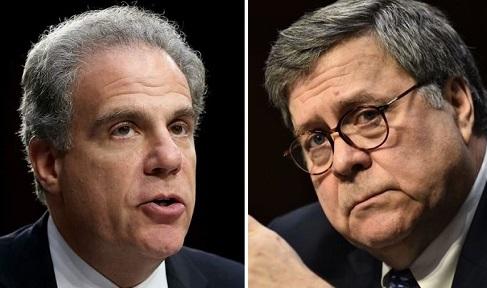
The long-awaited report from DOJ Inspector General Michael Horowitz was released yesterday, in which the Obama appointee protected the swamp. The OIG’s release was quickly followed by contrary statements from the two top law enforcement officers in charge of investigating the ongoing coup d’état against the President.

US Attorney John Durham issued a release strongly disagreeing with Horowitz’ conclusion that the FBI’s Crossfire Hurricane investigation was not politically-motivated. Unlike Horowitz, Durham has the power to bring the coup plotters to justice, including the power to indict and impanel a grand jury and it’s expected he will do so within the next few months.

US Attorney General Bill Barr also criticized the FBI, stating:

“The Inspector General’s report now makes clear that the FBI launched an intrusive investigation of a US presidential campaign on the thinnest of suspicions that, in my view, were insufficient to justify the steps taken…It is also clear that, from its inception, the evidence produced by the investigation was consistently exculpatory.”

In short, 1) the FBI abused the FISA process by relying on anti-Trump information from sources they knew were dubious, i.e., the Hillary Clinton campaign-financed “Pee-Pee Dossier”; 2) the FBI presented false information and withheld exculpatory evidence from the court.

For his part, FBI Director Christopher Wray issued a statement, saying “We will review the performance and conduct of certain FBI employees who were referenced in the Report’s recommendations…[and] will take appropriate disciplinary action where warranted.” Additionally, Wray has “ordered more than 40 corrective steps to address the Report’s recommendations.”

Here’s where it gets crazy. Horowitz’ report contained some very bizarre font artifacts whose significance is not yet fully understood. The term “Comey” does not exist in the OIG Report so technically, James Comey is not named in the report. However, the term “Corney”, clearly referring to the disgraced former FBI Director appears 140+ times!

The same phenomenon appears in the official May 17, 2017 DOJ document memorializing Acting Attorney General Rod Rosenstein’s appointment of Special Counsel Robert Mueller to investigate alleged Trump-Russia collusion.

In this 2017 document, as well, the font has been altered and what appears to be “Comey” is actually “Corney”. Readers can confirm this for themselves by copying and pasting his name from these two DOJ documents into a blank document in their own computers. Very, very strange!

Another example of altered fonts appears in the footer of the final page 476 of yesterday’s OIG Report. It says, “To report allegations of waste, fraud, abuse, or misconduct regarding DOJ programs, employees, contractors, grants, or contracts please visit or call the DOJ OIG Hotline at oig.justice.gov/hotline or (800) 869-4499.”

When you copy and paste “oig.justice.gov/hotline” into a new document, it reads: “oiq.justice.qov/hotline”. The Gs are converted to Qs! Very strange, indeed! Try it yourself!

In the meantime, Adam Schiff was a no-show yesterday at the impeachment inquiry that he’d convened.

In this video, Douglas and Tyla Gabriel and Michael McKibben weigh in on the OIG Report, which Douglas equates to a reiteration of the useless, swampy Mueller Report.

Alexandra Bruce

Contributed by Alexandra Bruce

Contact


via IFTTT
InoreaderURL: SECONDARY LINK

Trump And Key Republicans Are Boiling With Anger Over The Revelations About The Deep State In The IG Report

ORIGINAL LINK

Big-Brother-Surveillance-Public-Domain.j

The IG report was finally released on Monday, and boy was it a doozy. It detailed literally dozens of very serious errors committed by the FBI during their investigation of the Trump campaign, and Republican leaders are absolutely outraged about what this report has revealed. Apologists for the deep state are attempting to characterize these […]

The post Trump And Key Republicans Are Boiling With Anger Over The Revelations About The Deep State In The IG Report appeared first on The Most Important News.


via IFTTT
InoreaderURL: SECONDARY LINK
Monday, December 9, 2019

'A Clear Abuse': Barr, Durham Object To IG FISA Probe Findings In Stunning Statements

ORIGINAL LINK
'A Clear Abuse': Barr, Durham Object To IG FISA Probe Findings In Stunning Statements

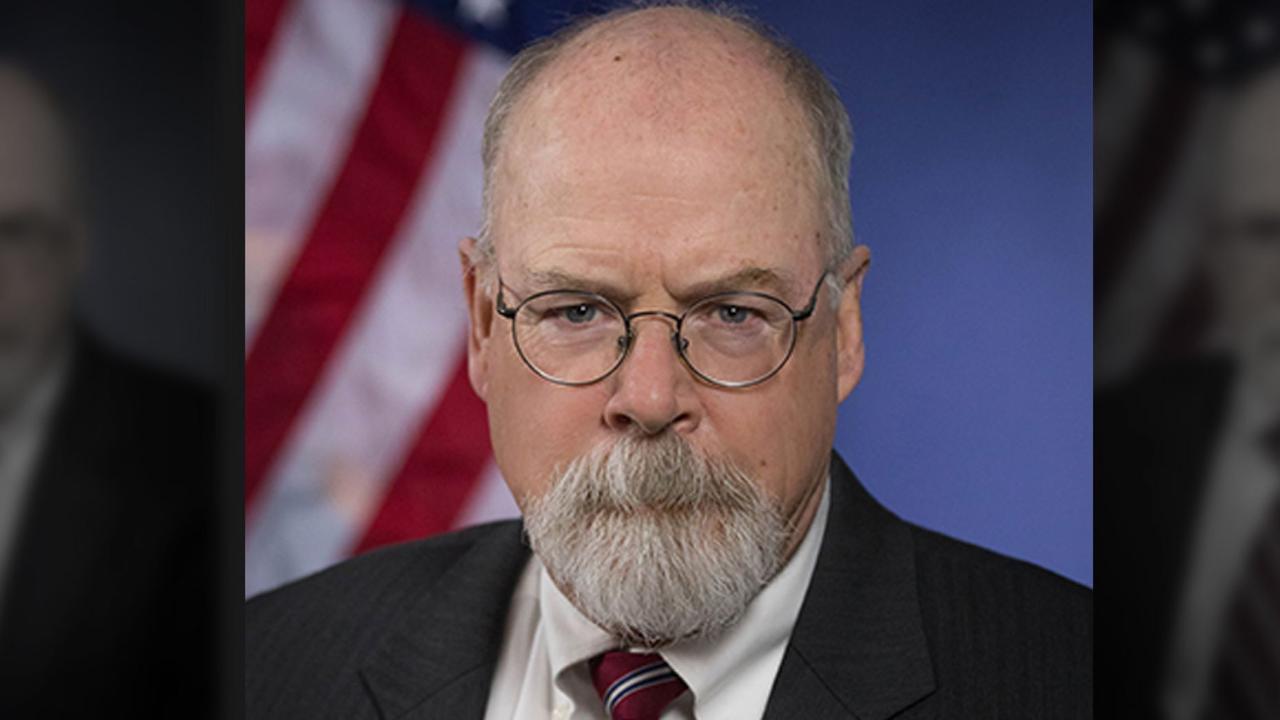
Following the highly anticipated release of the DOJ Inspector General's so-called FISA report, Attorney General Bill Barr and his hand-picked US Attorney, John Durham, have issued statements disagreeing with the IG's conclusions.

The report found that while the FBI made serious errors investigating the Trump campaign, and relied heavily on the discredited Steele dossier, that the agency was ultimately justified in launching a counterintelligence operation, dubbed Crossfire Hurricane.

"The Inspector General’s report now makes clear that the FBI launched an intrusive investigation of a U.S. presidential campaign on the thinnest of suspicions that, in my view, were insufficient to justify the steps taken," Barr said in a statement released shortly after the FISA report.

"It is also clear that, from its inception, the evidence produced by the investigation was consistently exculpatory," he continued. "Nevertheless, the investigation and surveillance was pushed forward for the duration of the campaign and deep into President Trump’s administration."

Barr added that the FISA report reveals a "clear abuse" of the surveillance court.

"In the rush to obtain and maintain FISA surveillance of Trump campaign associates, FBI officials misled the FISA court, omitted critical exculpatory facts from their filings, and suppressed or ignored information negating the reliability of their principal source."

"The Inspector General found the explanations given for these actions unsatisfactory. While most of the misconduct identified by the Inspector General was committed in 2016 and 2017 by a small group of now-former FBI officials, the malfeasance and misfeasance detailed in the Inspector General’s report reflects a clear abuse of the FISA process."

Statement from U.S. Attorney General Bill Barr:

"The Inspector General’s report now makes clear that the FBI launched an intrusive investigation of a U.S. presidential campaign on the thinnest of suspicions that, in my view, were insufficient to justify the steps taken... pic.twitter.com/xVNfOJxzCP

— Trump War Room (Text TRUMP to 88022) (@TrumpWarRoom) December 9, 2019

Durham, meanwhile, said "Based on the evidence collected to date, and while our investigation is ongoing, last month we advised the Inspector General that we do not agree with some of the report’s conclusions as to predication and how the FBI case was opened."

"I have the utmost respect for the mission of the Office of Inspector General and the comprehensive work that went into the report prepared by Mr. Horowitz and his staff," Durham also said. "However, our investigation is not limited to developing information from within component parts of the Justice Department. Our investigation has included developing information from other persons and entities, both in the U.S. and outside of the U.S."

Full Durham statement:

"I have the utmost respect for the mission of the Office of Inspector General and the comprehensive work that went into the report prepared by Mr. Horowitz and his staff.  However, our investigation is not limited to developing information from within component parts of the Justice Department.  Our investigation has included developing information from other persons and entities, both in the U.S. and outside of the U.S.  Based on the evidence collected to date, and while our investigation is ongoing, last month we advised the Inspector General that we do not agree with some of the report’s conclusions as to predication and how the FBI case was opened."

Tyler Durden Mon, 12/09/2019 - 18:00
Tags


via IFTTT
InoreaderURL: SECONDARY LINK
"Undeniable Evidence": Explosive Classified Docs Reveal Afghan War Mass Deception


In what's already being hailed as a defining and explosive "Pentagon papers" moment, a cache of previously classified documents obtained by The Washington Post show top Pentagon leaders continuously lied to the public about the "progress" of the now eighteen-year long Afghan war.

ORIGINAL LINK

Sunday, December 8, 2019

US government drops case against Max Blumenthal after jailing journalist on false charges


As the mysterious disappearance of Secret Service records and complete absence of evidence supporting its case came to light, the US government dropped its bogus charges against journalist Max Blumenthal.

ORIGINAL LINK