Sunday, August 23, 2020

‘Science Fictions’ Review: Begone, Science Swindlers

ORIGINAL LINK

A review of Science Fictions: How Fraud, Bias, Negligence, and Hype Undermine the Search for Truth by Stuart Ritchie, Bodley Head, 353 pages (July, 2020).

As I sat down to review Stuart Ritchie’s new book, Science Fictions, I was interrupted immediately by mournful texts from a young man who was being hosed for his write-up of the results from a study. He’d asked me to take a look at it. A charity wanted to improve literacy in poor children. Children’s literacy had been measured before and after a “treatment” or intervention. There was no “control group” in the design. No similar sample of children who trundled along without the intervention, nor an intervention designed to match the treatment in all but the supposed crucial component. Had literacy increased at the second assessment because of the treatment or because the children were a year older? Your guess is as good as mine. The young man fed this problem back to his superiors and was called, peremptorily, to an online meeting. The charity had wanted a glowing report and were unhappy they didn’t get it. The young man said he felt like his bones were filling up with lead. I’ll send him a copy of Stuart’s book. I hope his bosses at the charity will read it too. After all, they are spending (wasting) tens of thousands of dollars on a bad study.

Science Fictions bites down hard on four key problems that beset the institution of science. It begins with the spooky story of a paper, which appeared in a top-flight psychology journal, showing that the fundamental laws of physics had been broken by undergraduates; they had reversed time.

In one experiment, in this now infamous paper, students were shown words on a screen, one at a time. Then they were asked to type as many as they could recall. Next 20 randomly chosen words were shown to the students from the original list. The surprising finding was that the students were more likely to remember the 20 words they were about to see for a second time, even though they had only psychic intuition to guide them. Astonishing! And, yes, it was parapsychological nonsense, but the story warms us up for Ritchie’s key themes.

Chapters begin with tales of various kinds of malfeasance, followed by cogent analyses of what went wrong and why. Sometimes the fault lies in an individual rogue player; after all villains exist in art, commerce, finance, and writing, so why shouldn’t some scoundrels haunt the halls of science and medicine? Sometimes it’s a matter of over-egging, or a hapless mistake. When the research question concerns the placing of Whalleyanidae in the Lepidoptera Tree of Life, mistakes may be forgiven and the dear Whalleyanidae (a genus of moth endemic to Madagascar) will find its correct taxonomic home eventually. But when the research question concerns medicine or a surgical protocol (as in the shameful tale of Dr Paolo Macchiarini, with his fraudulent plastic tracheas), bad practice leads to lost lives.

Given the constellation of demanding behaviours that get you to the start line as a professional scientist (such as protracted, detailed work which is regularly scrutinised by others), one might expect that fraud-inclined people would find the going easier elsewhere. Yet microbiologist Elisabeth Bik, who conducted a painstaking search through papers in 40 biology journals, found evidence of cheating in many images of Western blots (those blurry blobs in columns produced by proteins in gel). She found many published images that had been manipulated in something like Photoshop. When you look at some of her examples, the duplication seems obvious. Why wasn’t it picked up by reviewers? It was probably partly due to our biases: We expect honesty. Intentional data distortion is such a weird thing to do, it simply wouldn’t occur to most reviewers to check for it. Fraud harms trust in science; how common is it? The largest study to date, using data from seven pooled self-report surveys found that 1.97 percent of scientists admitted to faking their data at least once. Low prevalence, but reason for greater vigilance, better training, and maintenance of scepticism—especially when the laws of physics are overturned by undergraduates.

Science Fictions contains elaborations of p-values, p-hacking, statistical significance, and the importance of including null results. It is written in such everyday language it could lead any Ariadne out of a dark jargon maze and into the daylight. The section in the “Bias” chapter explaining why we’d expect to see a funnel-shaped set of data points in a meta-analysis, and what to worry about when we don’t, is handled with great clarity. The appendix on “How to read a scientific paper” is a superb crib sheet for students, journalists, or anyone who wants to paddle around Google Scholar in their own canoe. References are expanded, informative, and worth their own read; there’s a lovely quote from Ronald Fisher: “[T]o consult the statistician after an experiment is finished is often merely to ask him to conduct a post mortem examination. He can perhaps say what the experiment died of.” Short headings at the top of each page in the Notes section would make it easier to navigate between main text and references, but if you own the book you can fix that with a pencil.

I have some criticisms. I found a hint of hype in this anti-hype book. The journal that published the parapsychological paper is shamed for rejecting Ritchie’s own study (which contradicted the paranormal findings), but his study included many fewer subjects (50 in each of three experiments) whereas the original offending article looked stronger with 1,000 subjects and nine experiments. A study with 3,289 subjects showing the laws of physics are intact (phew!) was published by Galak et al only a year after the super-sensory paper, and in the offending journal. A year is quick for science publishing.

The “replication crisis” could just as well be called the Replication Revolution. Stale old blunders are being called out, and the record corrected. Figuring out what went wrong and how to do better is a sign of health and vigour in science practice.

This is a golden age for learning how to do science well. It has never before been easier to obtain free help from qualified experts. Eager, informed, scientists on Twitter help strangers with readings, methods, and statistical approaches. The open science movement, the reproducibility project, and registered report repositories all foster greater transparency and better research.

In the chapter on “Negligence,” the hunt for candidate genes (that may influence any trait: height, extraversion, chocolate preference) is presented as a sorry tale of failed science. Is that fair? Seems like business as usual: formerly we knew less, now we know more. Most people who worked on candidate genes jumped on new techniques, with their greater statistical power, as soon as they nosed out of the gate. Genetics is a fast-moving field; it’s a sign of success, not failure, that we make horse-eyes at work done 10 years ago. Isn’t this how science has always worked historically? It wasn’t a failure that physicist Albert Michelson spent years fiddling with an interferometer designed to demonstrate the existence of the luminiferous aether, it was a win when he concluded there was no aether. He went on to measure the speed of light with spectacular accuracy; Nobel Prize deserved and given.

Have the most important crimes against science been identified in Science Fictions? I can’t speak to the whole of science, but I can see two muggings being played out on the scientific stage. They were known to ancient rhetoricians as suggestio falsi and suppressio veri. Let’s talk first about suppressing the truth.

Science can expose uncomfortable facts. Ritchie raises concerns about political bias in science, but too softly. Science needs ruthless defenders. No liberal or conservative bias will do.

Science should generate new knowledge about the world. Those who are institutionally involved in knowledge-generation (universities, scientists, and others) should be disinterested in research questions and findings. It takes guts. Every scholar knows, especially after recent publicised sackings and so on, that it would be tough to get a grant, or a paper in a top journal, for a study showing: that teams comprising men from elite academic institutions function well; that women are better at looking after babies than men; that fracking is fine; that intelligence is mostly genetic (insert your own worst nightmare top-line). No caveats like “on average”; I’m illustrating a point here—those findings would press our buttons (they press mine, too). But as scientists, our social and political perspectives belong at the coat check. Academia, scientific institutions, and much of the press strongly favour some answers and detest others. This hurts our capacity for generating knowledge about the world. The world does not have a social conscience. We do. Institutions in science and education should be clear about the distinction. Careers have been ruined because institutions have failed to grasp it. I’m looking at you, Cambridge.

There’s another kind of suppression. When a truth has become generally known, is it ethical for funding agencies, universities, researchers to ignore it? In my view, this flirts with fraud. We have known for decades that people who are more closely genetically-related are more similar to each other. Human behaviour is heritable; all of it. This is possibly the most reproduced datum in the whole of the human behavioural sciences. So why do large-scale, longitudinal, social science studies that are not genetically-informative still get funded?

The answer is that many social scientists and their funders don’t like genes. Even a top UK university whose motto is “rerum cognoscere causas” (to know the causes of things) appears to conduct little, if any, empirical research in criminology, economics, gender studies, health policy, or psychology that incorporates genetically-informative studies. Whether genetics are relevant or not depends on what problem you want to solve, but if your research question includes causes and human behaviour, a genetic component ought to be essential. So why don’t genes more often have a place at the table? And why is this not a causum for concernum to boards and trustees?

What about suggestio falsi—not a pasta, but a statement of untruth? What do we do when ideas that once seemed useful (think of phlogiston) have expired? Social science may need something analogous to the Cochrane Reviews which synthesize medical evidence. Power Posing, the Implicit Association Test, the Myers-Briggs test, Stereotype Threat, and most priming studies would vanish like stains in sunlight.

The last chapter is on “Fixing Science.” It locates the problem in the wrong place. Science is fine; it’s our tendency to game it that needs an armed guard. Evolutionary anthropologist Richard McElreath recently tweeted: “Science is one of humanity’s greatest inventions. Academia, on the other hand, is not.” I’m with Richard on that.

Ritchie correctly identifies problems with organising the outputs from science. Friends in other professions scratch their heads on hearing that all the content, and all reviewing, are supplied gratis to journals. The original author hands over copyright, the publisher retains 100 percent of the profit and the public, who subsidise the whole shamoozle via income tax, can’t read it without paying. It seems a tad unfair.

Current remedies include open access publishing in which authors, or their funders, pay around $3,000 per article to the journal in order to make their work freely accessible to all. And pre-print servers to which scholars can upload manuscripts for anyone to read and comment on before peer review. This idea originated with physicist Paul Ginsparg, who founded the original pre-print server, the arXiv (pronounced archive), in 1991. The bioRxiv (biology archive server) followed in 2013, psyRxiv (psychology) and socRxiv (social science) in 2016, medRxiv (medicine) in 2019. Ginsparg reflected, after 20 years of the arXiv, that publishing is still in transition: “There is no consensus on the best way to implement quality control (top-down or crowd-sourced, or at what stage), how to fund it or how to integrate data and other tools needed for scientific reproducibility.”1 Problems of how to organise the knowledge generated by science still exist, but there is now widespread agreement that well-designed, replicated, reproducible studies are essential.

Replication is not the only fruit. A second edition of this book could include the total evidence rule. We should probe our problems from different methodological approaches to see if the general findings converge. Our provisional knowledge about the world increases as we take into account what the Vienna Circle philosopher, Rudolf Carnap, described as the “total observational knowledge available to a person at the time of decision-making.”2

Science Fictions is engaging, story-led, and well-organised. It will equip my sad young friend to articulate what went wrong with his charity’s study on literacy and, as importantly, to do the next one well. If he absorbs Ritchie’s lessons, he will become a science ninja. His shuriken will chasten scammers and chisellers, he’ll lance those weaselly “trending” p-values, and forego the forking paths. Go slay the enemies of science young man.


Rosalind Arden is a research fellow at the Centre for Philosophy of Natural and Social Science at the London School of Economics.

References: 

1 Ginsparg, P. ArXiv at 20. Nature 476. 2011. pp.145–147.
2 Rieppel, Olivier. The philosophy of total evidence and its relevance for phylogenetic inference. PapĂ©is Avulsos de Zoologia 45(8). 2005. pp. 77–89. 

The post ‘Science Fictions’ Review: Begone, Science Swindlers appeared first on Quillette.


via IFTTT
InoreaderURL: SECONDARY LINK

Dr. Fauci: What About the Immune System?


Guest Editorial by David Brownstein, M.D. COVID-19 continues to wreak havoc across our country. Previously quiet areas are aflame now with infections.  Hospitals are running out of beds just as it happened in March/April in New York City and my home town, Detroit, MI.

ORIGINAL LINK

Saturday, August 22, 2020

If you are reading this, you might be a conspiracy theorist


“I should not misuse this opportunity to give you a lecture about, say, logic. I call this a misuse, for to explain a scientific matter to you it would need a course of lectures and not an hour’s paper.

ORIGINAL LINK

11-year-old girl transforms junky RV into her own ‘tiny home’ for $800


With most summer activities canceled this year, many kids were struggling to find ways to keep busy. But one upstate girl used that downtime to complete a unique project: building a tiny house.

ORIGINAL LINK

Michigan College Unleashes "Mandatory" App To Track Students At All Times

ORIGINAL LINK
Michigan College Unleashes "Mandatory" App To Track Students At All Times Tyler Durden Sat, 08/22/2020 - 20:25

Colleges that are reopening campuses this fall understand outbreaks of COVID-19 are certainly possible on school grounds and in the surrounding communities. To safeguard students against the virus, Albion College, located in Albion, Michigan, is requesting all students to download a smartphone app that tracks their location to create a "COVID-bubble." 

According to The Washington Free Beacon, Albion College's COVID-bubble will require students to stay within a 4.5-mile perimeter of the school. If students violate bubble rules, such as stepping outside the bubble, the app will automatically notify school officials who could slap the violater with a "temporary suspension."

The move to track students comes as college, health experts, and government officials have been in several months of disputes about reopening for the fall semester. Many schools are opting for remote courses to mitigate the spread of the virus, though such actions will be disastrous on enrollment and school budgets. 

Readers may recall a higher education bust is underway, one where the virus pandemic accelerated the trend (see: Higher Education Bust - Vermont College Goes On Auction Block With $3 Million Bid). 

So far, not everyone is thrilled about Albion's reopening plan to maximize a contact tracing app. Students and parents had this to say: 

A father of an Albion student said that he is upset that he must choose between keeping his daughter home from school or signing off on a university-sanctioned "invasion of privacy."

"The school wants my daughter to sign a form consenting to specimen collection and lab testing," he told the Washington Free Beacon on condition of anonymity. "I have a ton of concern with that…. Why is the state of Michigan's contact tracing not enough?"

Though students are required to remain on campus, professors and administrators are not. When asked about this potential loophole in its "COVID-bubble," the school declined to comment.

Rising senior Andrew Arszulowicz said that he is upset with both the mandatory use of the app and the manner in which students are being treated. "I feel like I am being treated like a five-year-old that cannot be trusted to follow rules," Arszulowicz told the Free Beacon. "If the school believes masks work … why are we not allowed to leave if they work? It does not make sense to me." -The Washington Free Beacon

Albion's courses will only be offered in-person, and students who reject downloading the tracing app will be deferred to the spring semester. 

Does this sound Orwellian to you?


via IFTTT
InoreaderURL: SECONDARY LINK

Kids Continued to Cope Well Two Months After Schools Closed


Two weeks ago, I posted an article (here) summarizing results of a survey of 800 parents and 800 children (ages 8 through 13) that was conducted in April of 2020, approximately a month after most schools had closed because of the pandemic.

ORIGINAL LINK

Mom says parents asked to sign 'ridiculous' waiver they won't eavesdrop on kids' online lessons

ORIGINAL LINK

public_school.jpg

(FOX NEWS) A Tennessee school district is under fire for asking parents to sign a form agreeing not to eavesdrop on kids' virtual classes over concerns they could overhear confidential information.

After significant pushback, Rutherford County Schools is allowing parents to tune in with permission from the teacher but they can't record the classes.

"It's ridiculous. It's so hypocritical because they've been data mining our children for years, compliments of common core," Laurie Cardoza-Moore, founder of Proclaiming Justice to the Nations, said on "Fox & Friends Weekend" Saturday.

"What are they trying to hide? What is the problem? Why won't they let us sit in?" the homeschool mom of five asked.

Read the full story ›

The post Mom says parents asked to sign 'ridiculous' waiver they won't eavesdrop on kids' online lessons appeared first on WND.


via IFTTT
InoreaderURL: SECONDARY LINK

Proof of Fraud

ORIGINAL LINK

The following is an analysis by greenmedinfo.com and is the best ‘Proof of Fraud’ re the COVID-19 ‘pandemic’ that I’ve come across. These numbers do not lie (I’ve put in bold the the bullet points): From CDC data, 2020 has the lowest weekly death rate in a decade – so far Although some of this lower death rate may be due…

Read more


via IFTTT
InoreaderURL: SECONDARY LINK

Friday, August 21, 2020

“Good Trouble” and Not-Good Trouble

ORIGINAL LINK

Clusterfuck Nation
For your reading pleasure Mondays and Fridays

Support this blog by visiting Jim’s Patreon Page


And so, the party of the Resistance has completed its solemn four day confab of info-ceremonials and sent forth its Primero Ingenioso Hidalgo, Joe Biden, on his limping horse of platitudes, armored by news media hosannahs, a saintly woman-of-color at his side to assist, tilting onward with his lance of moral instruction to bring love, hope and light to a world darkened by the shadow of MAGA-Diablo, Trump-the-Terrible. Plus, Joe promised to stop Covid-19 and cure cancer.

The convention organizers contrived a schedule Thursday night that did not put Mr. Biden before the cameras until eleven o’clock, preceded by a cavalcade of his former primary election rivals and family members pouring on soporific encomiums to a tinkly-treacly musical sound-track ­— aiming, apparently, to lull as many viewers as possible to sleep before the speech. But finally, the candidate appeared out of the studio mists, and acquitted himself ably reading from the jumbotron teleprompter, while his handlers cringed off-stage in little pools of flop-sweat.

The speech itself was wholly an invocation of righteousness in opposition to the manifest evil as represented by the current occupant of the White House. The question is: how many voters actually believe that when the party of the Resistance tacitly supports mobs looting, shooting, and burning across the land? Earlier that day, the Terrible Trump sallied forth diabolically to Joe Biden’s place of birth, Scranton, PA, where he inveighed against “the crazy people on the other side.”

He had a point. The Democrats are crazy people with a mostly crazy policy program — which a large number of non-crazy Americans actually see for what it is: the drive to run America on sheer coercion, pitting the supposedly under-privileged against the supposedly over-privileged, telling everybody what to think and punishing all non-correct thinkers. The catch is that life in this country has gotten a whole lot harder for everybody economically and, before long, matters may turn quite desperate. So, will the months and years just ahead become a fight over the table-scraps of the bygone 20th century banquet, with dreadful racialist overtones, mobs rioting and battling in the streets?

The Democrats have not called off their war-dogs and really everybody is aware of that. Antifa rioters have insulted the public order for eighty-some nights in Portland, Oregon, while the Democratic mayor, Ted Wheeler, and the Democratic governor, Kate Brown, do absolutely nothing to stop it. Similar campaigns against civil order are run by Democratic mayors Lori Lightfoot in Chicago and Bill deBlasio in New York City to the degree that these places may never return to the old normal. Mayor Jacob Frey allowed “social justice” mobs to burn down Minneapolis, leading the city council to logically propose abolishing the city’s police force. The Democratic regime in California uses hordes of the mentally ill homeless to prod its productive citizens to flee the state. Baltimore, Philadelphia, St. Louis, Richmond, Louisville — all yield to Democratic Party inspired violence and anarchy.

For Mr. Biden, the party’s Don Quixote, and his sidekick Kamala Harris, yesterday with all its infomercial glitz will be the apogee of the campaign. Antifa is promising a big Saturday night of “good trouble” in Portland to end the week. The NFAC black paramilitary gang is promising a show of armed “resistance” at the Louisville racetrack on the rescheduled Sept.5 Kentucky Derby day. Last time the group came out, in late July, they accidently shot three of their own troops. Just a week before the Democratic Convention, looters on Chicago’s ritzy Michigan Avenue announced that their robberies should be written off as “reparations” for slavery. Mr. Biden and Ms. Harris haven’t said a word about any of it. The voters are not supposed to notice, or care.

Personally, I don’t see how this amounts to a winning election strategy. And the Democrats themselves may not either. Rather, their aim may be to generate as much disorder as possible from the election process itself to paralyze governing the USA at every level and paint Mr. Trump as Hobgoblin-in-chief in order to keep their hustle going: the mau-mauing of America. It’s a really dumb and reckless game and it will bring on a whole lot of not-good trouble for a country reeling into full-blown economic collapse.


Note: I am posting on Parler now as jhkunstler.


This blog is sponsored this week by McAlvany ICA. To learn more visit: //icagoldcompany.com/


Your Summer Reading ! ! !


Attention Movie Producers!
JHK’s screenplay in hard-copy edition

Click to order!

A Too-Big-To-Fail Bankster
Three Teenagers who bring him down
Gothic doings on a Connecticut Estate.
High velocity drama!


Support this blog by visiting Jim’s Patreon Page

The post “Good Trouble” and Not-Good Trouble appeared first on Kunstler.


via IFTTT
InoreaderURL: SECONDARY LINK

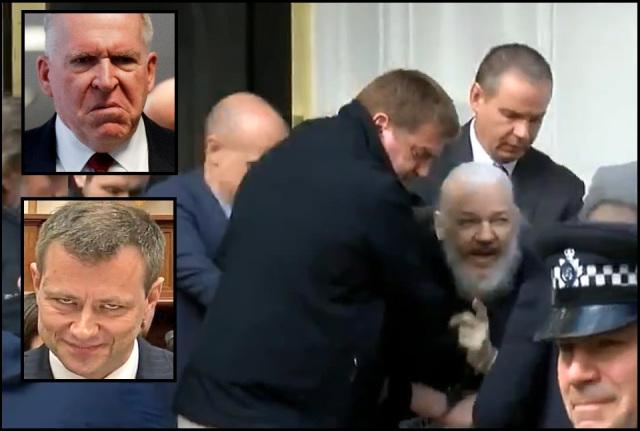
Why Brennan, Strzok, & DOJ Needed Julian Assange Arrested; And Why UK Officials Obliged...

ORIGINAL LINK
Why Brennan, Strzok, & DOJ Needed Julian Assange Arrested; And Why UK Officials Obliged... Tyler Durden Fri, 08/21/2020 - 02:00

Authored by 'sundance' via TheConservativeTreehouse.com,

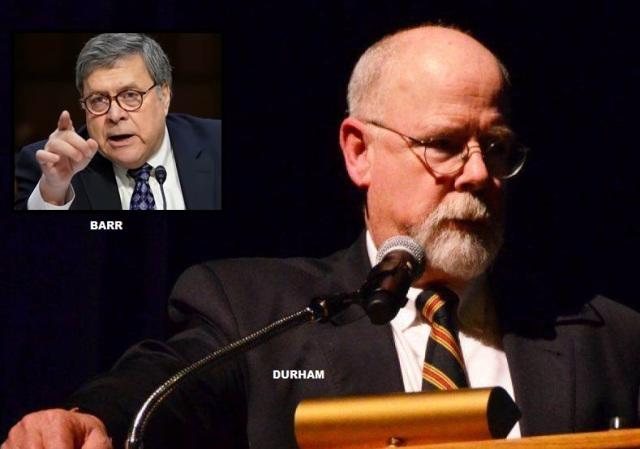
According to reports in November of 2019, U.S Attorney John Durham and U.S. Attorney General Bill Barr were spending time on a narrowed focus looking carefully at CIA activity in the 2016 presidential election. One recent quote from a media-voice increasingly sympathetic to a political deep-state notes:

“One British official with knowledge of Barr’s wish list presented to London commented that “it is like nothing we have come across before, they are basically asking, in quite robust terms, for help in doing a hatchet job on their own intelligence services””. (Link)

It is interesting that quote came from a British intelligence official, as there appears to be  evidence of an extensive CIA operation that likely involved U.K. intelligence services. In addition, and as a direct outcome, there is an aspect to the CIA operation that overlaps with both a U.S. and U.K. need to keep Wikileaks founder Julian Assange under tight control. In this outline we will explain where corrupt U.S. and U.K. interests merge.

To understand the risk that Julian Assange represented to CIA interests, it is important to understand just how extensive the operations of the CIA were in 2016. It is within this network of foreign and domestic operations where FBI Agent Peter Strzok is clearly working as a bridge between the CIA and FBI operations.

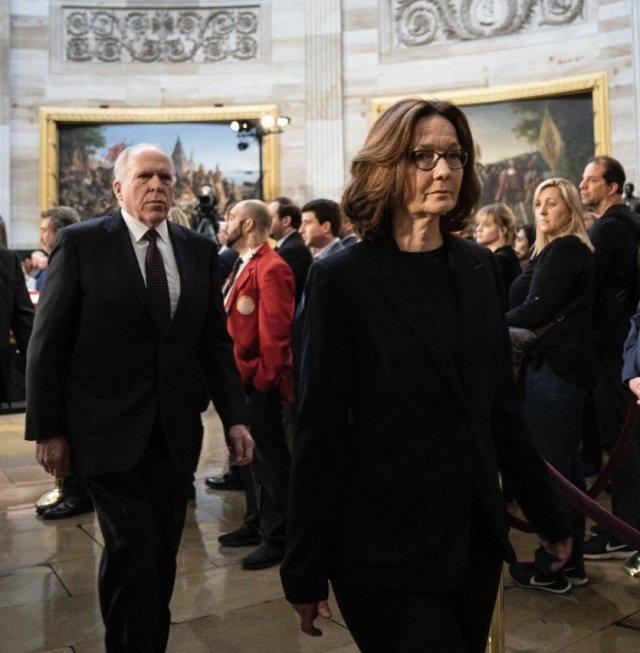
By now people are familiar with the construct of CIA operations involving Joseph Mifsud, the Maltese professor now generally admitted/identified as a western intelligence operative who was tasked by the CIA (John Brennan) to run an operation against Trump campaign official George Papadopoulos in both Italy (Rome) and London. {Go Deep}

In a similar fashion the CIA tasked U.S. intelligence asset Stefan Halper to target another Trump campaign official, Carter Page. Under the auspices of being a Cambridge Professor Stefan Halper also targeted General Michael Flynn. Additionally, using assistance from a female FBI agent under the false name Azra Turk, Halper also targeted Papadopoulos.

The initial operations to target Flynn, Papadopoulos and Page were all based overseas. This seemingly makes the CIA exploitation of the assets and the targets much easier.

One of the more interesting aspects to the Durham probe is a possibility of a paper-trail created as a result of the tasking operations. We should watch closely for more evidence of a paper trail as some congressional reps have hinted toward documented evidence (transcripts, recordings, reports) that are exculpatory to the targets (Page & Papadop). HPSCI Ranking Member Devin Nunes has strongly hinted that very specific exculpatory evidence was known to the FBI and yet withheld from the FISA application used against Carter Page that also mentions George Papadopoulos. I digress…

However, there is an aspect to the domestic U.S. operation that also bears the fingerprints of the CIA; only this time due to the restrictive laws on targets inside the U.S. the CIA aspect is less prominent. This is where FBI Agent Peter Strzok working for both agencies starts to become important.

Remember, it’s clear in the text messages Strzok has a working relationship with what he called their “sister agency”, the CIA. Additionally, Brennan has admitted Strzok helped write the January 2017 Intelligence Community Assessment (ICA) which outlines the Russia narrative; and it is almost guaranteed the July 31st, 2016, “Electronic Communication” from the CIA to the FBI that originated FBI operation “Crossfire Hurricane” was co-authored from the CIA by Strzok…. and Strzok immediately used that EC to travel to London to debrief intelligence officials around Australian Ambassador to the U.K. Alexander Downer.

In short, Peter Strzok appears to be the very eager, profoundly overzealous James Bond wannabe, who acted as a bridge between the CIA and the FBI. The perfect type of FBI career agent for CIA Director John Brennan to utilize.

Fusion-GPS founder Glenn Simpson hired CIA Open Source analyst Nellie Ohr toward the end of 2015; at appropriately the same time as “FBI Contractors” were identified exploiting the NSA database and extracting information on a specific set of U.S. persons.

It was also Fusion-GPS founder Glenn Simpson who was domestically tasked with a Russian lobbyist named Natalia Veselnitskya. A little reported Russian Deputy Attorney General named Saak Albertovich Karapetyan was working double-agents for the CIA and Kremlin. Karapetyan was directing the foreign operations of Natalia Veselnitskaya, and Glenn Simpson was organizing her inside the U.S.

Glenn Simpson managed Veselnitskaya through the 2016 Trump Tower meeting with Donald Trump Jr. However, once the CIA/Fusion-GPS operation using Veselnitskaya started to unravel with public reporting… back in Russia Deputy AG Karapetyan fell out of a helicopter to his death (just before it crashed).

Simultaneously timed in late 2015 through mid 2016, there was a domestic FBI operation using a young Russian named Maria Butina tasked to run up against republican presidential candidates. According to Patrick Byrne, Butina’s handler, it was FBI agent Peter Strzok who was giving Byrne the instructions on where to send her. {Go Deep}

All of this context outlines the extent to which the CIA was openly involved in constructing a political operation that settled upon anyone in candidate Donald Trump’s orbit.

International operations directed by the CIA, and domestic operations seemingly directed by Peter Strzok operating with a foot in both agencies. [Strzok gets CIA service coin]

Recap: ♦Mifsud tasked against Papadopoulos (CIA). ♦Halper tasked against Flynn (CIA), Page (CIA), and Papadopoulos (CIA). ♦Azra Turk, pretending to be Halper asst, tasked against Papadopoulos (FBI). ♦Veselnitskaya tasked against Donald Trump Jr (CIA, Fusion-GPS). ♦Butina tasked against Trump, and Donald Trump Jr (FBI).

Additionally, Christopher Steele was a British intelligence officer, hired by Fusion-GPS to assemble and launder fraudulent intelligence information within his dossier. And we cannot forget Oleg Deripaska, a Russian oligarch, who was recruited by Asst. FBI Director Andrew McCabe to participate in running an operation against the Trump campaign and create the impression of Russian involvement. Deripaska refused to participate.

All of this engagement directly controlled by U.S. intelligence; and all of this intended to give a specific Russia impression. This predicate is presumably what John Durham is currently reviewing.

The key point of all that background is to see how committed the CIA and FBI were to the constructed narrative of Russia interfering with the 2016 election. The CIA, FBI, and by extension the DOJ, put a hell of a lot of work into it. Intelligence community work that Durham is now unraveling.

We also know specifically that John Durham is looking at the construct of the Intelligence Community Assessment (ICA); and talking to CIA analysts who participated in the construct of the January 2017 report that bolstered the false appearance of Russian interference in the 2016 election. This is important because it ties in to the next part that involves Julian Assange and Wikileaks.

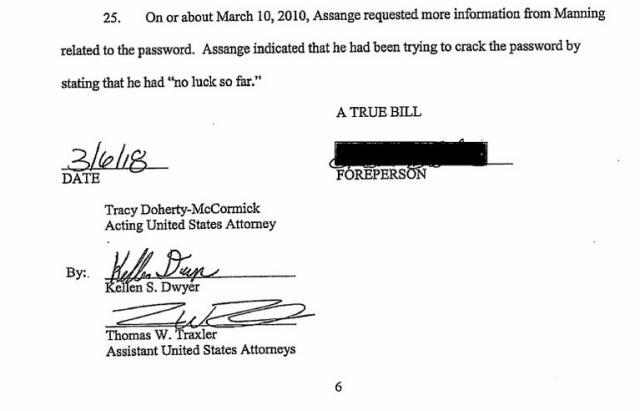
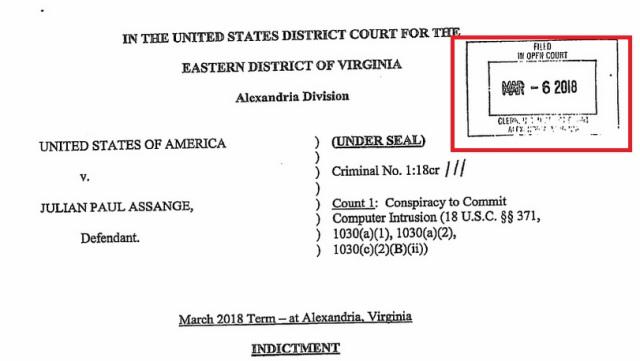
On April 11th, 2019, the Julian Assange indictment was unsealed in the EDVA. From the indictment we discover it was under seal since March 6th, 2018:

(Link to pdf)

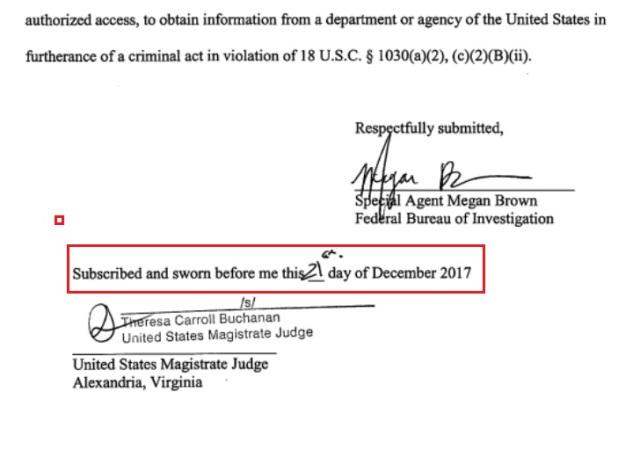
On Tuesday April 15th more investigative material was released. Again, note the dates: Grand Jury, *December of 2017* This means FBI investigation prior to….

The FBI investigation took place prior to December 2017, it was coordinated through the Eastern District of Virginia (EDVA) where Dana Boente was U.S. Attorney at the time. The grand jury indictment was sealed from March of 2018 until after Mueller completed his investigation, April 2019.

Why the delay?

What was the DOJ waiting for?

Here’s where it gets interesting….

The FBI submission to the Grand Jury in December of 2017 was four months after congressman Dana Rohrabacher talked to Julian Assange in August of 2017: “Assange told a U.S. congressman … he can prove the leaked Democratic Party documents … did not come from Russia.”

(August 2017, The Hill Via John Solomon) Julian Assange told a U.S. congressman on Tuesday he can prove the leaked Democratic Party documents he published during last year’s election did not come from Russia and promised additional helpful information about the leaks in the near future.

Rep. Dana Rohrabacher, a California Republican who is friendly to Russia and chairs an important House subcommittee on Eurasia policy, became the first American congressman to meet with Assange during a three-hour private gathering at the Ecuadorian Embassy in London, where the WikiLeaks founder has been holed up for years.

Rohrabacher recounted his conversation with Assange to The Hill.

“Our three-hour meeting covered a wide array of issues, including the WikiLeaks exposure of the DNC [Democratic National Committee] emails during last year’s presidential election,” Rohrabacher said, “Julian emphatically stated that the Russians were not involved in the hacking or disclosure of those emails.”

Pressed for more detail on the source of the documents, Rohrabacher said he had information to share privately with President Trump. (read more)

Knowing how much effort the CIA and FBI put into the Russia collusion-conspiracy narrative, it would make sense for the FBI to take keen interest after this August 2017 meeting between Rohrabacher and Assange; and why the FBI would quickly gather specific evidence (related to Wikileaks and Bradley Manning) for a grand jury by December 2017.

Within three months of the grand jury the DOJ generated an indictment and sealed it in March 2018. The EDVA sat on the indictment while the Mueller probe was ongoing.

As soon as the Mueller probe ended, on April 11th, 2019, a planned and coordinated effort between the U.K. and U.S. was executed; Julian Assange was forcibly arrested and removed from the Ecuadorian embassy in London, and the EDVA indictment was unsealed (link).

As a person who has researched this three year fiasco; including the ridiculously false 2016 Russian hacking/interference narrative: “17 intelligence agencies”, Joint Analysis Report (JAR) needed for Obama’s anti-Russia narrative in December ’16; and then a month later the ridiculously political Intelligence Community Assessment (ICA) in January ’17; this timing against Assange is too coincidental.

It doesn’t take a deep researcher to see the aligned Deep State motive to control Julian Assange because the Mueller report was dependent on Russia cybercrimes, and that narrative is contingent on the Russia DNC hack story which Julian Assange disputes.

This is critical. The Weissmann/Mueller report contains claims that Russia hacked the DNC servers as the central element to the Russia interference narrative in the U.S. election. This claim is directly disputed by WikiLeaks and Julian Assange, as outlined during the Dana Rohrabacher interview, and by Julian Assange on-the-record statements.

The predicate for Robert Mueller’s investigation was specifically due to Russian interference in the 2016 election. The fulcrum for this Russia interference claim is the intelligence community assessment; and the only factual evidence claimed within the ICA is that Russia hacked the DNC servers; a claim only made possible by relying on forensic computer analysis from Crowdstrike, a DNC contractor.

The CIA holds a massive conflict of self-interest in upholding the Russian hacking claim. The FBI holds a massive interest in maintaining that claim. All of those foreign countries whose intelligence apparatus participated with Brennan and Strzok also have a vested self-interest in maintaining that Russia hacking and interference narrative.

Julian Assange is the only person with direct knowledge of how Wikileaks gained custody of the DNC emails; and Assange has claimed he has evidence it was not from a hack.

This Russian “hacking” claim is ultimately so important to the CIA, FBI, DOJ, ODNI and U.K intelligence apparatus…. Well, right there is the obvious motive to shut Assange down as soon intelligence officials knew the Mueller report was going to be public.

Now, if we know this, and you know this; and everything is cited and factual… well, then certainly AG Bill Barr knows this.

The $64,000 dollar question is: will they say so publicly?


via IFTTT
InoreaderURL: SECONDARY LINK