Hillsborough police are investigating an apparent firebombing of the Orange County Republican headquarters, an incident that one state GOP official called an act of “political terrorism” according to the Charlotte observer. Police say the incident occurred when a bottle of flammable liquid was thrown through the front window of the office on Ja-Max Dr.
The flammable substance appears to have ignited inside the building, burned some furniture and damaged the building’s interior before going out. The substance was housed in a bottle thrown through one of the building’s front windows. No damage estimates are available yet, and Hillsborough police are continuing to investigate the incident with the Bureau of Alcohol, Tobacco, Firearms and Explosives
The building, located at 347 Ja-Max Drive in the Shops at Daniel Boone, was struck overnight with hate graffiti and with a flammable material thrown through a front window of the headquarters. The graffiti — which included a swastika and the words “Nazi Republicans leave town or else” — was spray-painted in black on the side of an adjacent building, Balloons Above Orange, 353 Ja-Max Drive. The damage was discovered this morning by another business owner, who reported it before 9 a.m.
“The office itself is a total loss,” said Dallas Woodhouse, executive director of state GOP. “The only thing important to us is that nobody was killed, and they very well could have been.”
Police said the words, “Nazi Republicans get out of town or else” were spray painted on the side of an adjacent building.
“This highly disturbing act goes far beyond vandalizing property; it willfully threatens our community’s safety via fire, and its hateful message undermines decency, respect and integrity in civic participation,” Hillsborough Mayor Tom Stevens said. “I believe I speak for the overwhelming majority of people who make Hillsborough their home: Acts like this have no place in our community. Our law enforcement officials are responding quickly and thoroughly to investigate this reprehensible act and prosecute the perpetrators.”
The North Carolina Republican party issued the following statement:
The mayor said law enforcement officials are investigating the incident. Anyone with information is asked to call the police department’s tip line at 919-732-3975.
In the meantime, Woodhouse said he’s sending an advisory to county Republican offices across the state warning them to take extra caution.
As you’ve probably already heard, Wikileaks has been exposing previously classified documents and private emails of various people within politics. Some of these emails include leaks from John Podesta’s inbox. Podesta is the current head of Hillary Clinton’s presidential campaign, and also a former councillor to Barack Obama, as well as former White House Chief of Staff under the Clinton administration.
Although this might have been surprising to many, those who keep close tabs on the UFO issue were not shocked at all, and that’s because Podesta has been outspoken about UFOs for a very long time, and he is not the only politician to do so, there have been dozens over the past few decades.
For example, Senator Barry Goldwater, Chairman of the Senate Intelligence Committee said:
“This thing has gotten so highly-classified… it is just impossible to get anything on it. I have no idea who controls the flow of need-to-know because, frankly, I was told in such an emphatic way that it was none of my business that I’ve never tried to make it to be my business since. I have been interested in this subject for a long time and I do know that whatever the Air Force has on the subject is going to remain highly classified.” (source)
He has also stated that he thinks that at “Wright Patterson Field, if you could get into certain places, you find out what the Air Force and the government knows about UFOs.Reportedly, a spaceship landed, and it was all hushed up quieted and nobody ever heard about much of it.” (source)
He also told of a story of calling General Curtis Lemay, stating that he said “General, ugh, I know we have a room at Wright Patterson, where you put all this secret stuff, can I go in there? I’ve never heard him get mad, but he got madder than hell at me, cussed me out and said, ‘don’t ever ask me that question again.'”
Another example would be Former Sen. Mike Gravel (D-Alaska), and 2008 presidential candidate who in 2008 stated that there is “an extraterrestrial influence that is investigating our planet. Something is monitoring the planet and they are monitoring it very cautiously.”
Here is a video of Paul Hellyer, Former Canadian Defence Minister basically doing the same thing.
As far as John Podesta, he wrote the statement below as part of the forward for Leslie Kean’s 2010 New York Times bestseller, “UFOs: Generals, Pilots, And Government Officials Go On The Record,” the same source used for the first Barry Goldwater quote above.
“I’m skeptical about many things, including the notion that government always knows best, and that the people can’t be trusted with the truth. The time to pull the curtain back on this subject is long overdue. We have statements from the most credible sources – those in a position to know – about a fascinating phenomenon, the nature of which is yet to be determined.” – John Podesta
John Podesta
If you take a look at the sentence highlighted in red above from Senator Barry Goldwater, he speaks of landing spaceships, or rumours of crashed spaceships like the one that supposedly crashed at Roswell, New Mexico. These types of rumours have been floating around these circles for years.
Below is another example from John Podesta, where he says that he “filled an FOIA (Freedom of Information Act) on a cash of a crash that occurred in Pennsylvania in the 1960’s.”
He went on to state that “nobody knew what it was” and that there was “some speculation of whether it was a Soviet satellite.”
Furthermore, he said that “all of a sudden when the FOIA case was filled it turned out most of the files had disappeared, it was clear that there was an investigation by the Air Force.”
Crash Retrievals of UFOs & Why We Can’t Trust Government
It’s not odd that Podesta threw in the comment that “there was some speculation of whether it was a soviet satellite.” Why? Because that’s not probably not true, in my opinion.
It’s no secret that a growing number of people are starting to lose faith in information that Western governments and mainstream media put forth. A great example is the so-called ‘war on terror,’ the validity of which many people have begun to question. It is now becoming clear that this war is based on false premises meant to justify the invasion of other countries and a heightened national security state. (You can read more about this topic and ‘false flag’ terrorism here).
There are countless examples, the point is, why should we be any different when it comes to the topic of UFOs. Western politics is a cesspool of disinformation, half truths, manipulation of information and lies.
Based on the research conducted by the world’s foremost UFO researchers, and witness testimony from countless people who would be “in the know,” so to speak, it’s clear to me that there have been multiple UFO crashes over the decades, and these crashes have involved the retrieval of the craft along with alien bodies.
That’s a separate topic in itself (crash retrievals). In my research, I’ve come across multiple sources that have stated these craft were able to disarm electronic weapons, nuclear weapons and rockets, but they were incapable of handling anti-aircraft fire. We are also pretty advanced ourselves, more so than we know. Our world is plagued in secrecy, and you can find out more about that in an article I wrote about the Black Budget, here.
One of the world’s foremost researchers on the topic of UFOs sums it up best, “if one thing is glaringly obvious, it is that the UFO phenomenon is a global and has included many military encounters
“If one thing is glaringly obvious, it is that the UFO phenomenon is global and has included many military encounters.” –Richard Dolan, Author, Historian, UFO Researcher, taken from his book cited above.
This is true, if something is violating your airspace, and performing maneuvers that defy our understanding of physics, maneuvers that no known air craft can perform, you’re going to want to take a closer look.vUFOs present a number of defence, national security and air safety issues at the very least.
Military jets are scrambled to intercept these objects that are commonly tracked on air radar, ground radar, and visually confirmed by both ground and air personnel. What often happens to the jets when they enter into the vicinity of a UFO is that critical weapons systems and electrical devices within the jet go completely dead.
Here is one example out of thousands of declassified files coming from defence agencies from around the world.
Another example would be an event that occurred over Aviano Air Base in Italy, on July 1, 1977. During this event, several U.S. Air Force personnel saw a UFO hovering outside of the base perimeter. While the object was there, the facility lost electrical power. (source) Or when Canadian military pilots were flying in a formation of four F86 Sabre jet aircraft. One of the pilots described the phenomenon as a “bright light which was sharply defined as disk-shaped,” that looked like “a shiny silver dollar sitting horizontal.” Another pilot managed to photograph the object. Dr. Jacques Vallee, notable for co-developing the first computerized mapping of Mars for NASA, published a paper in the Journal of Scientific Explorationtitled “Estimates of Optical Power Output in Six Cases Of Unexplained Ariel Objects With Defined Luminosity Characteristics.” (source)(source)
“The nations of the world are currently working together in the investigation of the UFO phenomenon. There is an international exchange of data. Maybe when this group of nations acquires more precise and definite information, it will be possible to release the news to the world” –General Carlos Castro Cavero, Spanish Air Force General
The above statement was made in the 1970’s…
The list goes on and on, again, there are too many documented cases to count.
I’m going to leave you with this last video, one of my favourites, and a great one to let people know that there really is abundant evidence, you just have to look for it. This is something that, I believe, Podesta and his camp are playing an active role in covering up, in the guise of ‘releasing’ documents to find out the truth. I guarantee you that there will be no significant leaks dealing with extraterrestrial bodies and craft from other worlds, but who knows?
The point is, we constantly look to these people for validation of a subjects credibility, which is a huge mistake. Mainstream media and politics is the last place you want to look for any type of truth for this matter.
Control of the news media is an instrumental, key feature to any totalitarian government. In contrast, the primary reason this experiment known as the United States has lasted so long under relatively free conditions is due to the preservation of free speech (and press) via the First Amendment to the U.S. Constitution.
In case you haven’t read it in a while, here’s the text:
Congress shall make no law respecting an establishment of religion, or prohibiting the free exercise thereof; or abridging the freedom of speech, or of the press; or the right of the people peaceably to assemble, and to petition the Government for a redress of grievances.
Nowhere in there do I see an exception for “conspiracy theories,” but apparently Constitutional scholar Barack Obama has an alternative interpretation.
Pittsburgh (AFP) – President Barack Obama on Thursday decried America’s “wild, wild west” media environment for allowing conspiracy theorists a broad platform and destroying a common basis for debate.
Recalling past days when three television channels delivered fact-based news that most people trusted, Obama said democracy require citizens to be able to sift through lies and distortions.
“We are going to have to rebuild within this wild-wild-west-of-information flow some sort of curating function that people agree to,” Obama said at an innovation conference in Pittsburgh.
“There has to be, I think, some sort of way in which we can sort through information that passes some basic truthiness tests and those that we have to discard, because they just don’t have any basis in anything that’s actually happening in the world,” Obama added.
“That is hard to do, but I think it’s going to be necessary, it’s going to be possible,” he added.
“The answer is obviously not censorship, but it’s creating places where people can say ‘this is reliable’ and I’m still able to argue safely about facts and what we should do about it.”
The above may sound good on a superficial level to people with zero critical thinking skills, but even the most elementary analysis exposes it as the obvious and dangerous attack on free speech that it is. Let’s zero in on a few things he said in closer detail.
He describes the media environment as the “wild, wild west.” Kind of sounds like an environment in which people are free to say, publish or record whatever they want, and let the chips fall where they may. Seems consistent with the first amendment to me.
He notes that there needs to be “some sort of way in which we can sort through information that passes some basic truthiness tests and those that we have to discard.” This sounds good on the surface because, after all, who doesn’t want truth? The problem lies in the fact that governments can and do lie all the time about stuff of monumental significance. Let’s take the Iraq war for example. As I discussed in August’s post, Questioning Hillary’s Health is Not Conspiracy Theory:
Of course, the New York Times rendering judgment on those pushing conspiracy theories would be downright hilarious if it weren’t so sad. For example, the paper itself exhibited no such restraint when it came to peddling U.S. government conspiracies about Iraq in the run up to one of the most inhumane, unnecessary and destructive foreign policy blunders in American history. In fact, the paper was ultimately so embarrassed by its own behavior, it issued a statement in 2004 titled, FROM THE EDITORS; The Times and Iraq.
Meanwhile, there were millions of people in the “wild west” of opinion making yelling and screaming that the government was misleading the public about Iraq in order to go to war. So who got it right, the New York Times, or the wild, wild west?
If Obama had his way, those people who asserted that the public was being mislead into the Iraq war would have been dismissed as “conspiracy theorists” not worth paying attention to since they refused to agree with government “facts.” Obama’s position is such an obvious authoritarian slippery slope, one has to ask why he would dare go so far.
My view is that there is a full on panic occurring right now at the very top of America’s shadow government due to the fact that the public is no longer falling for corporate media propaganda. Once again, let’s turn to something I wrote in the post, Questioning Hillary’s Health is Not Conspiracy Theory:
As I look at the landscape in 2016 to-date, I observe emergent signs that alternative media is finally beginning to take over from the legacy mainstream media when it comes to impact and influence. The mainstream media (unlike with John McCain in 2008), had decided that Hillary Clinton’s health was not an issue and chose not to pursue it. Many in the alternative media world took a different position, and due to mainstream media’s failure to inform the American public for decades, the alternative media drove that issue to the top of the news cycle. That’s power.
This is an incredibly big deal, and the mainstream media intuitively knows what it means. It means a total loss of legitimacy, prestige and power. All of which is well deserved of course.
So here’s the bottom line. 2016 represents the true beginning of what I would call the Media Wars. Alternative media is now capable of driving the news cycle. Mainstream media now has no choice but to fight back, and fight back it will. It will fight back dirty. This is going to get very ugly, but by the time the dust has settled, I think much of the mainstream media will be left as a shell of its former self.
By ugly, I didn’t expect the President of these United States to so publicly and radically advocate in favor of free speech restrictions, but here we are.
Let’s conclude by tackling another portion of his talk, where he states, “the answer is obviously not censorship, but it’s creating places where people can say ‘this is reliable’ and I’m still able to argue safely about facts and what we should do about it.”
Who exactly is supposed to be granted the power to create such spaces and verify things as factual? We know that government lies all the time, yet when they lie, they present such falsehoods as fact. It is the duty of the people to decide what to believe and what not to believe. This is not the job of government, or anyone else for that matter.
Yes, it’s true that there’s an unbelievable amount of garbage out there on the internet, but yet we manage. What seems to be happening here with Obama is a not so subtle attempt to blame the rise of Trumpism on alternative media as opposed to the actual culprit, his oligarch coddling policies. It’s a sign of pathetic desperation from a man who has completely and utterly failed the American public while protecting the rich and powerful. It’s an ugly manifestation of an executive who cannot come to terms with the justified anger of a public who feels betrayed by him. Sure a compliant, preening and entirely propagandist media would make Obama feel a whole lot better about his miserable legacy, but we shouldn’t sacrifice the first amendment to achieve this.
More than a third of all Americans can’t pay their debts. I don’t know about you, but to me that is a shocking figure. As you will see below, 35 percent of the people living in this country have debt in collections. When a debt is in collections, it is at least 180 days past due. And this is happening during the “economic recovery” that the mainstream media keeps touting, although the truth is that Barack Obama is going to be the only president in United States history to never have a single year when the economy grew by at least 3 percent. But at least things are fairly stable for the moment, and if this many Americans are having trouble paying their bills right now, what are things going to look like when the economy becomes extremely unstable once again.
About 66% of residents have debt in collections — meaning more than 180 days past due — at a median amount of $1,847. Across the U.S., 35% of Americans have debt in collections.
It is hard to believe that 66 percent of the residents of one of our largest cities could have debt in collections, but without a doubt the city of Detroit is a complete and utter economic wasteland at this point.
But to me, the 35 percent figure for the nation as a whole is a much greater concern.
And much of the debt that is in collections is credit card debt.
In the immediate aftermath of the last financial crisis, many Americans started getting out of debt, and that was a very good thing.
Unfortunately, that trend has completely reversed itself over the past few years, and now credit card balances are rising at a pace that is quite alarming…
Using data from the U.S. Census Bureau and the Federal Reserve, ValuePenguin found that the average credit card debt for households that carry a balance is a shocking $16,048 — a figure that has risen by 10% over the past three years. At the average variable credit card interest rate of 16.1%, this translates to nearly $2,600 in credit card interest alone. And many credit cards have interest rates much higher than the average.
Even scarier, consider that based on the average interest rate and a minimum payment of 1.5% of the balance, it would take nearly 14 years for the typical indebted household to pay off its existing credit card debt, at a staggering cost of more than $40,200. Keep in mind that this assumes no additional credit card debt is added to the tab along the way.
Those that have been there know exactly how it feels to be drowning in credit card debt.
You know, they don’t teach you about credit cards in high school or in college. At least they didn’t in my day. So once I got out into the “real world” and discovered the joy of instantly getting whatever I wanted with a credit card, I didn’t understand how painful it would be to pay that money back someday.
If you have credit card balances that are out of control, they can keep you up late into the night. The worry and the fear can eat away at you like a cancer, and many people play a game of moving balances from one card to another in a desperate attempt to stay afloat.
Fortunately I learned my hard lessons at an early enough age to get things turned around. Now I warn others about the danger of credit card debt through my writing, and my hope is that the things that I share on my websites are doing some good for others that may be struggling financially.
When you are deep in debt, it is exceedingly difficult to build up any wealth of your own. This is one of the primary reasons why 69 percent of all Americans have less than $1,000 in savings today.
In essence, more than two-thirds of the country is living paycheck to paycheck, and that is a recipe for disaster when the next major economic downturn in the U.S. strikes.
Overall, household debt in America has now reached a grand total of 12.3 trillion dollars. When you break that down, it comes to $38,557 for every man, woman and child in the entire nation.
So for a family of five, your share of that total would be $192,785.
And remember, that is just household debt. That total does not include any form of business debt or any form of government debt.
We truly are a “buy now, pay later” society. We were the wealthiest and most prosperous nation on the entire planet, and previous generations handed us the keys to the greatest economic machine in world history, but that wasn’t good enough for us.
We always had to have more, more, more – and now we have accumulated more debt than any society in the history of the globe.
It is inevitable that this giant debt bubble is going to burst. Anyone with an ounce of common sense can see that.
What we experienced in 2008 was just a preview of the hard times that are coming. The next recession is going to be even worse, and most economists are convinced that it will happen within the next four years no matter who is elected president in November. The following comes from the Wall Street Journal via the Calculated Risk blog…
Economists in The Wall Street Journal’s latest monthly survey of economists put the odds of the next downturn happening within the next four years at nearly 60%.
Just like the last time around, millions of those that are “living on the edge” financially will fall out of the middle class and into poverty when they lose their jobs.
Hopefully most of you that have been reading my work for an extended period of time have already been getting out of debt and have been building up a financial cushion.
Sadly, most of the country continues to act as if they are living in a pre-2008 world, and the economic wake up call that is coming is going to be incredibly painful for those that thought they could get away with being exceedingly reckless financially.
On September 9, most prisoners at Michigan’s Kinross Correctional Facility took part in the national prison strike against slave labor and refused to report for work. The prison responded by withholding their hot meals and eventually launched an assault against the prisoners for their peaceful protest. Administrators later withheld medical care and a prisoner died.
“They fed them breakfast that morning,” the first day of the strike, Evelyn Williams told Shadowproof. Her fiancé, Anthony Williams, is incarcerated at Kinross. But after the strike, she said prisoners were only given a peanut butter and jelly sandwich for lunch with some cookies, and a turkey sandwich with a banana and some milk for dinner.
“That’s not right, they have a scheduled meal every day,” Evelyn said. “The warden told [prison staff] not to give them the rest of the meal. You got all these grown men that only got a peanut butter and jelly sandwich to eat.”
According to the Incarcerated Workers Organizing Committee (IWOC), which has organized support on the outside for striking prisoners, between 400-500 prisoners engaged in a peaceful march in the prison yard the following day.
Prisoners spoke to deputy wardens and said they were upset about the low wages they receive for their labor. They complained of the commutation process and the lack of space in the visitation room, which leads to the turning away of visitors.
They discussed high phone rates, terrible food provided by the contractor Trinity Services Group, and crowded living conditions in which eight prisoners are forced to live in a room built for four. They spoke out against the lack of re-entry programs, the lack of bleach for their laundry, and MP3 players given to the prisoners that break easily and can neither be fixed nor replaced.
The prisoners said there was not enough room in the law library and complained that they were not allowed to transfer to other facilities. Just as their predecessors at Attica did 45 years earlier, the marching prisoners demanded “no retaliation for their peaceful protest.”
Evelyn said the warden promised he would take care of whatever he could, and if there was something he couldn’t take care of, he would take it to the legislature. “The guys, thinking everything was fine, begin to disperse, go back to their rooms, go back to their everyday routine.”
But Anthony told her that as soon as the warden returned to the control center and the doors were locked, emergency response teams entered the yards with guns, tear gas, and shields.
The assault led to chaos on the yard. Prisoners panicked as officers fired tear gas canisters directly at them while others barricaded themselves in their units. Fires were set, windows were broken, and other facility property was damaged after officers attacked the inmates.
Prisoners hands were zip-tied behind them. Others, believed to be instigators of the strike, were roused from their beds.
“They put them outside in the rain for hours, left them out there even some of them wanting to use the bathroom, they refused, so a couple had to use it on themselves,” Evelyn said. “Then they ended up shipping those guys out.”
Evelyn was getting ready to drive to Kinross that day to visit Anthony, but he called and told her not to come. The facility was being placed on lockdown. “I found out later there was a policy that more than three guys can’t walk at a time on the yard together,” she said, noting the spokesperson for MDOC said this was a peaceful march.
The facility stayed on lockdown for 12 days, as prisoners faced more brutal retaliation for their peaceful protest.
Around 150 prisoners were allegedly accused of being instigators of the action and were transferred. An unknown number were charged with inciting a riot and put in solitary confinement. Others, who said they had nothing to do with the protest, were punished as well.
“When guys are sick, they won’t do anything about it. When guys are passed out, the medical team won’t come,” Evelyn said when asked about conditions for prisoners living at Kinross.
On October 10, an inmate named Charles Lee Johnson died at the facility. He was the third inmate to die at a prison in the state within the last month.
“They called for help and the area where the nurses station is like a minute away from where the guy’s bunk was,” Evelyn said.
Prison staff allegedly gave Johnson some water and told him to lay down when he complained. He then started convulsing and became unresponsive. It took fifteen minutes for staff to get to him.
Beyond medical care, prisoners are treated poorly by prison staff. “They pick on them on purpose. They give them tickets on purpose. It’s like its set up for them to fail,” Evelyn explained.
Evelyn used to visit Anthony once a month. One 4th of July visit was especially great, she said. But Anthony called her a few hours later and told her he had received a disciplinary ticket.
Evelyn explains that before every visit, the visitors and prisoners get a pat-down. After the visit, prisoners are subject to strip search to look for contraband. This involves asking prisoners to lift their testicles and cough.
“So this one particular guard was like, open your bottom up and let me see inside your bottom. And he’s like man, you know, I’ve been in here twenty years, and I’ve never had to do that before. Get me a supervisor.”
Anthony thought he was being sexually harassed, but they ended up writing him a class 1 ticket, accusing him of refusing to be searched. He was placed on lockdown for fifteen days. He tried to challenge the ticket with a grievance but failed. “They always lose. You know, they never win a grievance,” Evelyn said.
Evelyn recalled another incident involving a young woman who was visiting someone at Kinross. “She just happened to kiss him an extra time. He got sixty days with no visits,” Evelyn said. “They do it on purpose it seems to try and take away any humanity they may have.”
She pointed to other restrictions that seem to violate the Michigan Department of Corrections’s own policies. “When you visit, you’re supposed to get one hug in, one hug out. But you’re supposed to be able to sit next to your visitor and they can put their arm around you,” Evelyn said.
Kinross has a Level 2 security classification, which is one of the lowest in the state. Yet, at Kinross, they are not permitted to do as the policy states. “This is one of the demands they had that they brought, you know, just follow policy. When I go visit, he has to sit across from me.”
“I think the hardest part for me is just seeing him because he just hates being up there,” Evelyn said. “He’s always frustrated with the way they’re treated, and there’s no resolution to any problems.”
Evelyn said after the strike and lockdown, the Detroit Free Press published an article about the action. She noticed a lot of people wrote “very evil comments.”
“‘Well they just need to be chained up by dogs. They need to be put in crates.’ You see all these evil comments and people don’t realize these are still people. They made a mistake, just like all of us make a mistake. Some of those people are in there for things they didn’t even do. That’s Anthony. We’re still fighting to get his case overturned for something that he didn’t even do,” Evelyn added.
For those who did make a mistake, “These are still somebody’s husbands, these are still somebody’s children, these are still most importantly individuals that god made and god still loves, and to treat them like they’re animals or less than human, to deprive them of basic human needs, that hurts for me. That’s the most hurtful thing for me—when people view them as just downright dirty animals.”
“Yeah, are there some people that deserve to be in there? Yeah, I’ll agree with that. But they still deserve the basic human needs, and that’s just what I want people to understand. Even one of the guards [told] Anthony, ‘Some of us are way worse than some of y’all. We just never get caught.'”
Two years ago, we wrote about the ridiculousness of police arresting reporters for reporting in Ferguson, Missouri, even though courts had told police to knock it off. Even more ridiculous is that those reporters were eventually charged, leading to a ridiculous settlement earlier this year. And yet... arresting journalists for doing journalism continues to be a thing. As you probably know, there have been a bunch of protests in North Dakota lately concerning the Dakota Access Pipeline. Back in September, after covering the protests and having some of her videos of an attack on the protestors go viral, famed Democracy Now reporter Amy Goodman found out an arrest warrant had been issued for her. It's pretty clear that this arrest warrant was solely because of the coverage reflecting poorly on officials.
It has been nearly four years since one of the most infamous, and still largely unexplained, banker "suicides" took place, the first in a series of many: we are talking about the death of the director of communications at Monte dei Paschi di Siena, David Rossi, who allegedly jumped to his death on March 6, 2013.
Since this event has largely faded away from the public consciousness here is a quick recap: David Rossi, who was the head of communications for Monte dei Paschi di Siena bank, which was founded in 1472 and which is currently seeking to finalize its third bailout since the financial crisis, died after falling - or being pushed - from a third floor window of the bank's headquarters in a 14th century palazzo in the Tuscan city of Siena.
His death in March 2013 came at a time when the bank was pushed close to the brink of collapse over a scandal involving the loss of hundreds of millions of euros through risky investments.
While a quickly cobbled together post-mortem found that Rossi, 51, had killed himself, his family strongly suspected that he was murdered because he knew too much about the bank’s shady financial deals. As a result, earlier this year, prosecutors in Siena, where the bank is based, ordered his body to be exhumed and for the trajectory of his fall to be simulated, in an attempt to discover exactly how he died.
The death itself was suspicious: while Rossi fell, or was pushed, from his office at exactly 7:59:23 pm on March 6, 2013, and landed in a darkened alleyway, he did not die immediately – he was alive for 22 minutes, investigators believe.
What made Rossi's death even more puzzling is that security camera footage, released years after his death, showed two shadowy figures appear at the end of the alley, apparently checking that there was no chance he would survive.
The scandalous video emerged in public this June, when the Post's Michael Gray used it as the basis for an article asking "Why are so many bankers committing suicide?" For those who have not seen the 4 minute clip, we present it below in its entirety.
Among the oddities revealed at the site of the alleged suicide is that the executive had bruises and scratches on his arms and wrists which suggested that he may have been gripped forcibly by one or two assailants before being pushed out of the window. On the back of his head was a deep, L-shaped gash suggesting he may have been hit with a blunt object before falling from the window.
Three apparent suicide notes were found crumpled in a bin in his study, but Antonella Tognazzi, his widow, said they contained phrases that her husband would never have used. One of them said: “Ciao, Toni, my love. I’m sorry.”
“He never called me Toni, he always called me Antonella,” his widow, who has long contended that her husband did not kill himself but was murdered, said. The recent reopening
A handwriting expert who analyzed the notes said they seemed to have been written under duress. Another unexplained element is the fact that 33 minutes after Mr Rossi fell from his office window, a call was made on his mobile phone.
At exactly the same moment, the CCTV footage showed an object falling onto the ground and landing a few feet from the body; it was later found to be Mr Rossi’s watch, minus the strap.
To be sure, the recent emergence of the video has somehwat placated Rossi's widow, Antonella Tognazzi, who got her wish for a re-examination into the circumstances surrounding Rossi's death: “We’ve been waiting a long time for the investigation to be reopened,” said Ms Tognazzi early this year quoted by the Telegraph. “It’s what we had been hoping for – it’s an important sign on the part of the judiciary. I have never believed he committed suicide.”
The plot thickens when one digs into the details revealed by the footage captured on the surveillance video.
The footage shows the three-story fall didn’t kill Rossi instantly. For almost 20 minutes, the banker lay on the dimly lit cobblestones, occasionally moving an arm and leg. As he lay dying, two murky figures appear. Two men appear and one walks over to gaze at the banker. He offers no aid or comfort and doesn’t call for help before turning around and calmly walking out of the alley.
Two minutes into the clip, Gray also notes that "Italian authorities have yet to identify these two men."
Following the Post article, there was a scramble by the Italian press to explain that the two men had indeed been identified, and to suggest that the local police knew, all along who they were. In a statement, the prosecutor of Siena said that the video on the fall of David Rossi “being circulated on the internet corresponds to the one already acquired during the investigation”. Moreover, the two men seen near Rossi’s body in the video footage were already interviewed in the first phase of the investigation.
“For final confirmation and to avoid any further speculation, we have decided to re-interview the two men in the video as part of the new investigation,” wrote the prosecutor. The two people in question are Giancarlo Filippone and Bernardo Mingrone. "The first, seen wearing a padded jacket, was a colleague and friend of David Rossi, while Mingrone, who is wearing a coat and remains in the background, was at the time a senior executive in the MPS finance department."
Courtesy of the police inquest into the suicide can confirm the two individuals seen in the back alley where Rossi died, were indeed his former coworkers Giancarlo Filippone a manager at Monte Paschi and a friend of Rossi, and Bernardo Mingrone, the CFO of Monte Paschi.
The police report notes the following testimony from Filippone, as recounted by Il Fatto Quotidiano: "I came from work at 18 and later I was contacted by the wife of Rossi who had not heard from her husband and begged me to go and call him. I sent him a text message at 19:41 (...) and got no response, so after waiting a bit I went to the office at 20:30 and when I entered the room I saw the window open, I looked below and saw David's lifeless body."
Mingrone's testimony was also recorded: "At 20:40 on my way out I was talking on the phone, and just as I was in the hallway on the ground floor of the building heading towards the main exit, I met another man (Filippone) gesticulating dramatically and confused. The concierge mouthed the following words: "David Rossi" then "window", then after hanging up the phone i met with Rossi's colleague (Filippone, ed) who told me that David Rossi was thrown from the window. I asked the two where Rossi's office was located and to accompany me there asking if they had called an ambulance. I entered the office and I looked out the window seeing the body on the ground; at that point I called 118 (emergency sevices) since I had been told that no one had called previously."
That's the official version; the actual video evidence demonstrates no panic, and no distressed among the two individuals, who calmly walk up to the dying body and then calmly walk away. The public prosector found little in the circumstances suspect, and as he detailed on June 17, there was no mystery as to the presence of the two men in the alley, where Rossi was either pushed or had jumped on his own.
Where some confusion does emerge, however, is that according to a different recount of events that night, Rossi did in fact speak to his wife Antonella whom he called at 19:02, one hour prior to the deadly fall, in which he did not speak as like someone who is going to commit suicide. To the contrary they were making dinner plans: "I will be home at 19.30. I already bought everything you need. But first I need to take the meatballs that I ordered for dinner. See you later." He would never make it home as he was dead shortly after. Adding to the confusion is that after his death a number was typed on his cell: 409909 which, according to his lawyer, may have been a computer access code. It is unclear what was being accessed or who typed in the code.
But the question about the presence of the Monte Paschi CFO at the crime (or suicide) scene, is just one part of the mystery.
Two days prior to Rossi's death, the communications director sent a cryptic
email to the bank’s CEO, Fabrizio Viola according to Rossi's wife. “I want guarantees of not being overwhelmed by this thing,” he wrote. “We would have to do right away, before tomorrow. Can you help me?” As the post previously asked,"it remains a mystery what specifically Rossi thought could “overwhelm” him just before his death, but many have speculated that he was referring to Monte Paschi’s troubled financial position."
Incidentally, Fabrizio Viola stepped down as Monte Paschi CEO just one month ago, as the bank was deep in the middle of its latest, third, bailout process which however according to press reports has met substantial procedural hurdles and may not be completed, with speculation a debt for equity swap may be required to facilitate the bank's rescue.
Furthermore, Rossi was a close confidant of former bank Chairman, Joseph Mussari, who was the driving force behind Monte Paschi’s 2008 $13 billion purchase of Banca Antonveneta from Spain's Santander. Many banking analysts agreed at the time that Monte Paschi had overpaid for the acqusition, which incidentally was financed by Deutsche Bank.
Giuseppe Mussari poses at the ABI headquarters in Rome July 27, 2010
Adding to the mystery, in October 2014, an Italian court sentenced Mussari to three years and six months in jail for misleading regulators in relation to a 2009 derivative trade with Nomura that prosecutors said was used to conceal losses. The court in Siena, where Italy's third-biggest lender is based, also sentenced former chief executive Antonio Vigni and ex-finance boss Gianluca Baldassarri to the same jail term. Prosecutors had asked for a seven-year jail sentence for Mussari and six years for Vigni and Baldassarri.
Prosecutors had accused Mussari, Vigni and Baldassarri of hiding a document known as a mandate agreement, which prosecutors and regulators said made clear that the derivative, called Alexandria, was linked to the acquisition of 3 billion euros worth of long-term Italian government bonds by Monte dei Paschi. The link between the two trades meant they should have received different accounting treatment, which would have shown heavy losses. Alexandria and two other derivatives trades ultimately forced Monte Paschi to restate its accounts and book a loss of 730 million euros on its 2012 results.
New management at the bank, now working on a plan to fill the 2.1-billion-euro capital hole, has said it only discovered the existence of the mandate agreement when it was found in a safe in Vigni's former office in October 2012, more than three years after it was signed.
If so far this all appears very confusing, is because it indeed is.
Where it gets even more confusing is that in January of this year, three executives from Deutsche Bank, which as we now know was very intimately involved with some of the illegal derivative transactions undertaken by Monte Pasci, were also implicated civilly, including Michele Faissola, the head of Private & Asset Wealth Management at Deutsche Bank— charged by Italian authorities with colluding with the troubled Monte Paschi in falsifying accounts, manipulating the market and obstructing justice.
Prosecutors have been reconstructing how Monte Paschi’s former managers misrepresented the lender’s finances in the years before it sought a government bailout. The misrepresentation first came to light in January 2013 when Bloomberg reported that Monte Paschi used a transaction with Deutsche Bank, the infamous Santorini (profiled here), to mask losses from an earlier derivative contract. The bank the same year had to restate its accounts
Faissola denied the charges.
Michele Faissola, head of Private & Asset Wealth Management
Faissola, whose roles included overseeing rates and commodities, was put in charge of Deutsche Bank’s combined asset and wealth management division in 2012 when Anshu Jain and Juergen Fitschen took over as co-chief executive officers of the Frankfurt-based lender. Deutsche Bank on Oct. 18 said Faissola would leave after a transition period; his departure came just a few months after the sudden resignation of Co-CEOs Anshu Jain and Jurgen Fitschen in June 2015; it is said that Faissola was their close protege.
As a reminder, earlier this month, the recently troubled Deutsche Bank was itself charged by Italy for market manipulation and creating false accounts. Additionally, the name Faissole emerged once again, when as Bloomberg reported, six current and former managers of Deutsche Bank, including Michele Faissola, Michele Foresti and Ivor Dunbar, were charged in Milan for colluding to falsify the accounts of Italy’s third-biggest bank, Monte Paschi and manipulate the market.
Here is where things get interesting.
Michele Faissola was a coworker of one William S. Broeksmit. By way of background, Broeksmit had two stints at Frankfurt-based Deutsche Bank, first from 1996 to 2001, then from 2008 until his retirement in September 2013, having previously worked at Merrill Lynch. When he rejoined the bank in 2008 it was in a newly created position, head of portfolio risk optimization. In 2012, as Jain and Fitschen prepared to take over as CEOs, the duo advanced Broeksmit’s name to become the new chief risk officer. The bank retreated on his nomination after German financial regulator BaFin raised concerns that Broeksmit’s lack of experience managing a large number of employees.
Broeksmit worked as a consultant from his retriement until Janury 28, 2014... when the body of the 58 year old was found hanging in his London flat from a dog leash tied to the top of a door. He had just commited suicide..
As we reported at the time, financial papers had been strewn about the scene of his suicide, and on a dog bed near the body were a number of notes to family and friends. One was addressed to Deutsche Bank CEO Anshu Jain, with an apology. That note offered no clue as to the reason he was sorry.
And this is where the story gets even more fascinating: the abovementioned Michele Faissola, who was instrumental in helping Monte Paschi arrange its various derivative deals with Deutsche Bank, was the first to arrive at the gruesome scene of Broeksmit's suicide in 2014.
When he arrived at the South Kensington home, he immediately began going through the bank papers and read the suicide notes.
The west London home of William S. Broeksmit where he was found dead in 2014
We know all this because it was recounted to us by Val Broeksmit, the son of the deceased high-ranking Deutsche Bank banker. Val also who provided us the police report of David Rossi's death, and various other key notes as he has tried to piece together over the years how and why his father committed suicide.
While there is no evidence Faissola was involved in any misconduct related to Broeksmit’s death, Val wonders what, if anything, Faissola had been searching for.
So do we.
The reason why this story, which has seen bits and pieces float around over the past 3 years, is reemerging is because now that both the insolvent Monte Paschi is in the news for its ongoing third bailout, not to mention the significantly troubled Deutsche Bank is also a daily source of market stress, the fact that two bankers who were intimately familiar and certainly involved in many of the transactions between Deutsche Bank and Monte Paschi, and which have been deemed illegal and are being prosecuted by the Italian state, have committed suicide, is worth bringing to the public's attention.
* * *
What is fascinating, is not only how interconnected the fates of Deutsche Bank and Monte Paschi have been over the years - two banks that have each seen a dramatic, high ranking suicide in recent years - but also how far the political process has pushed to preserving a cone of silence surrounding these events: recall that on September 1, Milan prosecutors filed a request to shelve a probe for alleged market manipulation and false accounting against the chief executive of Monte Paschi, Fabrizio Viola, and the bank's former chairman, Alesandro Profumo; a probe that was launched just several weeks prior. As noted above, Viola quietly resigned from his post shortly after the announcement.
Most importantly, while investigators on both the UK and Italian side have been quick to dismiss the banker deaths as open and shut cases of suicide, courtesy of Broeksmit's son we have access to certain documents which we are confident will reveal not just how deep the rabbit hole truly goes, linking the oldest and biggest European banks through two still largely unexplained suicides, but also what is hidden behind Deutsche Bank's mirrored facade.
A growing amount of the global population is reducing their meat intake. Whether it is for health, religious, environmental, or moral reasons, plant-based diets are on the rise. However, eating a cruelty-free diet may not be as easy as you’d think. I stopped eating meat about four years ago, and since then, I’ve learned that many animal products are often hidden in consumer items. From gummy bears to pharmaceuticals, animal products are so heavily embedded into society that they’re no longer always easily recognizable. One item that is often mistaken as vegan is refined sugar.
How Sugar Is Refined Using Animal Bones
Refined sugar can be made from either sugar cane or sugar beets, both common in North America. Although they taste identical to one another, there is a significant difference between the refining processes. The pulp from sugar cane stalks is separated from the juice, then the juice is processed and heated until it crystallizes. The next step involved is where animal lovers may shudder: to obtain the sugar’s bright white colour, it must be filtered and bleached using bone char, a de-ashing and whitening agent made from the skull or spine of a cow. The bones are heated at a high temperature and reduced to carbon. The cattle is usually slaughtered in foreign countries, sold to traders, and then sold to American sugar companies (source).
Though the sugar you buy may not actually contain animal bones, they are still often involved in the production process. Some white sugar made from sugar cane is considered vegan, as processing alternatives to bone char exist, such as granular carbon. To be safe, you’re better off using sugar made from beets or sugar that is certified organic, because they cannot be filtered using bone char. Don’t be fooled by brown sugar, either; it’s simply white sugar with molasses added to it, so the refining process is the same. And confectioner’s sugar, otherwise known as “powdered sugar,” is just white sugar that has been pulverized into a very fine powder and sifted.
It’s important to note that there are still numerous health risks associated with consuming refined sugar, including cancer and obesity, so I am in no way advocating you eat refined sugar of any kind. If you’re interested in reading about the harmful effects sugar has on the body, you can read our article here.
According to PETA, the following sugar companies do not use bone-char filters:
Refined sugar has been associated with numerous health issues including cancer, heart and brain damage, obesity, and more. Instead of using refined white sugar, try substituting it with these healthier alternatives (preferably all organic):
Dates
Coconut sugar
Pure maple syrup
Raw honey (not vegan-friendly)
Stevia
Organic sugars (raw cane sugar, real brown sugar, etc.)
Unsweetened applesauce
Bananas
Final Thoughts
I don’t think a concrete definition of veganism exists. What I do know is that being vegan isn’t about achieving perfection; it’s just about making compassionate choices. Regardless of your stance on refined sugar and whether or not it’s considered vegan, by doing your best to follow a plant-based lifestyle, you’re still saving numerous animals’ lives and reducing your environmental footprint. Even if you’re not vegan or this article didn’t resonate with you, refined white sugar is still terrible for your body and you should do your best to avoid consuming it!
Drugs prescribed for attention deficit hyperactivity disorder (ADHD) are among the most controversial on the market. Such drugs are the most common psychotropic drugs used by children (tied for first place with antidepressants),1 yet they have questionable benefits and serious risks.
Medicating children with ADHD is in itself controversial, especially because there is no laboratory test or objective method to determine which children have ADHD.
Some may be labeled as such by parents or teachers, and even those diagnosed by a mental health professional may be displaying symptoms that could be attributed to other causes.
Many of the symptoms, such as being easily distracted, squirming and fidgeting, are seen in virtually all children at some point or another and, should they become problematic, may be better dealt with via lifestyle changes and psychotherapy than powerful stimulant drugs.
Any parent considering drug treatment for a child with ADHD must carefully weigh the benefits versus the risks, and new research suggests the purported benefits do not extend to improvements in school.
ADHD Drugs Don’t Help Kids Get Better Grades
A major concern of parents of children with ADHD is how it might affect their schoolwork. Worried that their child may fall behind other students or struggle with poor grades, some parents resort to drug treatment, believing it will help. Some drug companies even advertise their treatments as helping to improve homework time.
“Evidence indicates that children with Attention Deficit Hyperactivity Disorder (ADHD) experience acute and prolonged academic impairment and underachievement including marked difficulty with completing homework,” researchers wrote in a new study.2
It’s the first to examine the effects of drug versus behavioral treatment on homework performance in children with ADHD.
Seventy-five children between the ages of 5 and 12 participated. One group was assigned to receive either a stimulant drug or a placebo for three weeks, then switched. Another group received behavioral therapy.
The drug treatment led to no significant improvements in homework completion or accuracy compared to placebo. The behavioral therapy, however, led to children finishing up to 13 percent more homework problems and increased accuracy by 8 percent.
This homework boost could be the difference between a child receiving a passing “C” grade or failing a class, the researchers noted, adding:3
“Behavioral treatment focused on homework problems results in clear benefits for children's homework completion and accuracy (the difference between passing and failing, on average), whereas long-acting stimulant medication resulted in limited and largely nonsignificant acute effects on homework performance.”
Expectations of Benefit From ADHD Drugs Are ‘Greater Than They Should Be’
Many people assume that giving a child with ADHD drug treatment will make the symptoms disappear, but research reveals such expectations may be unrealistic.
Research published in The Cochrane Database of Systematic Reviews found the drug methylphenidate (brand names Ritalin, Concerta, Medikinet and Equasym) may lead to modest improvements in symptoms, general behavior and quality of life.4
However, the modest benefit was based on poor-quality studies, leading the researchers to caution against using the drug without careful consideration. Study author Morris Zwi, a clinician and consultant for child and adolescent psychiatry, said:5
"Our expectations of this treatment are probably greater than they should be … Whilst our review shows some evidence of benefit, we should bear in mind that this finding was based on very low-quality evidence. What we still need are large, well-conducted trials to clarify the risks versus the benefits."
Side Effects of ADHD Drugs: Sleep Problems and More
The Cochrane Database of Systematic Reviews study also found methylphenidate is associated with an increased risk of sleep problems and appetite loss.
Overall, those taking methylphenidate had a 29 percent increased risk of experiencing a non-serious adverse event, the most common of which were sleep problems and decreased appetite.
Among children taking the drug, the risks were especially pronounced. Compared to the control group, children taking methylphenidate had a 60 percent greater risk for trouble sleeping/sleep problems and a 266 percent greater risk for decreased appetite.
A separate study published in Pediatrics also found that stimulant medications such as Ritalin may harm children’s sleep.6
Although the drugs have stimulant effects, they may have a calming effect on children with ADHD, and some have suggested the drugs may improve sleep by reducing bedtime-resistant behaviors.
However, this research, which reviewed nine individual studies, found that in general children taking stimulant drugs:
Took longer to fall asleep than others (with the time lengthening as the dose increased)
Had shorter sleep duration
Had worse sleep efficiency, which is the ratio of time spent asleep to the time spent in bed
The effect is particularly troublesome because lack of sleep makes ADHD symptoms worse, with researchers noting, “sleep adverse effects could undermine the benefits of stimulant medications in some cases.”7
Why Is ADHD on the Rise?
Approximately 11 percent of U.S. children between the ages of 4 and 17 years (6.4 million) have been diagnosed with ADHD,8 and no one really knows what’s causing this condition. Many factors are likely involved, including poor nutrition and environmental toxins.
Children with higher levels of the endocrine-disrupting chemical bisphenol-A (BPA), for instance, are more likely to be diagnosed with ADHD.9
Pesticide exposure, including pyrethroids,10 has also been linked to ADHD. Children exposed to higher levels of organophosphate pesticides may have a twofold to threefold increased risk of being diagnosed with ADHD.11 Exposure to tobacco smoke in utero is also associated with ADHD.12
Nutritionally speaking, a number of factors have been linked to ADHD and/or similar behavioral problems in children. One study even suggested that eating an unhealthy diet during pregnancy may increase ADHD symptoms in youth.13 In addition:
Drinking sugar-sweetened beverages like soda is associated with ADHD14
Gluten sensitivity may be common in children with ADHD. According to a 2011 study, celiac disease is "markedly overrepresented among patients presenting with ADHD,"15 and a gluten-free diet has been shown to significantly improve behavior in kids.
Artificial food coloring and other food additives, such as preservatives, are associated with increased hyperactivity in children16
Exercise May Improve Schoolwork and Other Symptoms in Children With ADHD
While the featured study found no benefit to homework among children taking drugs to treat ADHD, there are other options, namely exercise.
Research published in the journal Pediatrics found that kids who engaged in a regular physical activity program had an improvement in executive control, which is the ability to maintain focus, working memory and cognitive flexibility (or switching between tasks).17
Executive functioning is often impaired in children with ADHD, which means exercise may directly help to improve symptoms. Further, exercise is well known to boost test scores and academic performance in children, and this association is particularly strong among kids with ADHD.
One study found, for instance, that a before- and after-school physical activity program reduced inattention and moodiness among young children at risk of ADHD, as well as improved math and reading test scores.18 Other research revealed that 26 minutes of physical activity each day helped to significantly reduce ADHD symptoms in grade-schoolers.19
In a TED talk from 2012, John Ratey, an associate professor of psychiatry at Harvard, suggested that exercise be viewed as medication for ADHD, as it triggers your brain to release dopamine and serotonin, which improve mood and boost cognitive performance. You can view that talk below.
Natural Methods to Help Overcome ADHD-Like Symptoms
If your child struggles with behavioral difficulties or other ADHD-like symptoms, behavioral therapy may help. However, whether he or she has been diagnosed with ADHD or not, I strongly recommend addressing the following factors in addition to such therapy:
•Too much sugar. High-sugar foods and starchy carbohydrates lead to excessive insulin release, which can cause falling blood sugar levels, or hypoglycemia. Hypoglycemia, in turn, causes your brain to secrete glutamate in levels that can cause agitation, depression, anger, anxiety and panic attacks.
Besides that, sugar promotes chronic inflammation in your body, and many studies have demonstrated the connection between a high-sugar diet and worsened mental health.
•An unhealthy gut. As explained by Dr. Natasha Campbell-McBride, a medical doctor with a postgraduate degree in neurology, toxicity in your gut can flow throughout your body and into your brain, where it can cause symptoms of autism, ADHD, dyslexia, dyspraxia, depression, schizophrenia and other mental disorders.
Reducing gut inflammation is imperative when addressing mental health issues, so optimizing your child's gut flora is a critical step.
This includes not only avoiding processed, refined foods but also eating traditionally fermented foods.Fermented vegetables are excellent, although many kids enjoy fermented dairy products like kefir, especially if you blend them into healthy smoothies.
If you cannot get your child to eat fermented foods on a regular basis, a high-quality probiotic supplement may be highly beneficial in correcting abnormal gut flora that may contribute to brain dysfunction and behavioral issues.
•Animal-sourced omega-3 deficiency. Research has shown that kids low in omega-3 fats are significantly more likely to be hyperactive, struggle with learning disorders and display behavioral problems. Omega-3 deficiencies have also been tied to dyslexia, violence and depression. A clinical study published in 2007 examined the effects of krill oil on adults diagnosed with ADHD.20
In that study, patients improved their ability to concentrate by an average of over 60 percent after taking a daily 500-milligram (mg) dose of krill oil for six months. They also reported a 50 percent improvement in planning skills and a close to 49 percent improvement in social skills.
•Food additives andGMOingredients. A number of food additives are thought to worsen ADHD, and many have subsequently been banned in Europe. Potential culprits to avoid include Blue #1 and #2 food coloring; Green #3; Orange B; Red #3 and #40; Yellow #5 and #6; and sodium benzoate, a preservative.
Additional Factors to Help Relieve ADHD Symptoms
Along with addressing your child's nutrition and activity levels, I also recommend implementing the following strategies:
Clear your house of dangerous pesticides and other synthetic chemicals.
EMF. Limit exposure to radiofrequency microwave radiation, cell and portable phones and electro-pollution. This is especially true for the sleeping environment where rest and repair occurs. It should be as electrically neutral as possible.
Avoid commercial washing detergents and cleaning products used on clothes and around your home and replace them with naturally derived cleaning products free of added perfumes and softeners.
Spend more time in nature. Researchers have found that exposing ADHD children to nature is an affordable, healthy way of controlling symptoms.
Investigate sensory therapy and emotional wellness tools. Energy psychology tools such as the Emotional Freedom Techniques (EFT) may help improve emotional coping and healing.
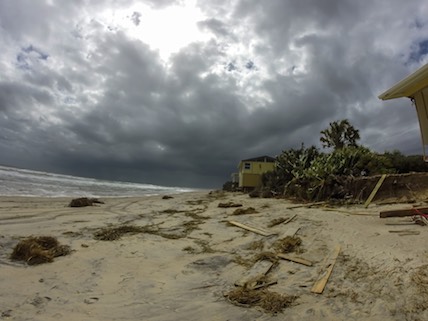
As residents all along the Southeastern coast start to put their lives back together after a devastating visit by Hurricane Matthew, these communities will face unique challenges. Not surprisingly, the calls for billions of dollars in federal government aid are already coming out loud and clear. In states affected by storms, government is often thought of as the only answer to reconstruction. However, research on the aftermath of natural disasters reveals that more often than not, local residents are better-suited to efficiently address these challenges than government on the local, state and federal levels.
Even if the federal government could increase the funding to help these communities above and beyond the $5 billion available in FEMA's disaster relief fund, the money would have to come from an omnibus bill passed by Congress in a lame-duck session, meaning it could be months before they receive an increase in funds. Even if Congress were to approve unlimited funds for rebuilding, it would most likely be surrounded by the type of bureaucracy that benefits a few while undermining true recovery of getting people back into their homes and communities.
Take a recent investigation by PBS' Frontline and NPR into flood insurance and aid distribution in the aftermath of Superstorm Sandy. They found that disaster victims' flood insurance claims were systematically underpaid, while the insurance companies selected by the feds to handle these claims were busy finding ways to increase their profits and limit payouts. Meanwhile, aid programs were slow to distribute funds while punishing homeowners with mountains of red tape and unqualified contractors, which ultimately prevented them from returning to their homes and communities.
Brad Gair, a disaster recovery manager in New York, said during the Frontline episode: "Did we put a bunch of money out? Yes. Is everybody mad? Yes. Did people get what they needed to get back into a home? No." These horrifying stories were unfortunately a repeat of previous governmental responses to disasters—for example, after Hurricane Katrina and Hurricane Andrew.
In a recent book titled Community Revival in the Wake of Disaster, three of my colleagues at the Mercatus Center—Virgil Henry Storr, Stefanie Haeffele-Balch and Laura E. Grube—explain in detail why we shouldn't be surprised that governmental responses to disasters lead to high administrative overhead costs and little relief to those who need it the most. They also show how entrepreneurs, "conceived broadly as individuals who recognize and act on opportunities to promote social change," end up filling this critical role.
They reveal how in general, these entrepreneurs promote community recovery by providing necessary goods and services and restoring and replacing disrupted social networks. The entrepreneurs also provide signals to indicate that a community is rebounding. These signals are essential to incentivize people and businesses to stay in the community or, in the event they deserted it during or after the hurricane, come back.
Just as importantly, they argue that creating space for entrepreneurs to act after disasters is essential for promoting recovery and fostering resilient communities. They tell many uplifting stories of communities that didn't wait for the various government agencies to rescue them and instead took matters into their own hands, finding ways to obtain funding, clean up and rebuild—which resulted in getting people back into their homes faster.
Storr and his co-authors link the success of these local entrepreneurs to people's knowledge of one another's needs, which allows them to find creative ways to overcome adversity. As opposed to the top-down approach of a distant government bureaucracy, the best knowledge is local knowledge. Those who have lived and worked in these communities know them best and are paramount to revival.
When it comes to the recovery after Hurricane Matthew, policymakers should remember that when social networks are broken by disasters, local knowledge is particularly powerful and holds an even bigger advantage over bureaucrats than usual, no matter how well-intentioned the public officials are. In fact, bureaucratic red tape will only cause more people more pain.


 As residents all along the Southeastern coast start to put their lives back together after a devastating visit by Hurricane Matthew, these communities will face unique challenges. Not surprisingly, the calls for billions of dollars in federal government aid are already coming out loud and clear. In states affected by storms, government is often thought of as the only answer to reconstruction. However, research on the aftermath of natural disasters reveals that more often than not, local residents are better-suited to efficiently address these challenges than government on the local, state and federal levels.