Saturday, May 25, 2019

“Wikipedia is…broken,” controlled by special interests and bad actors, says co-founder

ORIGINAL LINK
I’ve done quite a bit of reporting about how Wikipedia is definitely not “the encyclopedia anyone can edit.” It’s become a vehicle for special interests to control information. Agenda editors are able to prevent or revert edits and sourcing on selected issues and people in order to control the narrative. Watch Sharyl Attkisson’s TedX talk […]

via IFTTT

The Crisis of Sense-Making

ORIGINAL LINK

Political events in recent years have crept over the postwar order like dark clouds, and the heavy air has shaped public discourse and sensibility in ways that are unexpected and confounding. Words recited in the headlines every day give us a litany of agitation or exhilaration: Trump, Brexit, Populism, Impeachment, Social Media, Social Justice Warriors, #MeToo, Alt-Right, Troll Farms, the Death of Journalism, the Rise of Authoritarianism, Fake News, ISIS, and so on.

A perceptive insight into this landscape has come from the “Intellectual Dark Web” and other commentators found on various internet platforms: we are facing a crisis of sense-making. The incongruity of decisions made in institutions against public feeling derives from a failure of individuals in society to make sense of the world together. It’s not hard to find an ostensible cause. The internet has transformed the medium of public discourse, with profound implications for how ideas and opinions are shaped and spread. At the same time, certain economic and cultural processes have begun to generate big problems for which we don’t yet appear to have solutions. What are we going to do about climate change? Income inequality and the lingering effects of the Great Recession? The attrition of religious feeling and communal experience?

The first impulse, typically, has been to understand these changes in purely political terms. And so, in this telling, the crisis in sense-making is merely a series of political conflicts, with winners and losers. But politics is too flat and too superficial to comprehend the processes that, like a tide, seem to move our fixations from below. This is because, in reality, these changes, when viewed systematically across a population, or even the whole world, are operating on multiple levels simultaneously—geographic, epochal, ecological, cultural, economic, social and political—and any part of what we may want to observe can be distinguished, with great delicacy, by a degree of contingency, and by a web of fractal relationships with everything else involved.

An honest result does not lend itself to rhetorical binaries and zero-sum struggles. And so when public discourse focuses on the political, and its Left and Right binaries, our priorities become scrambled, and our conclusions misallocated. If we look for examples in an American context, I worry about cases like the refusal of Republicans to hold hearings on Supreme Court nominee Merrick Garland, motivated in no small part by the opposition of evangelical voters to the legality of abortion; a religious concern for sexual proprietary, with abortion as its emblem, does not justify such an unprincipled trashing of institutional norms. On the liberal side, the firing of James Damore from Google demonstrated that aggressive “equity” initiatives in corporate hiring or promotion can create a toxic political atmosphere in what should be a more purely social space, with an economic focus.

I’m not interested in litigating these particular examples—I mention them merely to point at concrete instances that are, to me, concerning and synecdochal. The reader can find his own examples, if he dislikes these. Instead, I would like to propose a series of principles for a new sense-making in public discourse, and suggest that political action, for the time being, should be antedated by an application of these principles among the conscientious.

The Personal Is Not Political

One of the great mistakes of ’60s and ’70s radicalism was the idea that “the personal is political.” There is some merit to the feeling behind this slogan: both formal policies and cultural attitudes can have a profound effect on the fate of individuals, especially those whose physical or emotional lives do not fit neatly into conventional social frameworks or power structures. However, simply noting that two domains are impacted by one another does not justify conflating them.

Politics exists because people have different values and interests (for whatever reason), but we have to live near each other, and there are limited resources that must be shared if violence is to be avoided. We’re also a social species and so we depend on one another for common endeavors and for mating. Politics demands that there be compromise among individuals or groups, given conflicting interests, and that, through some kind of social process, an accommodation is found for every party involved. Our institutions are built out of the repeated necessity of finding these accommodations. “Political idealism,” as it is usually understood, is something of an oxymoron: the ideal of any political process is compromise.

Meanwhile, the personal sphere has different concerns, and they center around the unique fate of each individual. Will I fall in love? Do I get along with my family and neighbors and colleagues and friends? How are my children doing? Am I invested in my house or my city? Do the things I do every day—my work, my hobbies, my physical habits, my involvement in a local community—do these things have meaning? The answers to these questions, ultimately, have to be decided by individuals, or between individuals, or within local communities. And the ideal of the personal should not be compromise, but self-actualization.

Corruption Matters

Centrist pundits love to beat up on tribalism; lamenting the current media environment of sharp partisanship and extrinsic ideological conflict is de rigeur among “reasonable” commentators. However, this masks the real problem embedded in tribalism: not the anger and simmering violence it generates, but the corruption it enables.

The word corruption often conjures images of a man in a trench-coat passing out brown envelopes of money for contracts or favors. However, in America, this sort of thing isn’t nearly as pervasive or harmful as it has been in other places and other eras. Corruption can be subtle, and it can be enacted through public kabuki rituals that are not illegal on their face; corruption, nevertheless, is always unethical, and it always has the insidious potential to proceed step-wise through a whole society.

The classic corrupt political maneuver of recent decades involves politicians who overtly signal for policies that favor narrow special interests and receive large donations to their campaigns or to affiliated organizations from those interests, without having to make an explicit ask. In American government, everything from the military industrial complex to student loans to health insurance has this stench. Other countries, no doubt, have their own version of this. It also can permeate the private sector. Large companies often gain enough market clout to exploit their customers, vendors, and employees. In general, policies and business decisions that encourage rent-seeking, tax avoidance, and environmentally destructive behavior are deeply corrupt, regardless of the legality of such actions, and this should effect how we participate in our institutions.

In Policy, Outcomes Are More Important than Identity

Tribalism not only blinds us to corruption, it also disorders our expectations about what institutional processes are meant to achieve. Institutions are not merely intended as vessels of belongingness. Some may offer this as a fringe benefit, but, fundamentally, institutions have a purpose to fulfill in their actions, and they lose their reason for being when that purpose is not ethical, or necessary and clearly circumscribed. Humans should seek belongingness first from family and from friendships, and even where membership in some organization may be gratifying, the actions of the institution have to be differentiated from the feeling of membership itself.

When politics hinges on affirmations of identity, the institutions of politics, the government and its appendages, are no longer seen as the means by which compromises can be crafted among competing groups or individuals. Policy, then, becomes a mode of self-expression, and any degree of narcissism can find its justification in an ideology and its prescribed policies. The best response to a lot of what passes for political argument is: Get over yourself!

The entailment from policies to outcomes is largely empirical and testable. We should fully expect to have conflict and compromise with regard to preferred outcomes, but no one should listen to uninformed chowderheads trying to persuade us of bad ideas for the aggrandizement of an identity.

Religious Feeling Can Only Be Satisfied in a Local Setting

Religion allows for individuals to orient their emotional lives in ways that align with the basic social prerogatives of their respective communities. When a religion is able to express, iconically, the spiritual feeling of a time or a place, it allows for the individual, there, to experience a profound sense of belongingness and meaning. There has been an unfortunate tendency, since the Scientific Revolution, to reduce religious practice to a rehearsal of belief, as if the symbolism and feeling endowed in communal rituals were a compulsion of what can and cannot be known, in some deterministic sense. Feeling is not in what is known, except to the extent that wisdom might let us know something about feeling.

Religious identification has been in decline for decades now all over the world, but especially in Europe and America. It has been proposed that the politics of identity or of other ideologies have stepped into this breach. There may be some truth to this and, if so, then it is a dangerous truth. At a minimum, we should be concerned about decadence and empty hedonism in a world without the iconicity of purpose. I want to suggest, however, that this emotional need cannot be fulfilled at a high social level, and that most of the public discussion about religion is focused on the wrong things.

It’s not clear that poorly attended churches preaching millennia-old doctrine are relevant to a post-industrial world, nor should we be inspired by the obsession of fundamentalists to enforce sexual proprietary through law or violence. Big, capitalized terms like “Western Civilization” or “Eastern Spirituality” don’t really have anything concrete to offer us. The images projected at us through TV and the internet have been made into spectacles for entertainment.

Instead, we must look around us, and find meaning in our immediate surroundings, in people we meet face-to-face, and in actions that bring value to our personal lives. Whatever is beamed to us on the news every day should not be of profound emotional interest.

Spend as Much Time Cross-Examining Your Own Soul as You Spend Excoriating or Venerating Public Figures

Does this require elaboration? Who among the outraged has a deeply satisfying personal life? Who is driven to publicly perform their feelings, but an actor?

A Society’s Success Should Be Judged in Millennia

Despite everything that has been learned about long stretches of time in the history of the earth and of the cosmos, we’re obsessed, culturally, with “moment time.” There is something to this, psychologically: the individual has every reason to devote considerable attention to the events that make up his or her day, and what can be remembered, verbally, among friends and family, at most, around the span of a decade or two. As I just argued, this is what should occupy our emotional lives. However, the awesome power of technology, in an industrialized economy, has unleashed the terrifying possibility that we could liquidate civilization through nuclear war or environmental destruction within a few generations. Our goals and our values are not only emotional, and so when we are a little more clear-eyed about the wider world, our actions must be framed in civilizational terms, across hundreds, thousands, or even hundreds of thousands of years. Only through such a perspective can humans take responsibility for themselves at this time in history.

Our Intellectual Systems Are Theoretically Stagnant and Need New Ideas

The academy and other institutions mostly produce intellectuals who fall into two categories: jackals and rabbits. Jackals misuse their knowledge for political ends or for self-aggrandizement, and are attracted to ideas dead and decomposing. Rabbits patiently munch away at small problems while nervously avoiding the unknown, and are admitted to run and hide when approached by strangers.

There have been great intellectual triumphs in recent centuries, and amazing work is being done right now on scientific applications to produce technology. But theoretical work across disciplines has stagnated, and this makes febrile soil for conspiracy theories, ideology, and the idiocies of the weak-willed and wicked. Many feel entitled to their opinions above the exigencies of having to learn. All the while, so many essential questions remain unanswered, either because we pay them no mind, or because we have no fresh ideas. How do we account for the subjectivity of consciousness in physical terms? What is rhythm? Why are we taught that there are three observable dimensions of space and one linear dimension of time? How is paralanguage related, structurally, to music? What, exactly, are grammatical categories?  What is “information”? We have a solid Darwinian theory of function—where is the complementary theory of form, and which is more basic? What is “life”?

I might posit here another category of intellectual, the platypus. We need a venomous, duck-waddling, semi-aquatic, egg-laying mammal, the last of its kind, the first comedian of Dream Time. Someone with a completely new idea of an old feeling, and enough sense of irony to communicate it. It’s very hard to make fundamental progress on big intellectual problems, and even the most talented among us can fail through no intrinsic fault of their own. But, socially, we must make a place for the awkward, original platypus, whether or not he succeeds. Or ours will be a kingdom of jackals.

One might say that at least some of these principles are self-evident banalities. Yes! Principles are platitudes! But each one of us must be reminded of them, from time to time, when we’ve forgotten the melody. Or the squawk of the platypus. Yes!


Jeffrey Quackenbush lives in the White Mountains of New Hampshire, and works in the renewable energy industry.

Photo by Jeremy Thomas on Unsplash

The post The Crisis of Sense-Making appeared first on Quillette.


via IFTTT

Facebook Bans CrossFit Group For Advocating Low-Carb, High-Fat Diets

Actually no, you pathological liar

https://twitter.com/EvaKBartlett/status/1132311456643506178?s=09


Merck Created Hit List to "Destroy," "Neutralize" or "Discredit" Dissenting Doctors - CBS News

http://www.cbsnews.com/8301-505123_162-42841411/merck-created-hit-list-to-destroy-neutralize-or-discredit-dissenting-doctors/

North Dakota's Food Freedom Law Dodges Another Bullet

ORIGINAL LINK

Powerful forces in North Dakota have once again targeted the state's popular food freedom law, but it appears the laws' supporters have successfully beaten back these attacks from state lawmakers and regulators.

The 2017 law, found here, "allows direct sales of many foods by a producer in the state to consumers in the state," I wrote last year. "That includes direct sales of virtually any foods—from apple slices to homemade pickles to homemade zucchini bread—except meat or raw dairy products."

In that column, I detailed how North Dakota health regulators were attempting to use the rulemaking process to undermine the law. As I explained, that effort failed in large part due to the fact the law doesn't allow the health department to draft such rules.

But the failure led some lawmakers opposed to food freedom—led by a lawmaker who's also a retired grocery owner and former head of the state's grocers' association, just in case you were wondering how the grocers' lobby feels about a little competition—to attempt to amend the law using the legislative process. Last month, that effort also failed. After the defeat, State Sen. Jerry Klein, the former grocery lobbyist, said he's now merely an "onlooker."

Klein no doubt looked eagerly on as the health department proposed rules once again to neuter the law. Those proposed rules were reviewed by North Dakota's State Health Council, which has oversight authority.

I'm happy to report the latest regulatory effort to destroy the food freedom law also failed.

Genny Dienstmann, a consumer member who chairs the council, confirmed to me by phone this week that the body had tabled the health department's proposed rules and has no current plans to take any further action on them, a big win for food freedom proponents.

Bravo.

Food freedom laws are only growing in popularity, as I detail in my recent book, Biting the Hands that Feed Us: How Fewer, Smarter Laws Would Make Our Food System More Sustainable. Such laws are on the books in a growing number of states, including Wyoming, Utah, and Maine (though the latter differs slightly from others). Nonpartisan groups such as the National Conference of State Legislatures track these laws. ALEC's website features model food freedom legislative language.

The spread of food freedom laws has only been limited by opponents—chiefly advocates for stricter food-safety laws.

Take Food Safety News's Dan Flynn. Not one to traffic in hyperbole, Flynn nevertheless painted the North Dakota legislature's failure to amend the law as a sign that state lawmakers are willing to "risk some botulism once in a while."

He's right. But everyone who eats food—regulated or unregulated—also risks occasional botulism. "Everyone is at risk for foodborne botulism," North Dakota's health department cautions. Along these same lines, a search for the term "botulism" at the website of Marler Clark, the law firm that publishes Food Safety News, yields three search results, each of which involves botulism in foods sold in the regulated commercial marketplace. It appears all lawmakers—those that oppose food freedom laws and those that support them—"risk some botulism once in a while."

I asked Julie Wagendorf, director of the Division of Food and Lodging in the state health department—which, again, opposes the law—if there have been any cases of foodborne illness in North Dakota involving foods sold under the law since it took effect. Wagendorf responded, but she didn't answer that question.

A quick web search revealed that North Dakota has been dealing of late with an outbreak of foodborne illness. It's one of eight states where sushi-grade tuna has been found to harbor Salmonella. But you can't blame the state's food freedom law. Tuna is subject to FDA inspection and is sold commercially, rather than under the state's law.

That said, there's no evidence anyone has ever been sickened by foods sold under a food freedom law.

Given that, do we really need more rules?

Wagendorf insists we do.

"Clarity is needed for what is already stated in law as not authorized under this chapter," she told me by email.

The law's supporters disagree.

"We absolutely do not believe [state lawmakers] have legal authority to write rules for this particular section of [state law]," LeAnn Harner, a North Dakota farmer and key supporter of the state's food freedom law, wrote to me in an email this week. "We believe the current law as passed in 2017 is working. Our producers are doing their very best to produce safe, delicious food and drink products."

"The current law provided much-needed authority to small farm and home business owners to provide healthy, wholesome food directly to their local consumers who prefer such products, and the law should continue to support such efforts," says Alexia Kulwiec, executive director of the Farm-to-Consumer Legal Defense Fund—a nonprofit advocacy group on whose board I serve—in an email to me this week.

I support state food freedom laws because they expand choice, not because no one has ever been sickened by food sold under these laws. Even if a person were to fall ill after eating, say, a homemade pie they bought at a farmer's market—and that will happen someday—I would continue to support such laws. Why?

It's simple. Foods are not legal because they don't ever sicken anyone. By which I mean, countless foods that are produced and inspected according to government regulations and sold in restaurants, groceries, and elsewhere have made people in this country sick. If we banned every last one of the regulated animal and vegetable products that have sickened or killed people over the years, there'd be nothing left to eat. Given the choice between choice and no choice—between food freedom and prohibitive rules—I'll take the former every time.


via IFTTT

Friday, May 24, 2019

Spurious US 18-Count Indictment of Julian Assange: A Mockery of Justice

ORIGINAL LINK
Global Research, May 24, 2019

It was just a matter of time before the Trump regime piled on more spurious charges against Assange, clearly prepared long before Thursday’s release.

They’re on top of falsely accusing him of “conspiracy to commit computer intrusion,” according to an unsealed indictment, dated March 6, 2018.

New charges and the above one are all about waging war on truth-telling investigative journalism the way it should be conducted, providing vital information on issues related to the rule of law, fundamental rights, and the public welfare.

On Thursday, the Trump regime’s Justice Department headlined: “WikiLeaks Founder Julian Assange Charged in 18-Count Superseding Indictment — Charges Related to Illegally Obtaining, Receiving and Disclosing Classified Information (sic).”

Spurious charges include the following:

  • Criminal No.1:18-cr-l11 (CMH)
  • Count1: 18 U.S.C. (US Code) § 793(g) Conspiracy To Receive National Defense Information
  • Counts 2-4: 18 U.S.C. & 793(b) and 2 — Obtaining National Defense Information
  • Counts 5-8: 18 U.S.C. § 793(c) and 2 — Obtaining National Defense Information
  • Counts 9-11: 18U.S.C. §793(d) and 2 — Disclosure of National Defense Information
  • Counts 12-14: 18 U.S.C. § 793(e) and 2 — Disclosure of National Defense Information
  • Counts 15-17: 18 U.S.C. § 793(e) — Disclosure of National Defense Information
  • Count 18: 18 U.S.C. §§ 371 and 1030 — Conspiracy To Commit Computer Intrusion

According an accompanying DOJ statement,

“Assange conspired with (Chelsea) Manning…aid(ing) and abet(ing) her in obtaining classified information with reason to believe that the information was to be used to the injury of the United States or the advantage of a foreign nation” — a bald-faced Big Lie.

Manning is a courageous whistleblower. Material she released exposed US high crimes of war and against humanity, information vital for the public to know about how its government operates — extrajudicially time and again, accountability never forthcoming.

Assange is an investigative journalist. He earlier explained that WikiLeaks has the right “to publish newsworthy content,” adding: “Consistent with the US Constitution, we publish material that we can confirm to be true.”

Everyone in the US has the same right, what the First Amendment is all about, affirming speech, press, and academic freedoms – the most fundamental of all democratic rights bipartisan hardliners in Washington want compromised and eliminated.

Arresting and detaining Assange by UK authorities for extradition to the US for prosecution on the above charges is all about wanting truth-telling on vital issues suppressed — the same true for actions taken against Manning and other courageous whistleblowers.

The US wants scrutiny of its dirty linen prevented. Targeting individuals courageously revealing it harshly is all about intimidating other potential whistleblowers with damning information to remain silent.

Manning, Assange, and others targeted like them are innocent of charges against them. They’re victims of US judicial unfairness, denied their fundamental habeas, due process, and equal protection under law rights.

Manning is currently detained indefinitely for invoking her constitutional right to remain silent — refusing to give grand jury testimony that could unwittingly be used by prosecutors against Assange, potentially leaving herself vulnerable to new falsified charges.

Like Manning in 2010, Assange is charged under the long ago outdated 1917 Espionage Act, relating to WW I, what should have been rescinded at war’s end.

Following Assange’s unlawful April 11 arrest in London at the behest of the Trump regime, the Center for Constitutional Rights (CCR) called the action against him “an attack on press freedom,” a flagrant First Amendment breach, leaving all independent journalists vulnerable to similar actions against them.

In response to Thursday’s 18-count indictment of Assange, ACLU speech, privacy, and technology project director Ben Wizner said the following:

“For the first time in the history of our country, the government has brought criminal charges against a publisher for the publication of truthful information,” adding:

“This is an extraordinary escalation of the Trump (regime’s) attacks on journalism, and a direct assault on the First Amendment.”

“It establishes a dangerous precedent that can be used to target all news organizations that hold the government accountable by publishing its secrets.”

Each charge against Assange carries a potential 10-year sentence. Trump regime hardliners want him punished and silenced behind bars longterm — for the “crime” of truth-telling journalism the way it should be.

In response to Thursday’s indictment, WikiLeaks tweeted: “This is madness.” It represents “the end of national security journalism and the first amendment.”

At age 47 in poor health from his near seven-year ordeal in Ecuador’s London embassy to avoid his current fate, a slow-motion judicial unfairness death sentence likely awaits him.

Given deplorable healthcare for US prison inmates, what greatly shortened human rights lawyer Lynne Stewart’s life from her unjustifiable four-year imprisonment ordeal, Assange may not last more than a few years behind bars, especially if abused by US prison authorities.

A Final Comment

Chelsea Manning and her lawyer Moira Meltzer-Cohen said the following in response to Assange’s 18-count indictment:

“The continued detention of Chelsea Manning is purely punitive. Today’s events underscore what Chelsea has previously said, that “(a)ll of the substantive questions pertained to my disclosures of information to the public in 2010—answers I provided in extensive testimony, during my court-martial in 2013.”

“I continue to accept full and sole responsibility for those disclosures in 2010. It’s telling that the government appears to have already obtained this indictment before my contempt hearing last week. (The Trump regime) describes the press as the opposition party and an enemy of the people.”

“Today, they use the law as a sword, and have shown their willingness to bring the full power of the state against the very institution intended to shield us from such excesses.”

Manning’s attorney Meltzer-Cohen said “up until now, the Department Of Justice has been reticent to actually indict publishers for work implicating matters of national security, because the first amendment rights of the press and public are so constitutionally valuable.”

Assange’s 18-count indictment “signals a real shift, and sets a new precedent for the federal government’s desire to chill and even punish the vigorous exercise of the free press.”

*

Note to readers: please click the share buttons below. Forward this article to your email lists. Crosspost on your blog site, internet forums. etc.

Award-winning author Stephen Lendman lives in Chicago. He can be reached at lendmanstephen@sbcglobal.net. He is a Research Associate of the Centre for Research on Globalization (CRG)

His new book as editor and contributor is titled “Flashpoint in Ukraine: US Drive for Hegemony Risks WW III.”

http://www.claritypress.com/LendmanIII.html

Visit his blog site at sjlendman.blogspot.com.

The original source of this article is Global Research
Copyright © Stephen Lendman, Global Research, 2019


via IFTTT

"We're Being Played": Tucker Carlson Features Leaked Syria Chemical Attack Memo

The Ongoing Destruction Of The Minds Of Children | Zero Hedge

https://www.zerohedge.com/news/2019-05-24/ongoing-destruction-minds-children

Professional Assange Smearers Finally Realize His Fate Is Tied To Theirs

ORIGINAL LINK

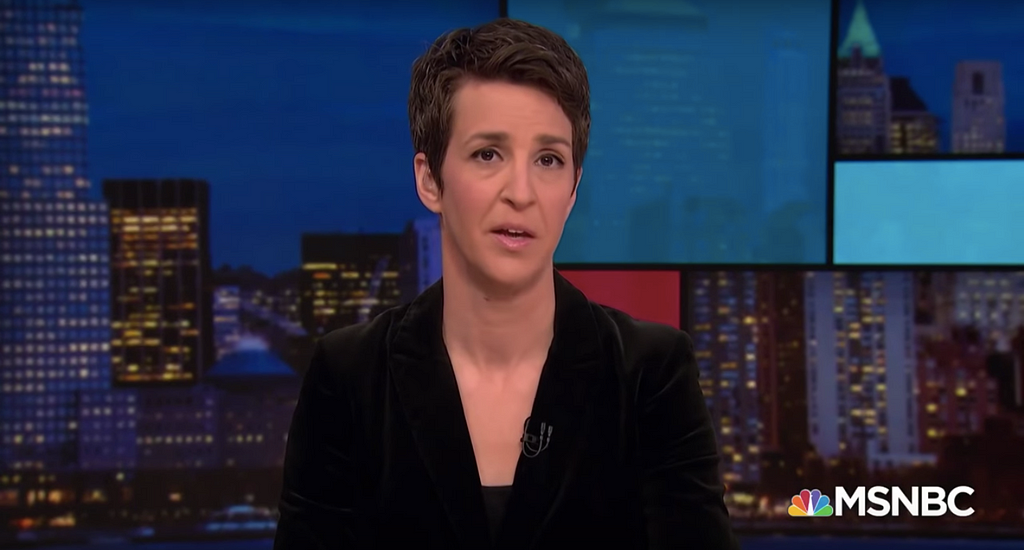
Rachel Maddow has aired a segment condemning the new indictment against Julian Assange for 17 alleged violations of the Espionage Act.

Yes, that Rachel Maddow.

MSNBC’s top host began the segment after it was introduced by Chris Hayes, agreeing with her colleague that it’s surprising that more news outlets aren’t giving this story more “wall to wall” coverage, given its immense significance. She recapped Assange’s various legal struggles up until this point, then accurately described Assange’s new Espionage Act charges for publishing secret documents.

“And these new charges are not about stealing classified information or outsmarting computer systems in order to illegally obtain classified information,” Maddow said. “It’s not about that. These new charges are trying to prosecute Assange for publishing that stolen, secret material which was obtained by somebody else. And that is a whole different kettle of fish then what he was initially charged with.”

“By charging Assange for publishing that stuff that was taken by Manning, by issuing these charges today, the Justice Department has just done something you might have otherwise thought was impossible,” Maddow added after explaining the unprecedented nature of this case. “The Justice Department today, the Trump administration today, just put every journalistic institution in this country on Julian Assange’s side of the ledger. On his side of the fight. Which, I know, is unimaginable. But that is because the government is now trying to assert this brand new right to criminally prosecute people for publishing secret stuff, and newspapers and magazines and investigative journalists and all sorts of different entities publish secret stuff all the time. That is the bread and butter of what we do.”

Maddow carefully explained to her audience that these new charges have nothing at all to do with the 2016 election or any of the Russiagate nonsense the MSNBC pundit has been devoting her life to, correctly calling what the Trump administration is doing with Assange “a novel legal effort to punch a huge hole in the First Amendment.” She tied this in with Trump’s common references to the mass media as the “enemy of the people”, finally taking mainstream liberalism into a direct confrontation with Trump’s actual war on the press instead of nonsense about his tweeting mean things about Jim Acosta. She rightly highlighted the dangers of allowing a president with a thick authoritarian streak the ability to prosecute journalists he doesn’t like, and discussed the possibility that the UK may not comply with this new agenda in extradition proceedings.

“I think these 17 espionage charges against the WikiLeaks guy are a huge deal, and a very dark development,” Maddow concluded. “Chris Hayes this evening called it a ‘four alarm development’, and I absolutely share that.”

“And, you know, I know you,” Maddow continued, pointing to the camera. “Given everything else that we know about the WikiLeaks guy, I can feel through the television right now your mixed feelings about what I am saying. I can feel what may be, perhaps, a certain lack of concern about Julian Assange’s ultimate fate, given his own gleeful and extensive personal role in trying to help a hostile foreign government interfere in our election in order to install their chosen president with WikiLeaks’ help. Okay? I know. Okay, I feel ya. I got it. But, it is a recurring theme in history, heck, it is a recurring theme in the Bible, that they always pick the least sympathetic figures to try this stuff on first. Despite anyone’s feelings about this spectacularly unsympathetic character at the center of this international drama, you are going to see every journalistic institution in this country, every First Amendment supporter in this country, left, right and center, swallow their feelings about this particular human and denounce what the Trump administration is trying to do here. Because it would fundamentally change the United States of America.”

Wow. Make no mistake, this is a hugely significant development. This isn’t just some columnist for the New York Times or the Guardian, this is Rachel effing Maddow, the Queen Mother of all tinfoil pussyhat-wearing Russiagate insanity. This same pundit was just a couple of months ago not just smearing but outright lying about Assange, deceitfully telling her audience that the new legal rings closing around Assange were about his 2016 publications then instructing viewers not to Google anything about it because they’ll get computer viruses. Now that she’s recognized that this could actually hurt her and her network directly, she’s finally feeding her audience a different narrative out of sheer enlightened self-interest.

The fact that such a hugely influential figure in mainstream liberal media is now pushing back against Assange’s prosecution, and doing so in a way that her mainstream liberal anti-Trump audience can relate to, cannot be over-appreciated. Maddow’s credulous audience would eat live kittens if she told them to, so the way she’s pushing back against a dangerous legal precedent in language they can understand will make a difference in the way American liberals think about Assange’s predicament. It won’t make them like him, it won’t make them value the things he’s done, but it will get them to finally begin resisting something that badly needs to be resisted. And that’s huge.

The danger has always been that this fatal blow to journalism would be meted out with total compliance and support from a population hammered into docility by the ongoing narrative war which has been waged on Assange’s and WikiLeaks’ reputations with the help of the mass media. There was a very real danger that thought leaders like Maddow were going to choose their feelings over reasoning when the foot finally fell and the charges that criminalize journalism as “espionage” were finally put into play. I don’t think anyone would have been surprised if she’d applied that giant intellect of hers into making it possible to ignore it without upsetting her audience and try and figure it out later when it was too late and the legal precedent was set.

She actually chose to do the right thing. I’m gobsmacked, and it’s not an exaggeration to say that my hope for humanity sparked up a little today.

If the resting smugfaced apex of liberal psychosis is getting this one right, then many more will surely follow. And indeed, many already are. In addition to Hayes’ coverage of the story, MSNBC’s Ari Melber also did a segment harshly criticizing the implications of Trump administration’s new charges. We’re seeing multiple segments from CNN about the grave dangers of the legal precedent that is being set with the superseding indictment, as well as urgent warnings about the new charges from major publications like the New York Times, the Washington Post, and the Guardian. The outlets which have been smearing Assange relentlessly are now finding themselves forced to defend him.

A typical comment under Maddow’s YouTube share of this segment reads “This is very strange. Very alarming! There we go again. The GOP is preparing the country for a Dictatorship.” And okay, that’s not exactly what is happening (this has been a bipartisan push and it’s not just preparations, we’re in full swing), but whatever, now this viewer can actually see the monster’s outlines. Finally the Maddow crowd which has been fruitlessly expending all their energy so far on punching at Russian shadows will actually be attacking a real thing.

And I’m quietly excited about that. I’m eager to see what happens to the #Resistance if it actually starts #Resisting something. It doesn’t matter that this is only happening because mainstream liberal media outlets realized that they might be next on the chopping block; it matters that it’s happening, period.

For years mainstream liberals have been fixating on the fake Russiagate psyop and rending their garments about Trump’s rude tweets while commentators like me desperately implored them to pay attention to the actual dangerous agendas that this administration is actually advancing. They’ve been in a holding pattern of adamantly refusing to do that, and now, because it’s threatening them personally, we’re suddenly seeing a sharp deviation from that holding pattern.

As Bill Murray said at the end of Groundhog Day, something is different. Anything different is good.

________________________

Everyone has my unconditional permission to republish or use any part of this work (or anything else I’ve written) in any way they like free of charge. My work is entirely reader-supported, so if you enjoyed this piece please consider sharing it around, liking me on Facebook, following my antics on Twitter, throwing some money into my hat on Patreon or Paypal, purchasing some of my sweet merchandise, buying my new book Rogue Nation: Psychonautical Adventures With Caitlin Johnstone, or my previous book Woke: A Field Guide for Utopia Preppers. The best way to get around the internet censors and make sure you see the stuff I publish is to subscribe to the mailing list for my website, which will get you an email notification for everything I publish. For more info on who I am, where I stand, and what I’m trying to do with this platform, click here.

Bitcoin donations:1Ac7PCQXoQoLA9Sh8fhAgiU3PHA2EX5Zm2

stat?event=post.clientViewed&referrerSou

via IFTTT