German Chancellor Angela Merkel has agreed to implement a partial second lockdown in a bid to control rising coronavirus cases in the country.
ORIGINAL LINK

Seeking Truth in a World of Propaganda. Links do not necessarily indicate agreement with stories or perspectives.
“Those who are able to see beyond the shadows and lies of their culture will never be understood, let alone believed, by the masses.” - Plato
Guest Post by Glenn Greenwald
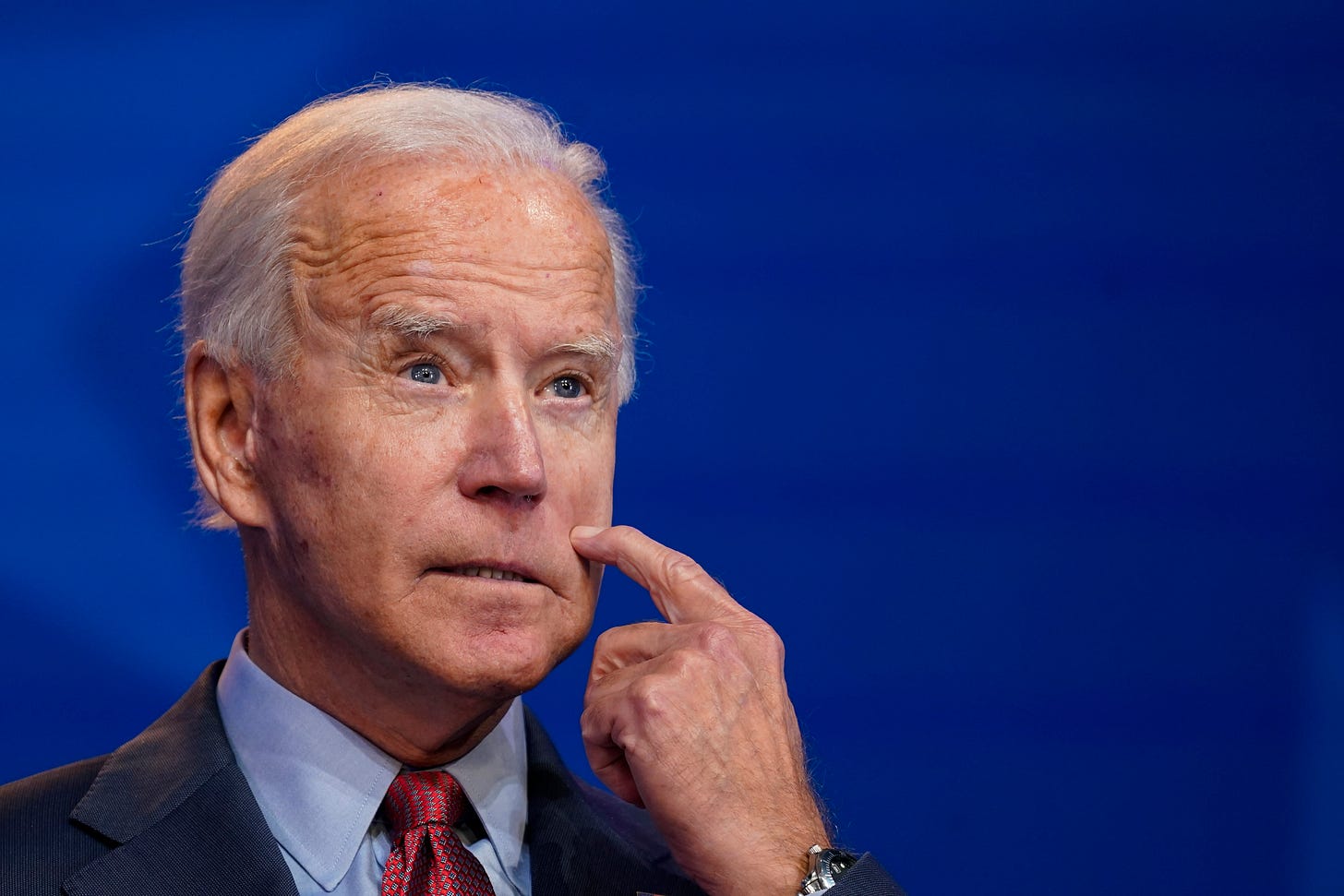
Today I sent my intention to resign from The Intercept, the news outlet I co-founded in 2013 with Jeremy Scahill and Laura Poitras, as well as from its parent company First Look Media.
The final, precipitating cause is that The Intercept’s editors, in violation of my contractual right of editorial freedom, censored an article I wrote this week, refusing to publish it unless I remove all sections critical of Democratic presidential candidate Joe Biden, the candidate vehemently supported by all New-York-based Intercept editors involved in this effort at suppression.
The censored article, based on recently revealed emails and witness testimony, raised critical questions about Biden’s conduct. Not content to simply prevent publication of this article at the media outlet I co-founded, these Intercept editors also demanded that I refrain from exercising a separate contractual right to publish this article with any other publication.
I had no objection to their disagreement with my views of what this Biden evidence shows: as a last-ditch attempt to avoid being censored, I encouraged them to air their disagreements with me by writing their own articles that critique my perspectives and letting readers decide who is right, the way any confident and healthy media outlet would. But modern media outlets do not air dissent; they quash it. So censorship of my article, rather than engagement with it, was the path these Biden-supporting editors chose.
The censored article will be published on this page shortly. My letter of intent to resign, which I sent this morning to First Look Media’s President Michael Bloom, is published below.
As of now, I will be publishing my journalism here on Substack, where numerous other journalists, including my good friend, the great intrepid reporter Matt Taibbi, have come in order to practice journalism free of the increasingly repressive climate that is engulfing national mainstream media outlets across the country.
This was not an easy choice: I am voluntarily sacrificing the support of a large institution and guaranteed salary in exchange for nothing other than a belief that there are enough people who believe in the virtues of independent journalism and the need for free discourse who will be willing to support my work by subscribing.
Like anyone with young children, a family and numerous obligations, I do this with some trepidation, but also with the conviction that there is no other choice. I could not sleep at night knowing that I allowed any institution to censor what I want to say and believe — least of all a media outlet I co-founded with the explicit goal of ensuring this never happens to other journalists, let alone to me, let alone because I have written an article critical of a powerful Democratic politician vehemently supported by the editors in the imminent national election.
But the pathologies, illiberalism, and repressive mentality that led to the bizarre spectacle of my being censored by my own media outlet are ones that are by no means unique to The Intercept. These are the viruses that have contaminated virtually every mainstream center-left political organization, academic institution, and newsroom. I began writing about politics fifteen years ago with the goal of combatting media propaganda and repression, and — regardless of the risks involved — simply cannot accept any situation, no matter how secure or lucrative, that forces me to submit my journalism and right of free expression to its suffocating constraints and dogmatic dictates.
From the time I began writing about politics in 2005, journalistic freedom and editorial independence have been sacrosanct to me. Fifteen years ago, I created a blog on the free Blogspot software when I was still working as a lawyer: not with any hopes or plans of starting a new career as a journalist, but just as a citizen concerned about what I was seeing with the War on Terror and civil liberties, and wanting to express what I believed needed to be heard. It was a labor of love, based in an ethos of cause and conviction, dependent upon a guarantee of complete editorial freedom.
It thrived because the readership I built knew that, even when they disagreed with particular views I was expressing, I was a free and independent voice, unwedded to any faction, controlled by nobody, endeavoring to be as honest as possible about what I was seeing, and always curious about the wisdom of seeing things differently. The title I chose for that blog, “Unclaimed Territory,” reflected that spirit of liberation from captivity to any fixed political or intellectual dogma or institutional constraints.
When Salon offered me a job as a columnist in 2007, and then again when the Guardian did the same in 2012, I accepted their offers on the condition that I would have the right, except in narrowly defined situations (such as articles that could create legal liability for the news outlet), to publish my articles and columns directly to the internet without censorship, advanced editorial interference, or any other intervention permitted or approval needed. Both outlets revamped their publication system to accommodate this condition, and over the many years I worked with them, they always honored those commitments.
When I left the Guardian at the height of the Snowden reporting in 2013 in order to create a new media outlet, I did not do so, needless to say, in order to impose upon myself more constraints and restrictions on my journalistic independence. The exact opposite was true: the intended core innovation of The Intercept, above all else, was to create a new media outlets where all talented, responsible journalists would enjoy the same right of editorial freedom I had always insisted upon for myself. As I told former New York Times Executive Editor Bill Keller in a 2013 exchange we had in The New York Times about my critiques of mainstream journalism and the idea behind The Intercept: “editors should be there to empower and enable strong, highly factual, aggressive adversarial journalism, not to serve as roadblocks to neuter or suppress the journalism.”
When the three of us as co-founders made the decision early on that we would not attempt to manage the day-to-day operations of the new outlet, so that we could instead focus on our journalism, we negotiated the right of approval for senior editors and, especially the editor-in-chief. The central responsibility of the person holding that title was to implement, in close consultation with us, the unique journalistic vision and journalistic values on which we founded this new media outlet.
Chief among those values was editorial freedom, the protection of a journalist’s right to speak in an honest voice, and the airing rather than suppression of dissent from mainstream orthodoxies and even collegial disagreements with one another. That would be accomplished, above all else, by ensuring that journalists, once they fulfilled the first duty of factual accuracy and journalistic ethics, would be not just permitted but encouraged to express political and ideological views that deviated from mainstream orthodoxy and those of their own editors; to express themselves in their own voice of passion and conviction rather stuffed into the corporatized, contrived tone of artificial objectivity, above-it-all omnipotence; and to be completely free of anyone else’s dogmatic beliefs or ideological agenda — including those of the three co-founders.
The current iteration of The Intercept is completely unrecognizable when compared to that original vision. Rather than offering a venue for airing dissent, marginalized voices and unheard perspectives, it is rapidly becoming just another media outlet with mandated ideological and partisan loyalties, a rigid and narrow range of permitted viewpoints (ranging from establishment liberalism to soft leftism, but always anchored in ultimate support for the Democratic Party), a deep fear of offending hegemonic cultural liberalism and center-left Twitter luminaries, and an overarching need to secure the approval and admiration of the very mainstream media outlets we created The Intercept to oppose, critique and subvert.
As a result, it is a rare event indeed when a radical freelance voice unwelcome in mainstream precincts is published in The Intercept. Outisde reporters or writers with no claim to mainstream acceptability — exactly the people we set out to amplify — have almost no chance of being published. It is even rarer for The Intercept to publish content that would not fit very comfortably in at least a dozen or more center-left publications of similar size which pre-dated its founding, from Mother Jones to Vox and even MSNBC.
Courage is required to step out of line, to question and poke at those pieties most sacred in one’s own milieu, but fear of alienating the guardians of liberal orthodoxy, especially on Twitter, is the predominant attribute of The Intercept’s New-York based editorial leadership team. As a result, The Intercept has all but abandoned its core mission of challenging and poking at, rather than appeasing and comforting, the institutions and guardians most powerful in its cultural and political circles.
Making all of this worse, The Intercept — while gradually excluding the co-founders from any role in its editorial mission or direction, and making one choice after the next to which I vocally objected as a betrayal of our core mission — continued publicly to trade on my name in order to raise funds for journalism it knew I did not support. It purposely allowed the perception to fester that I was the person responsible for its journalistic mistakes in order to ensure that blame for those mistakes was heaped on me rather than the editors who were consolidating control and were responsible for them.
The most egregious, but by no means only, example of exploiting my name to evade responsibility was the Reality Winner debacle. As The New York Times recently reported, that was a story in which I had no involvement whatsoever. While based in Brazil, I was never asked to work on the documents which Winner sent to our New York newsroom with no request that any specific journalist work on them. I did not even learn of the existence of that document until very shortly prior to its publication. The person who oversaw, edited and controlled that story was Betsy Reed, which was how it should be given the magnitude and complexity of that reporting and her position as editor-in-chief.
It was Intercept editors who pressured the story’s reporters to quickly send those documents for authentication to the government — because they was eager to prove to mainstream media outlets and prominent liberals that The Intercept was willing to get on board the Russiagate train. They wanted to counter-act the perception, created by my articles expressing skepticism about the central claims of that scandal, that The Intercept had stepped out of line on a story of high importance to U.S. liberalism and even the left. That craving — to secure the approval of the very mainstream media outlets we set out to counteract — was the root cause for the speed and recklessness with which that document from Winner was handled.
But The Intercept, to this very day, has refused to provide any public accounting of what happened in the Reality Winner story: to explain who the editors were who made mistakes and why any of it happened. As the New York Times article makes clear, that refusal persists to this very day notwithstanding vocal demands from myself, Scahill, Laura Poitras and others that The Intercept, as an institution that demands transparency from others, has the obligation to provide it for itself.
The reason for this silence and this cover-up is obvious: accounting to the public about what happened with the Reality Winner story would reveal who the actual editors are who are responsible for that deeply embarrassing newsroom failure, and that would negate their ability to continue to hide behind me and let the public continue to assume that I was the person at fault for a reporting process from which I was completely excluded from the start. That is just one example illustrating the frustrating dilemma of having a newsroom exploit my name, work and credibility when it is convenient to do so, while increasingly denying me any opportunity to influence its journalistic mission and editorial direction, all while pursuing an editorial mission completely anathema to what I believe.
Despite all of this, I did not want to leave The Intercept. As it deteriorated and abandoned its original mission, I reasoned to myself — perhaps rationalized — that as long as The Intercept at least continued to provide me the resources to personally do the journalism I believe in, and never to interfere in or impede my editorial freedom, I could swallow everything else.
But the brute censorship this week of my article — about the Hunter Biden materials and Joe Biden’s conduct regarding Ukraine and China, as well my critique of the media’s rank-closing attempt, in a deeply unholy union with Silicon Valley and the “intelligence community,” to suppress its revelations — eroded the last justification I could cling to for staying. It meant that not only does this media outlet not provide the editorial freedom to other journalists, as I had so hopefully envisioned seven years ago, but now no longer even provides it to me. In the days heading into a presidential election, I am somehow silenced from expressing any views that random editors in New York find disagreeable, and now somehow have to conform my writing and reporting to cater to their partisan desires and eagerness to elect specific candidates.
To say that such censorship is a red line for me, a situation I would never accept no matter the cost, is an understatement. It is astonishing to me, but also a reflection of our current discourse and illiberal media environment, that I have been silenced about Joe Biden by my own media outlet.
Numerous other episodes were also contributing causes to my decision to leave: the Reality Winner cover-up; the decision to hang Lee Fang out to dry and even force him to apologize when a colleague tried to destroy his reputation by publicly, baselessly and repeatedly branding him a racist; its refusal to report on the daily proceedings of the Assange extradition hearing because the freelance supporter doing an outstanding job was politically distasteful; its utter lack of editorial standards when it comes to viewpoints or reporting that flatter the beliefs of its liberal base (The Intercept published some of the most credulous and false affirmations of maximalist Russiagate madness, and, horrifyingly, took the lead in falsely branding the Hunter Biden archive as “Russian disinformation” by mindlessly and uncritically citing — of all things — a letter by former CIA officials that contained this baseless insinuation).
I know it sounds banal to say, but — even with all of these frustrations and failures — I am leaving, and writing this, with genuine sadness, not fury. That news outlet is something I and numerous close friend and colleagues poured an enormous amount of our time, energy, passion and love into building.
The Intercept has done great work. Its editorial leaders and First Look’s managers steadfastly supported the difficult and dangerous reporting I did last year with my brave young colleagues at The Intercept Brasil to expose corruption at the highest levels of the Bolsonaro government, and stood behind us as we endured threats of death and imprisonment.
It continues to employ some of my closest friends, outstanding journalists whose work — when it overcomes editorial resistance — produces nothing but the highest admiration from me: Jeremy Scahill, Lee Fang, Murtaza Hussain, Naomi Klein, Ryan Grim and others. And I have no personal animus for anyone there, nor any desire to hurt it as an institution. Betsy Reed is an exceptionally smart editor and a very good human being with whom I developed a close and valuable friendship. And Pierre Omidyar, the original funder and publisher of First Look, always honored his personal commitment never to interfere in our editorial process even when I was publishing articles directly at odds with his strongly held views and even when I was attacking other institutions he was funding. I’m not leaving out of vengeance or personal conflict but out of conviction and cause.
And none of the critiques I have voiced about The Intercept are unique to it. To the contrary: these are the raging battles over free expression and the right of dissent raging within every major cultural, political and journalistic institution. That’s the crisis that journalism, and more broadly values of liberalism, faces. Our discourse is becoming increasingly intolerant of dissenting views, and our culture is demanding more and more submission to prevailing orthodoxies imposed by self-anointed monopolists of Truth and Righteousness, backed up by armies of online enforcement mobs.
And nothing is crippled by that trend more severely than journalism, which, above all else, requires the ability of journalists to offend and anger power centers, question or reject sacred pieties, unearth facts that reflect negatively even on (especially on) the most beloved and powerful figures, and highlight corruption no matter where it is found and regardless of who is benefited or injured by its exposure.
Prior to the extraordinary experience of being censored this week by my own news outlet, I had already been exploring the possibility of creating a new media outlet. I have spent a couple of months in active discussions with some of the most interesting, independent and vibrant journalists, writers and commentators across the political spectrum about the feasibility of securing financing for a new outlet that would be designed to combat these trends. The first two paragraphs of our working document reads as follows:
American media is gripped in a polarized culture war that is forcing journalism to conform to tribal, groupthink narratives that are often divorced from the truth and cater to perspectives that are not reflective of the broader public but instead a minority of hyper-partisan elites. The need to conform to highly restrictive, artificial cultural narratives and partisan identities has created a repressive and illiberal environment in which vast swaths of news and reporting either do not happen or are presented through the most skewed and reality-detached lens.
With nearly all major media institutions captured to some degree by this dynamic, a deep need exists for media that is untethered and free to transgress the boundaries of this polarized culture war and address a demand from a public that is starved for media that doesn’t play for a side but instead pursues lines of reporting, thought, and inquiry wherever they lead, without fear of violating cultural pieties or elite orthodoxies.
I have definitely not relinquished hope that this ambitious project can be accomplished. And I theoretically could have stayed at The Intercept until then, guaranteeing a stable and secure income for my family by swallowing the dictates of my new censors.
But I would be deeply ashamed if I did that, and believe I would be betraying my own principles and convictions that I urge others to follow. So in the meantime, I have decided to follow in the footsteps of numerous other writers and journalists who have been expelled from increasingly repressive journalistic precincts for various forms of heresy and dissent and who have sought refuge here.
I hope to exploit the freedom this new platform offers not only to continue to publish the independent and hard-hitting investigative journalism and candid analysis and opinion writing that my readers have come to expect, but also to develop a podcast, and continue the YouTube program, “System Update,” I launched earlier this year in partnership with The Intercept.
To do that, to make this viable, I will need your support: people who are able to subscribe and sign up for the newsletter attached to this platform will enable my work to thrive and still be heard, perhaps even more so than before. I began my journalism career by depending on my readers’ willingness to support independent journalism which they believe is necessary to sustain. It is somewhat daunting at this point in my life, but also very exciting, to return to that model where one answers only to the public a journalist should be serving.
* * * * * * * *
LETTER OF INTENT TO RESIGN
——– Forwarded Message ——–
Subject: ResignationDate: Thu, 29 Oct 2020 10:20:54 -0300From: Glenn Greenwald <xxxxxxxx@theintercept.com>To: Michael Bloom <xxxxxxxxx@firstlook.media>, Betsy Reed <xxxxxxx@theintercept.com>
Michael –
I am writing to advise you that I have decided that I will be resigning from First Look Media (FLM) and The Intercept.
The precipitating (but by no means only) cause is that The Intercept is attempting to censor my articles in violation of both my contract and fundamental principles of editorial freedom. The latest and perhaps most egregious example is an opinion column I wrote this week which, five days before the presidential election, is critical of Joe Biden, the candidate who happens to be vigorously supported by all of the Intercept editors in New York who are imposing the censorship and refusing to publish the article unless I agree to remove all of the sections critical of the candidate they want to win. All of that violates the right in my contract with FLM to publish articles without editorial interference except in very narrow circumstances that plainly do not apply here.
Worse, The Intercept editors in New York, not content to censor publication of my article at the Intercept, are also demanding that I not exercise my separate contractual right with FLM regarding articles I have written but which FLM does not want to publish itself. Under my contract, I have the right to publish any articles FLM rejects with another publication. But Intercept editors in New York are demanding I not only accept their censorship of my article at The Intercept, but also refrain from publishing it with any other journalistic outlet, and are using thinly disguised lawyer-crafted threats to coerce me not to do so (proclaiming it would be “detrimental” to The Intercept if I published it elsewhere).
I have been extremely disenchanted and saddened by the editorial direction of The Intercept under its New York leadership for quite some time. The publication we founded without those editors back in 2014 now bears absolutely no resemblance to what we set out to build — not in content, structure, editorial mission or purpose. I have grown embarrassed to have my name used as a fund-raising tool to support what it is doing and for editors to use me as a shield to hide behind to avoid taking responsibility for their mistakes (including, but not only, with the Reality Winner debacle, for which I was publicly blamed despite having no role in it, while the editors who actually were responsible for those mistakes stood by silently, allowing me to be blamed for their errors and then covering-up any public accounting of what happened, knowing that such transparency would expose their own culpability).
But all this time, as things worsened, I reasoned that as long as The Intercept remained a place where my own right of journalistic independence was not being infringed, I could live with all of its other flaws. But now, not even that minimal but foundational right is being honored for my own journalism, suppressed by an increasingly authoritarian, fear-driven, repressive editorial team in New York bent on imposing their own ideological and partisan preferences on all writers while ensuring that nothing is published at The Intercept that contradicts their own narrow, homogenous ideological and partisan views: exactly what The Intercept, more than any other goal, was created to prevent.
I have asked my lawyer to get in touch with FLM to discuss how best to terminate my contract. Thank you –
Glenn Greenwald
The Intercept co-founder Glenn Greenwald resigned from the outlet on Thursday, after 'editors censored an article I wrote this week, refusing to publish it unless I remove all sections critical of Joe Biden, the candidate vehemently supported by all Intercept editors involved in this effort at suppression.'
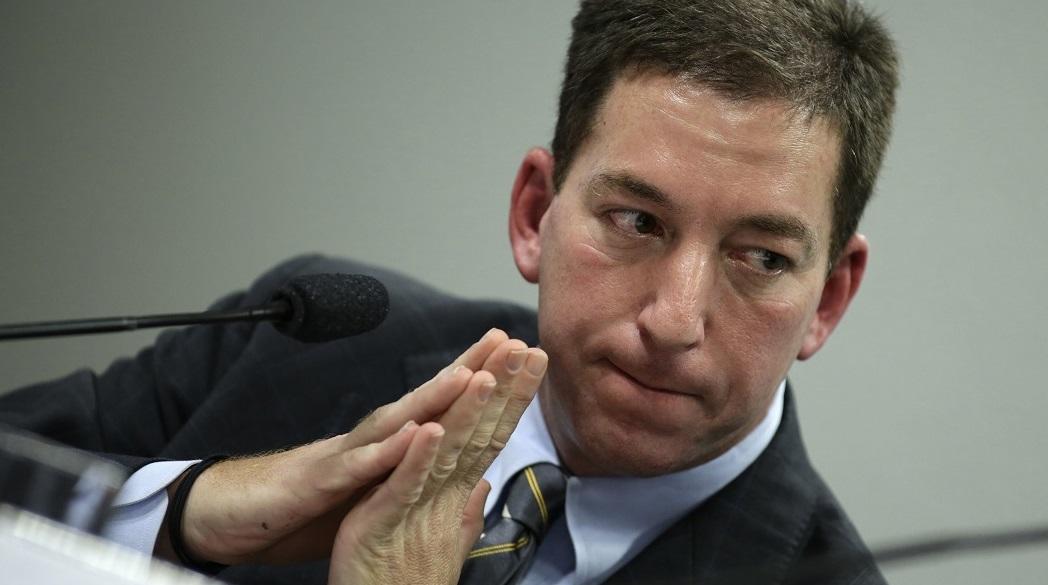
"The final, precipitating cause is that The Intercept’s editors censored an article I wrote this week, refusing to publish it unless I remove all sections critical of Joe Biden, the candidate vehemently supported by all Intercept editors involved in this effort at suppression."
— Glenn Greenwald (@ggreenwald) October 29, 2020
Greenwald writes at his new home (greenwald.substack.com):
The censored article, based on recently revealed emails and witness testimony, raised critical questions about Biden’s conduct. Not content to simply prevent publication of this article at the media outlet I co-founded, these Intercept editors also demanded that I refrain from exercising a separate contractual right to publish this article with any other publication.
I had no objection to their disagreement with my views of what this Biden evidence shows: as a last-ditch attempt to avoid being censored, I encouraged them to air their disagreements with me by writing their own articles that critique my perspectives and letting readers decide who is right, the way any confident and healthy media outlet would. But modern media outlets do not air dissent; they quash it. So censorship of my article, rather than engagement with it, was the path these Biden-supporting editors chose.
What did The Intercept do in response to Greenwald leaving? They're attempting to raise money off of it!
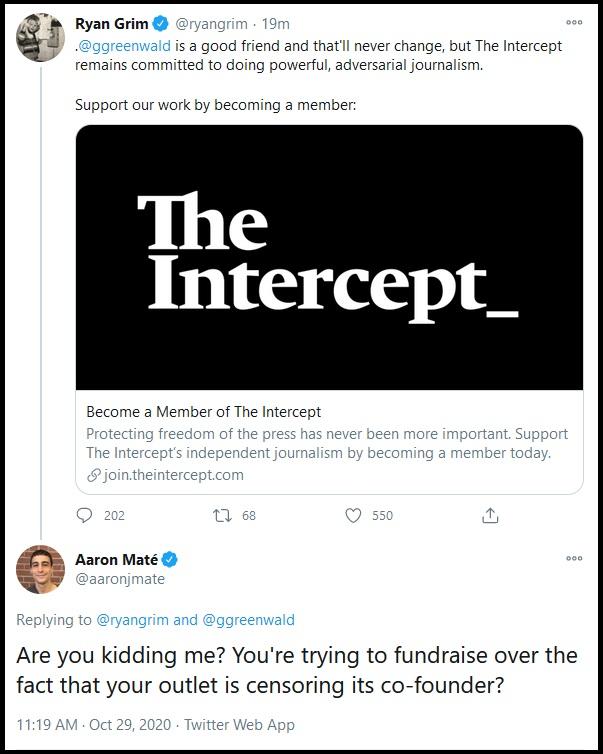
Greenwald has found support across the political spectrum for his decision to walk.
.@ggreenwald and i have disagreed about lots of things over the years -- he's taken shots at me and vice versa -- but i have always respected his mind, courage and voice. today, i respect him even more. https://t.co/MyWWy7W3S6
— Andrew Ross Sorkin (@andrewrsorkin) October 29, 2020
Much respect for the principled move, Glenn.
— Ben Norton (@BenjaminNorton) October 29, 2020
It's been a tragedy to see The Intercept increasingly abandon adversarial reporting and adopt Democratic orthodoxy, especially in its international coverage of Washington-appointed bogeymen.
I look forward to seeing your future work.
It's sad that it's come to this. As I've said, I do not always agree with you, but you are one of very few people who says exactly what they believe and can be trusted to call things exactly how you see them without fear or favor. That is rare and vital. I wish you all the best.
— Ali Abunimah (@AliAbunimah) October 29, 2020

(MEDICAL KIDNAP) – On Oct. 7, 2020, during a hastily scheduled virtual meeting, four District of Columbia Council members making up the Health Committee amended and unanimously passed a minor consent bill, B23-0171.
The bill would not only permit children aged 11 years and older to give consent for doctors and other vaccine administrators to give them vaccines without their parents’ knowledge or consent, but would also require insurance companies, vaccine administrators and schools to conceal from parents that the child has been vaccinated.
On Oct. 20, 2020, the entire DC Council voted in favor of the bill 12:15 on the first reading in yet another virtual online meeting with no public testimony. It was announced that the second reading, which will be the final vote, will take place on Nov. 10, 2020.
The post Bill would allow children 11 years and older to be vaccinated without parental knowledge appeared first on WND.
Authored by Raul Ilargi Meijer via The Automatic Earth blog,
Had a little email exchange with Dave Collum this week. We go way back, more than two weeks even. It’s been a while though, Twitter cut me off from Dave’s tweets ages ago for some reason, and that’s just one person I know they did that with; how many others, no clue. My Twitter followers, @AutomaticEarth, have been just below the same certain number for years.
Regularly a few hundred are shaved off, and then they slowly revert back to just below that number. I don’t even care anymore. No more than I care about Facebook shutting down our account without any explanation. Let them be. We should not depend on these people, that’s just a bad idea.
Anyway, so Dave was reacting to a mail I sent him of the October 26 Debt Rattle -he’s always remained on one of my mailing lists- and that’s how we started talking again. Dave:
I have never spent a year so completely baffled by the world as this year. Nothing makes sense to me without invoking some seriously bizarre thinking (which I am not averse to doing.)
My reaction:
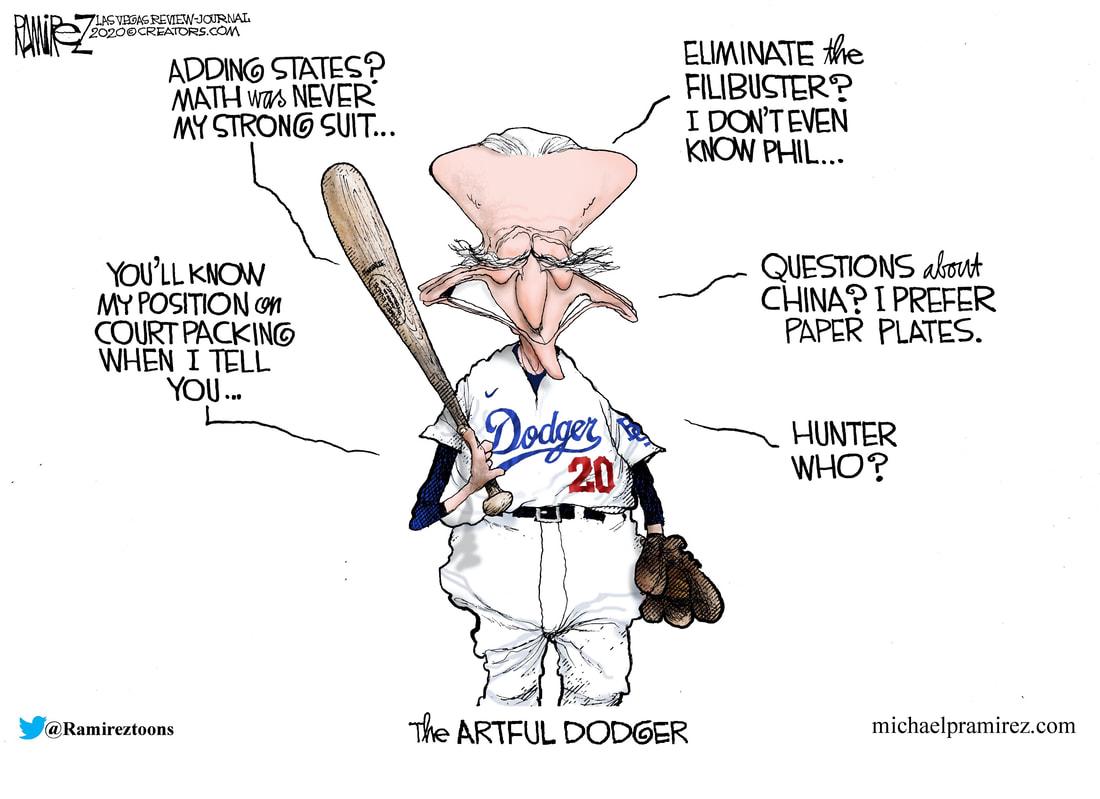
The game hasn’t even started yet. We’re still just warming up. Still, baseball is not the right analogy, that’s a civilized sport, this will feel much more like gladiators in the Forum fighting to the death. Biden has neither the energy not the -killer- instinct for that.
Yes, Dave, like Jim Kunstler, and like me, and many other people, have changed our views and positions on American politics quite a bit over the past 4-5 years. Mostly independently of each other. We just recognize the same patterns.
I think it’s fair to say that we all realize that there may be a million things wrong with Donald Trump, but there’s a lot more wrong with collusion to unseat a fairly elected president.
And that is what we all have faced. The FBI, and Robert Mueller, opening a years-long investigation based on a report that they already knew was fake, paid for by the DNC and Hillary campaign, relentlessly edged on by the -former- “media” sympathetic to that same campaign, and ending in absolute crickets, trying to save face by accusing Julian Assange and 13 Russians.
We have reached whole new depths with Robert Mueller and Andrew Weissmann. So, yes, sure, we all feel a bit vindicated when it turns out that the collusion was not on the Trump side, but on the DNC one, and very much on the Biden family’s one.
That the DNC media refuse to report on that hardly matters anymore.
They’ll have huge problems if Biden wins, because their day-to-day coverage has been based exclusively on Trump and scandal and intrigue for 5 years now, and they don’t remember how they used to make money without that, with just reporting honestly on what is going on. Trump is their golden goose. What will they do, report on Joe hiding in the White House basement? “Today, Joe slept only 12 hours!” Truman Show.
They will have even bigger problems if Trump wins, since that means his supporters will come after the entire DNC/FBI etc. cabal, including the media. I’ve often said that Michael Flynn lawyer Sidney Powell will not be satisfied anymore with a full exoneration of her client, and her legal team is sure to have accumulated an entire library of fabricated media pieces against him on top of FBI and Judge Sullivan “mishaps”.
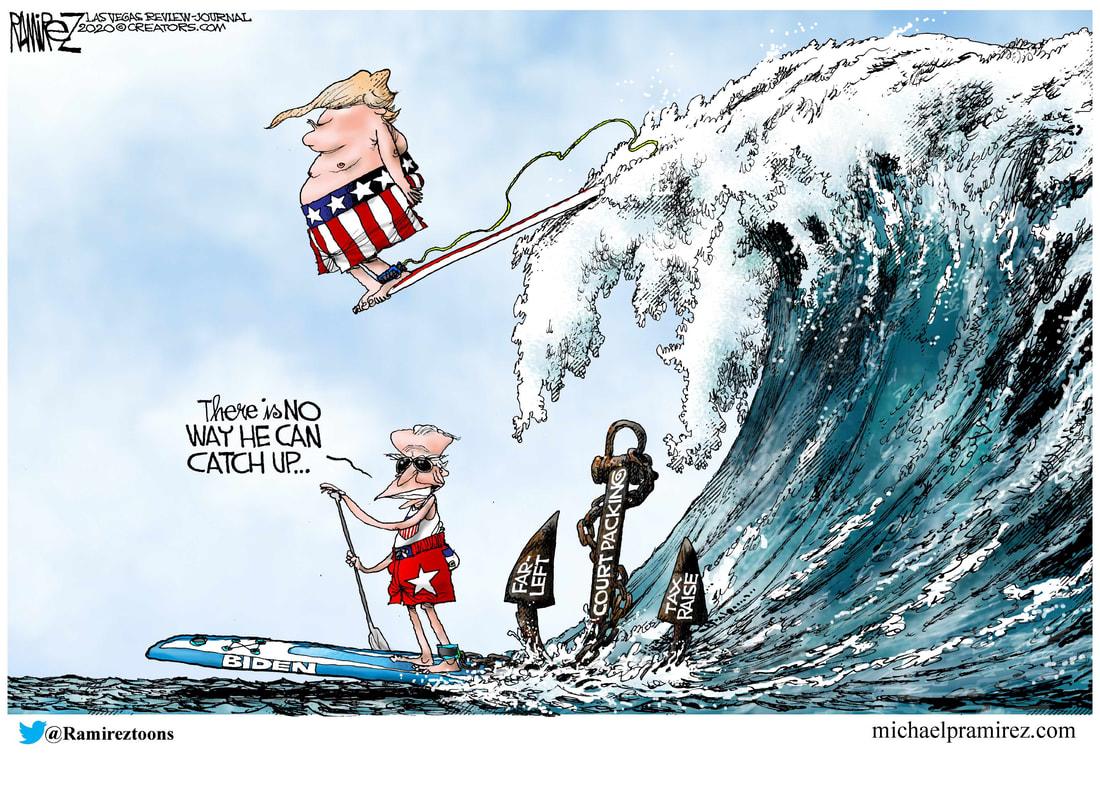
And whatever side of politics, or even the law, you’re on, and no matter who wins the election, the judicial system will still churn on. She won’t stop, she won’t wave a white flag, guaranteed. Trump must have offered Flynn a full exoneration many times, but every one of his refusals of the offers must have been more stern than the last one.
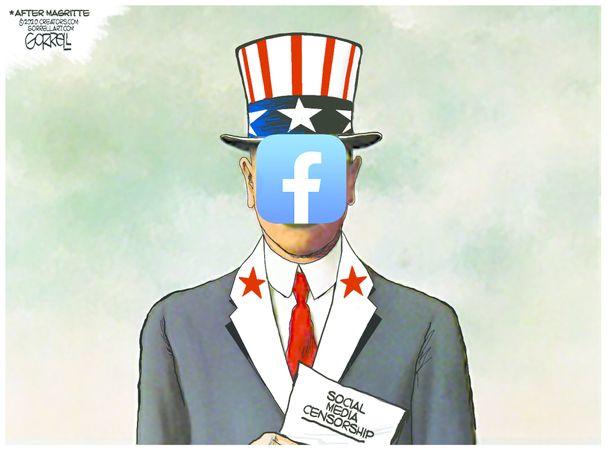
And now, 6 days before the election, Facebook’s Mark Zuckerberg, Twitter’s Jack Dorsey, and Google’s Sundar Pichai testified in front of a congressional committee. While, from what I’ve seen, half of US eligible voters have already cast their vote. 50% of the social media job is done. And no-one on Capitol Hill will dare touch them. Because they are the new arms and tools of US intelligence, and you don’t mess with that.
Trump wins, we’ll see a huge increase in the violent street parties dressed up as “peaceful protests” we’ve become accustomed to over the past 6 months. Just last night, like it’s some kind of warning shot, things got way out of hand in New York and Philadelphia.
Biden wins, the right wing will come looking for what’s been taken away from them over the past 4 years, with the president they elected under constant investigation based on nothing other than party political gossip – and that’s putting it nicely. The Hunter and Joe Biden files that have been revealed so far give them ample reason to do just that.
To get back to Collum’s “Nothing makes sense to me without invoking some seriously bizarre thinking”, I think we should all prepare for just that. Unless there’s a landslide win for either side, which looks impossible, there doesn’t seem to be any way to know who will win in six days, before the new year. While the “peaceful protests” rage on.
And then we end up in the Supreme Court and Amy Handmaid Barrett casts the deciding vote. That’s not her fault, it’s everybody else’s. Everything about American politics has gotten out of hand, on all sides of all aisles. We don’t want the most qualified judges anymore, or the most qualified presidents, we instead want people in all these positions who agree with everything we think is right, which we know because our media has told us.
Collum: “I have never spent a year so completely baffled by the world as this year.”
My friend, you’re in for a treat. Try 2021.
* * *

It seems that only 0.1% of the time during the last 70 years has the S&P 500 traded at a higher forward PE (price-to-earnings) multiple than it does today. That’s equal to 4 weeks out of the 3,640 weeks since 1950.
In a world faced by COVID lockdowns, staggering amounts of debt, central bank money-pumping extremes, and outright fiscal insanity in Washington, why is the present moment more propitious for the valuation of corporate earnings than during 99.9% of the time since the Korean War?
Of course, it is not. Not remotely so.
Instead, the Fed and the other central banks have led the robo-machines, day-traders, and Robinhood waifs into the most hideous stock-chasing mania in recorded history.
Here are just a few of the market extremities:
How could the S&P 500 be trading at its highest multiple in 70 years when the growth rate of corporate earnings has been sinking for more than two decades?
The recent S&P index value implies a PE multiple of 36.8X—a place the S&P 500 has never been before.
The forward PE is now above the record high reached during the dot-com madness at the turn of the century.

PE multiples at these levels imply double-digit earnings growth rates in the year ahead; it is relevant to start with the trend now in place. The only accurate way to measure the latter is on a peak-to-peak basis throughout the business cycle.
Corporate earnings peaked in Q4 2019, which was 12.5 years after the prior peak in June 2007. As it happens, the S&P 500’s earnings-per-share growth during that period—massive monetary stimulus to the contrary notwithstanding—was far below the rate of the two previous cycles.
Growth per annum:
Moreover, the 4.0% growth rate for the most recent cycle is not what it’s cracked up to be relative to prior cycles. That’s owing to the massive stock buyback campaigns and deterioration of corporate balance sheets since the June 2007 peak—as well as the one-time reduction in the corporate tax rate in 2017, a non-repeatable boost to cumulative S&P 500 earnings growth during the 12.5-year cycle.
Worse still, pretax corporate earnings in Q2 2020 plunged by 23% from their Q4 2019 peak—meaning that they have a huge hole to dig out of before there can be any growth in the post-Covid cycle.
Given today’s frenzied stock market, you would never guess that the $1.774 trillion level of profits reported for Q2 2020 was nearly identical to the $1.773 trillion level reported way back in Q4 2005.
In other words, corporate profits have been thrown backward by 15 years.
If you believed that current market levels had anything to do with the economic fundamentals, you would have to argue that the long-term trend of corporate earnings growth is fixing to pivot from the sinking pattern shown above to a new phase of parabolic rise.
This very idea is preposterous—besides, earnings don’t have anything to do with the casino’s current speculative frenzy.
Instead, what we have is pure, unadulterated inflation of PE multiples. That’s a monetary phenomenon—the AWOL inflation that the Fed heads keep gumming about.
It’s the PE multiple, stupid!
Editor’s Note: The economic, political, and social volatility in the days and weeks ahead promises to be extreme. The impact on your savings, retirement funds, and personal freedoms could be unlike anything we’ve ever seen.
Do you want to know exactly what you should be doing differently with your portfolio and in your personal life?
EXCLUSIVE VIDEO: The Day After—How to Prepare for What Comes Next
It reveals what you can do to prepare so that you can avoid getting caught in the crosshairs. Click here to watch it now.
Reprinted with permission from International Man.
The post The Mother of All Stock Market Manias appeared first on LewRockwell.


What Happened: A recently published study in PeerJ by Christian Wehenkel, a Professor at Universidad Juárez del Estado de Durango in Mexico, has found a positive association between COVID-19 deaths and influenza vaccination rates in elderly people worldwide.
According to the study, “The results showed a positive association between COVID-19 deaths and IVR (influenza vaccination rate) of people ≥65 years-old. There is a significant increase in COVID-19 deaths from eastern to western regions in the world. Further exploration is needed to explain these findings, and additional work on this line of research may lead to prevention of deaths associated with COVID-19.”
To determine this association, data sets from 39 countries with more than half a million people were analyzed.
The study was published on October 1st, and two weeks later a note from the publisher appeared atop the paper emphasizing that correlation does not equal causation, and that this paper “should not be taken to suggest that receiving the influenza vaccination results in an increased risk of death for an individual with COVID-19 as there may be confounding factors at play.”
The paper provides evidence from others which have recently been published that ponder if the flu shot could increase ones chance of contracting and dying from COVID-19.
For example, this study published in April of 2020, reported a negative correlation between influenza vaccination rates (IVRs) and COVID-19 related mortality and morbidity. Marín-Hernández, Schwartz & Nixon (2020) also showed epidemiological evidence of an association between higher influenza vaccine uptake by elderly people and lower percentage of COVID-19 deaths in Italy, which directly contradicts the author’s own findings and suggests that the flu shot may help prevent COVID-19 related deaths.
He goes on to mention another study:
In a study analyzing 92,664 clinically and molecularly confirmed COVID-19 cases in Brazil, Fink et al. (2020) reported that patients who received a recent flu vaccine experienced on average 17% lower odds of death. Moreover, Pawlowski et al. (2020) analyzed the immunization records of 137,037 individuals who tested positive in a SARS-CoV-2 PCR. They found that polio, Hemophilus influenzae type-B, measles-mumps-rubella, varicella, pneumococcal conjugate (PCV13), geriatric flu, and hepatitis A/hepatitis B (HepA-HepB) vaccines, which had been administered in the past 1, 2, and 5 years, were associated with decreased SARS-CoV-2 infection rates.
So, its important to mention that correlations between the flu vaccine have also found that it may decrease ones chance of deaths from COVID-19.
But are there studies that have shown an increased chance of death or contracting other respiratory viruses as a result of getting the flu shot? Yes.
That’s also discussed in the paper. For example, he mentions a paper published in 2018:
In a study with 6,120 subjects, Wolff (2020) reported that influenza vaccination was significantly associated with a higher risk of some other respiratory diseases, due to virus interference. In a specific examination of non-influenza viruses, the odds of coronavirus infection (but not the COVID-19 virus) in vaccinated individuals were significantly higher, when compared to unvaccinated individuals (odds ratio = 1.36).
The study above found the flu shot to increase the risk of other coronaviruses among those who had been vaccinated for influenza by 36 percent. The study was conducted prior to COVID-19, so it’s not included and only applies to pre-existing coronaviruses. The study also found an even higher chance of contracting human metapneumovirus amongst those who had received the flu shot.
Below are some more studies regarding the flu shot and viral infections that hint to the same idea.
- A 2018 CDC study (Rikin et al 2018) found that flu shots increase the risk of non-flu acute respiratory illnesses (ARIs), including coronavirus, in children.
- A 2011 Australian study (Kelly et al 2011) found that flu shots doubled the risk for non-flu viral lung infections.
- A 2012 Hong Kong study (Cowling et al 2012) found that flu shots increase the risk for non-flu respiratory infections by 4.4 times.
- A 2017 study (Mawson et al 2017) found vaccinated children were 5.9 times more likely to suffer pneumonia than their unvaccinated peers.
Why This Is Important: We live in an age where vaccinations are heavily marketed. We’ve seen this with the flu shot time and time again and we are also living in an age where a push for more mandated vaccines seems to be growing.
Dr. Peter Doshi is an associate editor at The BMJ (British Medical Journal) and also an assistant professor of pharmaceutical health services research at the University of Maryland School of Pharmacy. He published a paper in The BMJ titled “Influenza: Marketing Vaccines By Marketing Disease.” In it, he points out that the CDC pledges “to base all public health decisions on the highest quality of scientific data, openly and objectively derived,” and how this isn’t the case when it comes to the flu vaccine and its marketing. He stresses that “the vaccine may be less beneficial and less safe than has been claimed, and that “the threat of influenza seems to be overstated.”
This is a touchy subject that dives into medical ethics and the connections that big pharmaceutical companies have with our federal health regulatory agencies and health associations. Vaccines are a multi billion dollar industry.
At a recent World Health Organization conference on vaccine safety, it was expressed that vaccine hesitancy is growing at quite a fast pace, especially among doctors who are now becoming hesitant to recommend certain vaccines on the schedule. You can read more about that and find links to the conference here.
We have to ask ourselves, why is this happening? Is it because people and professionals are becoming aware of certain information that warrants the freedom of choice? Should freedom of choice with regards to what we put in our body always remain? Are we really protecting the “herd” by taking these actions?
In a 2014 analysis in the Oregon Law Review by New York University (NYU) legal scholars Mary Holland and Chase E. Zachary (who also has a Princeton-conferred doctorate in chemistry), the authors show that 60 years of compulsory vaccine policies “have not attained herd immunity for any childhood disease.” It is time, they suggest, to cast aside coercion in favor of voluntary choice.
When it comes to the flu shot, I put more information and science as to why so many people seem to refuse it, in this article if interested.
The University of California is currently being sued for mandating the flu shot for all staff, faculty and students. A judge has prevented them from doing so as a result until a decision has been made. You can read more about that here.
In South Korea, 48 people have now died after receiving the flu shot this season causing a lot of controversy. You can read more about that here.
The Takeaway: There are many concerns with vaccines, and vaccine injury is one of them. The National Childhood Vaccine Injury Act has paid more than $4 billion to families of vaccine injured children. A 2010 HHS pilot study by the Federal Agency for Health Care Research (AHCR) found that 1 in every 39 vaccines causes injury, a shocking comparison to the claims from the CDC of 1 in every million.
Should these statistics alone warrant the freedom of choice? Should the government have the ability to force us into measures, or would it simply be better for them to present the science, make recommendations and urge people to follow them? When the citizenry is forced and coerced into certain actions, sometimes under the guise of good-will, there always seems to be a tremendous amount of uproar and people who disagree. Why are these people silenced? Why are they censored? Why are they ridiculed? Why don’t independent health organizations receive the same voice and reach that government and state “owned” or organizations do? What’s going on here? Do we really live in a free, open and transparent world or are we simply subjected to massive amounts of perception manipulation?
When it come to the flu shot there is plenty of information on both sides of the coin that point to its effectiveness, and on the other hand there is information that points to the complete opposite. When something is not 100 percent clear, freedom of choice in all places should always remain, in my opinion.
Reprinted with permission from Collective Evolution.
The post Positive Association Found Amongst Covid Deaths & Flu Shot Rates Worldwide in the Elderly appeared first on LewRockwell.

Texas Republican Sen. Ted Cruz accused Twitter CEO Jack Dorsey of lying under oath while testifying before the Senate Commerce Committee on Wednesday.
Dorsey claimed that the New York Post articles regarding Hunter Biden's alleged laptop are no longer being censored on the platform.
“Anyone can tweet these articles,” Dorsey said.
"What [Dorsey] told the Senate, under oath, is false. I just tried to tweet the [New York Post] story alleging Biden’s CCP corruption," Cruz tweeted. "Still blocked."
What @jack told the Senate, under oath, is false. I just tried to tweet the @nypost story alleging Biden’s CCP corruption.
Still blocked.
18 USC 1621 makes it a felony to lie under oath to the Senate. https://t.co/BDHRB8CEzy
— Ted Cruz (@tedcruz) October 28, 2020
Several other Republican lawmakers joined Cruz in criticizing Dorsey.
Nothing like lying under oath https://t.co/Jp7monfPNs
— Josh Hawley (@HawleyMO) October 28, 2020
You're right, @Jack. We don't trust you.
Here's a first step that Twitter can take to change that: STOP TARGETING CONSERVATIVES. https://t.co/uO382dkL2S
— Kevin McCarthy (@GOPLeader) October 28, 2020
I don’t trust anyone to censor political speech. These are de facto public forums. https://t.co/j7SaNGAwLY
— Senator John Cornyn (@JohnCornyn) October 28, 2020
The Senate Commerce Committee held a hearing regarding Big Tech corporations Wednesday following the incident with the New York Post, leaving the media outlet's Twitter account, and many others, locked for days.
Facebook's Mark Zuckerberg and Google CEO Sundar Pichai also testified. The goal of the hearing was to discuss the role of social media and technology in election interference.
"Democrats including Sens. Ed Markey and Tammy Duckworth argued Republicans are making empty claims meant to support a threat to take away Section 230 or otherwise punish the platforms — all to influence them against cracking down on misinformation from Trump and other conservatives," Axios reported.
Section 230 is a part of the Communication Decency Act of 1996. Many are calling for reform or an all-out repeal of Section 230, because it does not hold Big Tech corporations accountable for censorship.
"No provider or user of an interactive computer service shall be treated as the publisher or speaker of any information provided by another information content provider" the section reads.
President Donald Trump, who is an active user on Twitter, has been a vocal advocate for repealing the section.
The USA doesn’t have Freedom of the Press, we have Suppression of the Story, or just plain Fake News. So much has been learned in the last two weeks about how corrupt our Media is, and now Big Tech, maybe even worse. Repeal Section 230!
— Donald J. Trump (@realDonaldTrump) October 28, 2020
Although foreign interference through social media is a common way to spread political disinformation, tech companies themselves have internal biases that are likely impacting political discourse.
A Facebook advisor on election integrity used to work with Democratic nominee Joe Biden, and YouTube recently issued an independent fact check on its search results for "Joe Biden fracking."
Election interference and political bias from social media platforms has been a subject of intense debate since the 2016 election, and will likely continue to be for years to come.
This article appeared originally on The Western Journal.
The post Twitter CEO Jack Dorsey accused of lying under oath to the Senate: That's a felony appeared first on WND.