Tuesday, March 3, 2020

BBC Publishes Leaked Iran Footage Showing Bagged Bodies Of Covid-19 Victims Piling Up


More shocking leaked footage published by the BBC shows bodies piling up at a local morgue in Qom, said to be victims of the country's spiraling coronavirus outbreak. Horrific thread of BBC obtained Videos from #Iran shows bagged bodies in Qom from moment of death till burial.

ORIGINAL LINK

How schools are using kids' phones to track and surveil them


Teachers often lament that phones can be a distraction in classrooms. Some governments have even banned phones outright in schools. But a few school administrations see phones in schools as a benefit because they can help keep track of students more efficiently.

ORIGINAL LINK

Clearview’s Facial Recognition App Has Been Used By The Justice Department, ICE, Macy’s, Walmart, And The NBA


A BuzzFeed News review of Clearview AI documents has revealed the company is working with more than 2,200 law enforcement agencies, companies, and individuals around the world.

ORIGINAL LINK

Genetically Engineered Food – the Lie That Won’t Die


Promises, promises, promises. The toxic world of genetically modified organisms (GMOs) and industrial agriculture is built on false promises.

ORIGINAL LINK

Monday, March 2, 2020

Is China's Economy Finally Starting To Recover? Here Is What The Real Data Shows

ORIGINAL LINK
Is China's Economy Finally Starting To Recover? Here Is What The Real Data Shows

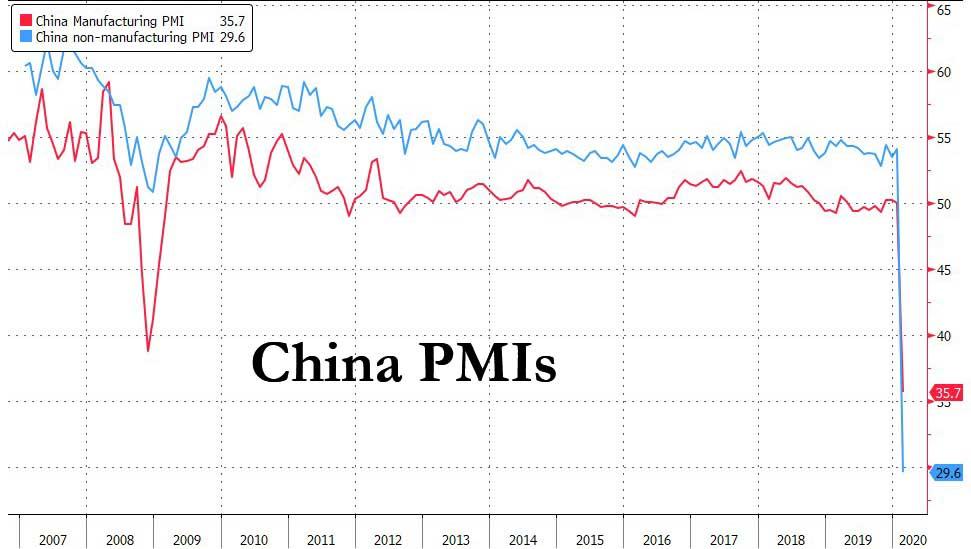
Over the weekend, China-watchers - or at least the ones who don't really watch China all that closely and instead rely on others' "hot takes" - were shocked to learn that in February both the Chinese manufacturing and non-manufacturing PMIs had crashed far below consensus expectations, tumbling to record low levels, surpassing even the economic contraction observed at the peak of the global financial crisis.

Meanwhile, anyone who was following out periodic updates of China's "alternative", high-frequency indicators demonstrating the real state of the economy was hardly surprised, because as we showed over the past few weeks, after China's catastrophic post-Lunar New Year collapse the economy has yet to stage a material rebound as profiled previously:

And yet, judging by the market's torrid surge on Monday, it appears that - as so often happens - traders took China's latest numbers in stride, and specifically as an indication of Beijing "kitchen sinking" the collapse in February, with a V-shaped recovery sure to follow.

Or maybe not, because while not only has China's economy not picked up even modestly, but it is only a matter of time before Beijing, which has forced people to go to work against their will, succumbs to a second wave of coronavirus infections, one which will result in an even worse economic slump than the current one, which incidentally has yet to show any actual recovery!

So what do the latest high-frequency economic indicators show? It may come as a surprise to some that not only has China's economy barely posted any improvement since our last update on this topic a week ago, but it has in fact lost ground in some metrics. Courtesy of Goldman, here is the latest "alternative" data:

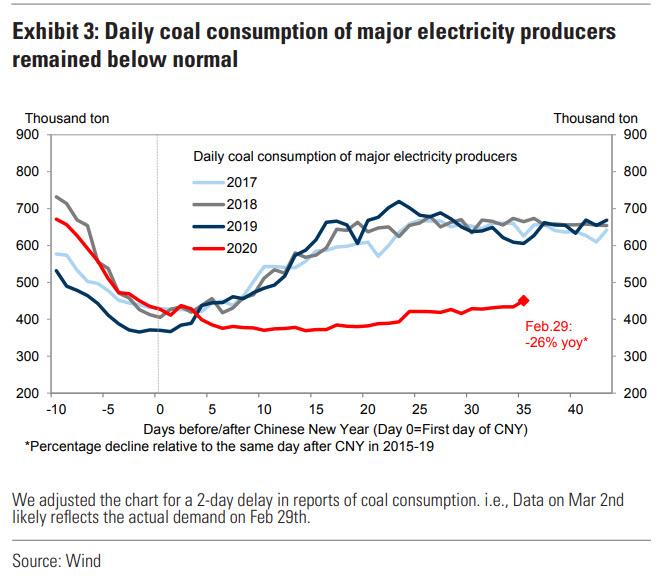
First, daily coal consumption has barely rebounded from the recent lows, and is in fact where it was when the Lunar Near Year started, and tracking almost 30% Y/Y:

In line with the reduced daily coal consumption, railway-loaded coal volumes are also tracking substantially below the average level of the past three years, and what's worse, the 2020 series appears to have slowed down in recent days.

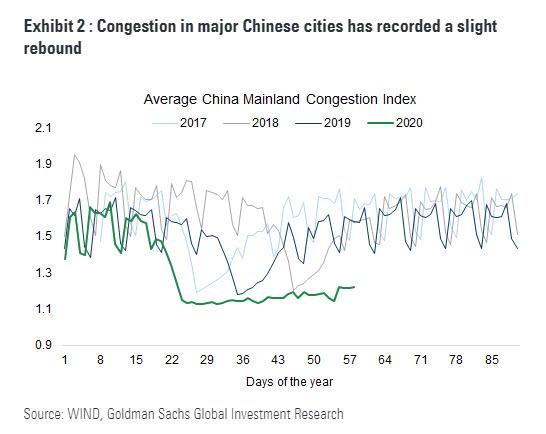
An even more ominous indicator is China's traffic congection index - a proxy of overall trade and commerce - which has barely budged since its new year lows and remains far below the same period in previous years.

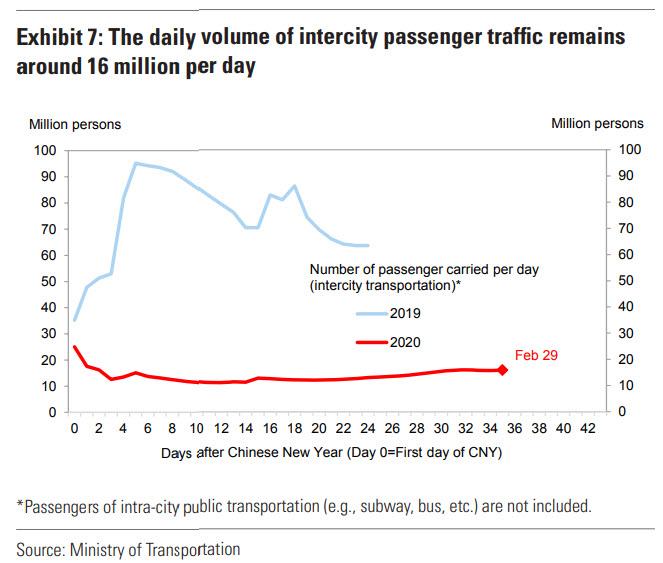
With commerce frozen and amid fears that the government is lying about the true extent of the coronavirus spread, it will hardly come as a surprise that passenger traffic has failed to stage even a modest rebound from its new year lows, and is about a quarter of where it was one year.

One of Wall Street's favorite real-time indicators, traffic congestion in major Chinese cities, has seen a modest rebound in recent days, however even it remains just barely above its level at the start of the lunar new year, and is below half where it has been in recent years.

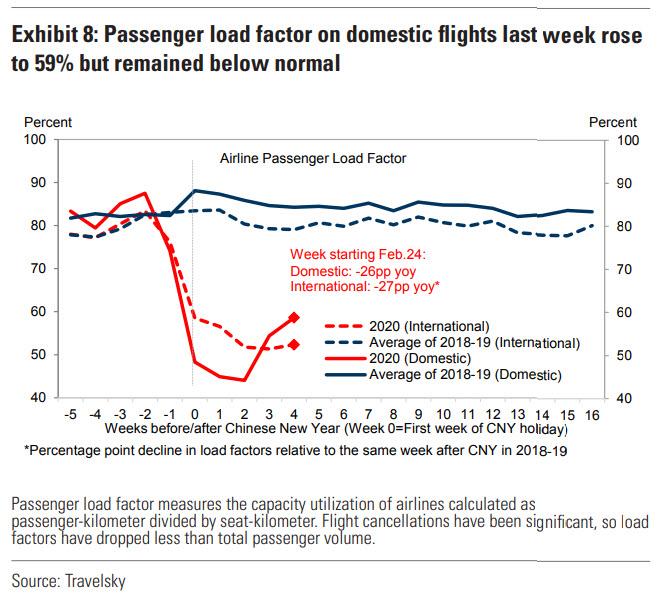
It's not just passenger traffic that is moribund: the load factor on domestic flights remains a fraction of where it has been in recent years.

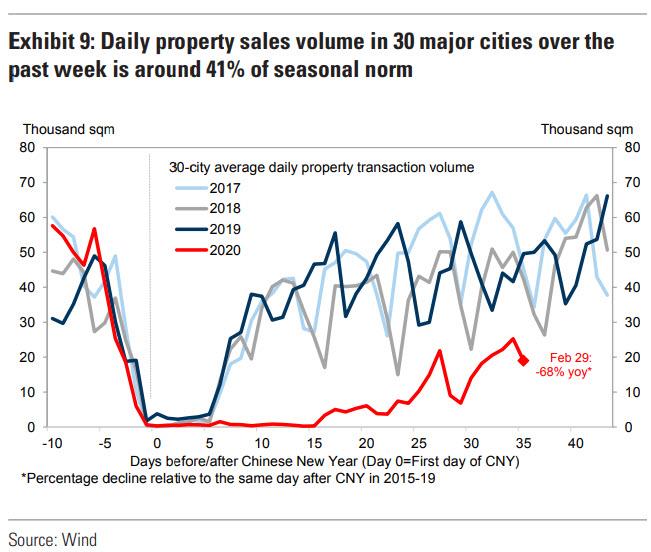
Even the one area where there was been a modest rebound in recent days, daily property sale, remains in dire territory, or about 68% down compare to last year.

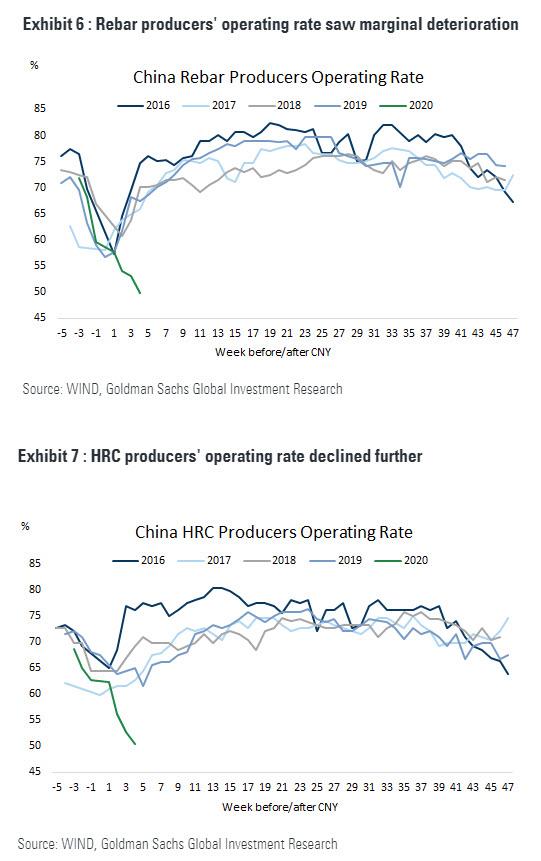
Looking at end markets for commodities used in construction, the operating rate of rebar  slumped further on both weak demand and high inventories. Likewise, the operating rate of HRC and galvanized steel, mainly used in the manufacturing sector, is now at just 50% of capacity and shows no signs of recovery.

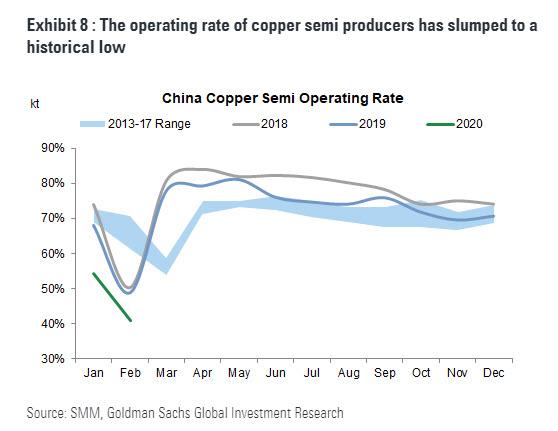
And, as Goldman points out, while the bank has found increased orders from cable and wires fabricators while, operating rate of copper rod producers remained as low as 50% for big companies and 30% for medium-sized producers. What’s more, some small producers have not restarted yet at all, according to a Goldman survey with onshore contacts.

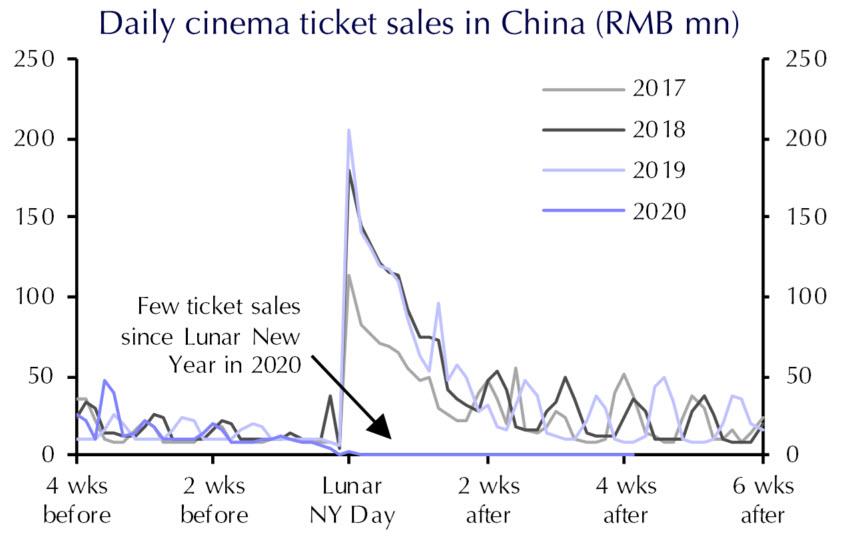
There is a silver lining to China's ongoing economic paralysis: anyone who ventures into one of the country's thousands of cinemas will have the building all to themselves.

The failure of China's economy to reboot comes even as authorities have ordered owners of closed factories - whose employees are scared to return to work - to boost electricity usage to pretend that the economy is back to normal, and to fool those people who look at the charts above, into getting the impression that China's economy is humming again. We described this bizarre example of central planning on Saturday, and here is Rabobank's Michael Every commenting on this very phenomenon on Monday morning:

Saturday’s China PMI data were frankly shocking. Manufacturing was at 35.7 and services at 28.9: these are not recessionary levels, but outright depressionary. The private Caixin PMI was also awful at 40.3, again saying a deep downturn is biting. Of course, the real issue is if we get a V-shaped recovery in output - or in virus infections. Optimists, and Chinese stocks this morning, are cheering the former – and Chinese stocks are always freely traded and never, ever manipulated by the authorities, as well all know. Realists, and NASA satellite imagery of no pollution over China, lean towards the latter: as does one anecdotal, unsubstantiated report trending over the weekend that China has been ordering factories to leave the lights on to make them look busier from space and to boost electricity output in case pesky foreigners start trying to use that as a GDP proxy.

Finally, for all those expecting that Beijing will unleash another massive stimulus to kick-start the economy which remains paralyzed at a time when most analysts said activity would be back to normal by the first week of March, we give the last word to Nomura's China economist Ting Lu, who not only correctly predicted the plunge in PMIs, but also said that "the likelihood of another round of massive stimulus appears low as policy space remains limited.”"

“We believe markets might underestimate the scale of the current growth slump. Due to a slower-than-expected rate of business resumption, we have cut our year-on-year Q1 real GDP growth forecast to 3.0% and expect Beijing to ramp up policy easing measures in coming months. That said, the likelihood of another round of massive stimulus appears low as policy space remains limited.

In short, for China - which was the world's growth dynamo during the global financial crisis and helped the world rebound from the 2009 global depression while raking up tens of trillions in debt - the end of the economic road may finally be here.

Tyler Durden Mon, 03/02/2020 - 20:40

via IFTTT
InoreaderURL: SECONDARY LINK

Court orders school to explain punishing students over activities at home

ORIGINAL LINK


A court in Michigan has ordered a school district to explain why it punished students for legal actions done outside of school time in their own homes.

The order came after lawyers for students at Saline High School in Saline, Michigan, and their parents filed a motion for a restraining order and preliminary injunction seeking to halt the punishment.

The Saline Area Schools district in Saline, Michigan, suspended four students for what it described as an offensive conversation on Snapchat.

The Snapchat occurred on a Sunday evening between friends and acquaintances, said lawyer David Kallman, who is representing the students and their parents. African-American and Caucasian children, he said, were using inappropriate and offensive language in a joking manner and in the context of immature banter among friends.

"The conversation did not occur at the school, at a school event, or on any school equipment," said Kallman. "While all the children are embarrassed by their language, it does not justify the school’s rush to judgment and overreaction."

Two of the suspended students have been allowed to return to school, but they continue to be punished with bans on participating in many school activities.

Kallman argued courts "have ruled that 'while public schools are not run as democracies, neither are they run as Stalinist regimes. Students do have First Amendment rights, and school officials do not have unfettered authority to regulate student speech.'

He said schools "may punish students for lewd speech or profanity used during school, but the Supreme Court has made it clear that schools have no power to punish lewd or profane out-of-school speech."

The lawyer noted the district claims the school was disrupted by the students' speech.

"However, no school should be permitted to manufacture its own, self-described 'disruption' in order to sanction out-of-school speech it may find offensive," he argued. "Defendants cannot simultaneously issue public media statements, hold public meetings on the issue, call its own students 'racist,' and then complain about the 'disruption' the media attention and public interest in the Snapchat has caused."

Kallman explained that the parents have made numerous efforts to resolve the situation and avoid litigation.

"Plaintiffs and their parents initiated multiple conversations with defendants prior to the filing of this lawsuit to resolve this matter and reinstate all the children. Defendants refused," he said. "Plaintiffs waited to file this motion for injunctive relief to give defendants an opportunity to meet with their counsel and reconsider their position. Plaintiffs' counsel met with Defendant Saline Superintendent Graden to make a final effort to have all the children fully reinstated to school. Defendants refused."

The objective of the lawsuit is to lift the school's punishments.

It asks that the students be returned to "school and full school activities" and that the district stops "continuing to improperly punish plaintiffs in violation of their constitutional rights."

U.S. District Judge Paul Borman has ordered the district to answer within a few days.

The students are also asking for a declaratory judgment, damages and injunctive relief for the violation of their constitutional rights to due process and free speech.

Who disciplines?

Kallman said the case "boils down to a simple question: When a child misbehaves at home, who disciplines – the local public school or the parent?"

"If a child gets stopped for drunk driving on a Saturday night, does the school have the right to expel that student? The answer is obvious. No. The conversation of these children had nothing to do with the school. It has no authority to discipline students for out of school misbehavior."

He said the school is "acting is acting outside the scope of its authority, has no legal right to impose the discipline carried out, and has violated our clients’ constitutional rights by their reckless and hasty rush to judgment."

The students are not named in the complaint. The defendants include the school, the school board, Supt. Scot Graden, Assistant Supt. Steve Laatsch, Principal David Raft, Assistant Principal Joe Palka and Assistant Principal Theresa Stager.

The complaint states: "A foundational core of our Constitutional Republic is that the state cannot punish its citizens for engaging in speech that is protected by the First Amendment. Just as citizens cannot be criminally punished for protected speech, a public school cannot discipline speech that falls within the ambit of the First Amendment."

Police grilled students without notifying them of possible penalties, and the school issued a statement to the entire community that the children were guilty of "an act of racism that created harm to all of our students, especially students of color."

The school charged the students with "hate, prejudice, and racism."

District officials declined to respond to a WND request for comment.

The new request to the court explains that the plaintiffs are likely to succeed on the merits of their claims, and they "will suffer irreparable harm unless the request for relief in granted."

"The government has no legally cognizable interest in suppressing the exercise of constitutional rights," the filing explains. "Accordingly, no harm to defendants would result from granting the requested injunctive relief."

The bottom line is that the district "acted outside the scope of their authority by disciplining plaintiff children for speech that occurred at home over the weekend and was not related to the school in any way."

wnd-donation-graphic-2-2019

The post Court orders school to explain punishing students over activities at home appeared first on WND.


via IFTTT
InoreaderURL: SECONDARY LINK

Another Actress, Another Point of View on Harvey Weinstein

ORIGINAL LINK

Cassie Jaye, now 33, was a struggling actress in Hollywood in her late teens and early twenties. Her story (click for YouTube link) sheds light on the Weinstein debacle. She describes how young beautiful actresses have contracts with publicists and now the publicists find them entry-level work with the rich and powerful of Los Angeles.

A beautiful young woman might become an “atmosphere model” at the opening of a new club and be paid $100 an hour to stand around looking beautiful, while not telling anyone they are being paid to be there. Or they might be a “shop girl” promoting a particular liquor at an upscale bar.

Ms. Jaye was once sent by her publicist to work at a fundraiser with over a thousand other beautiful young models at the Playboy Mansion, having been directed to “dress as candy.”

She arrived in a metallic mini tube dress (hoping it looked enough like a candy wrapper) and was rather surprised to find that she was the most clothed young woman there. The others were mostly nude with candy necklaces or well-placed whipped cream. They dressed themselves.

She quickly found out that “the more beautiful you are and the more willing you are to use your beauty as a financial asset the more you will be paid … there is a lot to gain from making connections with powerful and wealthy people.” She further notes that “female models are paid more than male models. Yes, there is a pay gap there.”

Just starting out, Ms. Jaye found a job in a B movie. The female director decided there was not enough nudity in the movie and changed the script halfway through shooting. She decided that Ms. Jaye’s character would now have a nude scene. She refused. The director then brought in a different actress for that scene. She was paid more for those five minutes of work than Ms. Jaye (or other members of the cast) were paid for the entire movie.

It became clear to her that those women with the most physical beauty and the fewest scruples could make the most money and get the furthest in their career.

In L.A., says Ms. Jaye, “the line between sex and business is very blurry… A man can say, ‘have sex with me and I’ll give you this role’ just as much as a woman can say, ‘if you give me this role I’ll have sex with you.’”

She eventually left acting for directing documentaries on topics that mattered to her. Her remarkable film The Red Pill, which started out as a feminist exposé of the dark underbelly of the men’s rights movement, changed in the production to be rather different. Her 15-minute Ted talk, Meeting The Enemy, is a beautiful plea for reason and depolarization of the gender debate.

In all of the horrifying stories that came out of the Harvey Weinstein affair we are expected to take the stance that every female is vulnerable all the time. We must never ask if maybe the women in question got something out of the encounter that benefited them, even if this might explain why, for instance, the chief complainants in the trial of Weinstein, Miriam Haley and Jessica Mann, would continue to have casual contact, texting, selfies and dinner, and even consensual sex (!) with the movie mogul after he raped them.

And if it is true that these or other complainants got something significant out of such encounters – perhaps a role in a film – why is that okay? Is it just that a woman can complain of the rape but still gets to keep the financial and other sorts of gain from a crime?

The other justice issue that looms large in the #MeToo context was highlighted by Donna Rotunno, Weinstein’s lawyer, who is no fan of the movement. As the New York Times reported:

“As the #MeToo movement grew, she embraced the role of contrarian, arguing that a public rush to condemn men accused of sexual misconduct and assault was shredding reputations and careers without due process. Even if the movement had helped the feminist cause, she said, it came at too high a price. If we have 500 positives that come from a movement, but the one negative is that it strips you of your right to due process and a fair trial, and the presumption of innocence, then to me, not one of those things can outweigh the one bad,” she said in an interview. “We can’t have movements that strip us of our fundamental rights.”

In the same Times article, Jane Manning, an advocate for rape victims and a former New York City sex crimes prosecutor, said of Ms. Rotunno: “Her willingness to claim that #MeToo has gone too far is attached to a steady stream of big paychecks, but is not supported by the facts.”

But is Ms. Rotunno’s paycheck bigger than that of the Hollywood actress-accusers? And how did they get those paychecks? If it’s true that Weinstein’s female lawyer can say false but expedient things about him for gain, then how can we #believeallwomen?

Some female is not telling the truth here. Which one is it?

Perhaps #MeToo is not attempting to do away with the presumption of innocence; perhaps it is only shifting the presumption of innocence to the female side of humanity (which might account for why some people these days would like to be female who are not) while creating a presumption of guilt that must be overturned on the male side. This is sexism and it must stop.

The fact that feminism is allied with the sexual revolution has confused a lot of us for a long time. Why on earth would supposed feminists want to champion so many things that hurt women, like pornography, promiscuity and prostitution? Current feminism seems to be using female sexuality for the sake of the movement’s own goals, the chief of which appears to be, fewer men in positions of power.

At the end of the first year of #MeToo, the New York Times ran an article entitled, #MeToo Brought Down 201 Powerful Men. Nearly Half of Their Replacements Are Women.” Language like “bring down” suggests big game hunting and leaves one asking if this is about seeking justice or simply replacing one kind of predation with another? To quote Cassie Jay again:

“The part of me that cares about justice for women wants to believe that the #MeToo movement has helped women find the strength to share their sexual assault stories with law officials for due process to take place and find healing through that. But when I look at the #MeToo movement and what it has inspired I don’t see healing as the main result. I see it inspiring hatred directed at men in general and also cruel and degrading treatment of men who have come out with their own #MeToo stories.”

We seem to have lost touch with what our judicial system is for. It is not for revenge; it is for the greater good. Nothing that risks punishing the innocent can be said to be working for the greater good. Why? Because the government must never be allowed to perpetrate crime. Blackstone’s ratio – "It is better that ten guilty persons escape than that one innocent suffer" – is a hallmark of our system of law. If we see a person escaping punishment it is not necessarily a sign that our system is not working – it might be a sign that it is!

Weinstein may deserve his sentence – or even more – but a system that always convicts the bad guys will necessarily also convict a few innocent people, something we should find abhorrent, but about which feminists routinely laugh.

We would have fewer bad guys, however, if more women lived up to the slogan that “girls can do anything”, including maintain their self-respect.

Having self-respect means saying No to what we don’t want. Ethically responsible women say No to sexual predators, walk away and then press charges to help protect other people from being abused. When you fail to press charges (instead of taking the benefits you get from the relationship with the perpetrator while staying silent), you betray yourself and you let down all the other victims, past and future.

I would suggest to women everywhere that we should live up to the equality we claim with men. That means taking responsibility for our actions, and not playing the women=vulnerable people, men=oppressors card.

Powerful men with money and insatiable sexual appetites must take their chances in court, but if we destroy due process for the Harvey Weinsteins of the world it won’t be there for us and the ones we love when we need it.

--

This article has been republished from MercatorNet under a Creative Commons license.

[Image Credit: Wikimedia Commons-YouTube-Rebel Wisdom, "My 'Red Pill' suicide mission, with director Cassie Jaye"]


via IFTTT
InoreaderURL: SECONDARY LINK

The Nobility Of Tulsi Gabbard


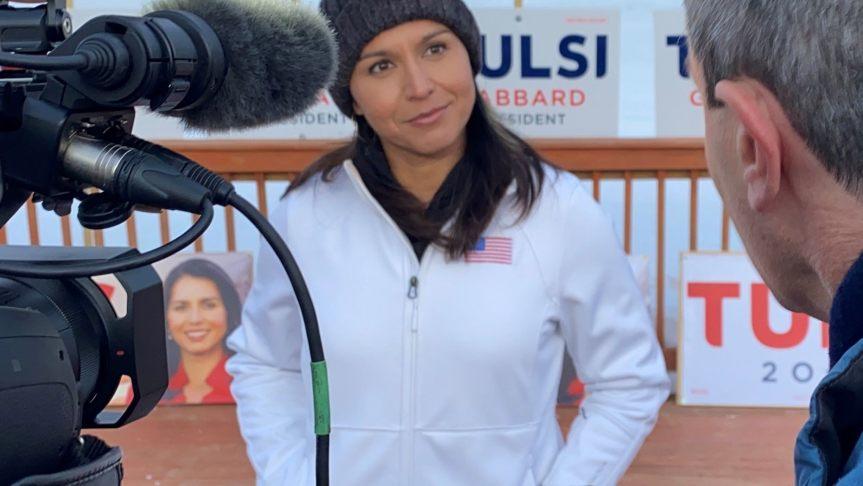
Authored by W.J.Astore via BracingViews.com, In the South Carolina primary won on Saturday by Joe Biden, Tulsi Gabbard earned only 1.3% of the vote.  Her poor showing was due in part to her outcast status among the Democratic establishment joined by mainstream media outlets like MSNBC and CNN.

ORIGINAL LINK

Video: The WHO’s Vaccine Experts Inadvertently Communicate to the World that “Vaccine Hesitancy” Makes Scientific Sense

ORIGINAL LINK

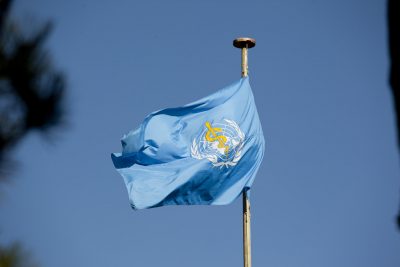
Despite Its Recent Warnings About “Vaccine Hesitancy”, WHO “Experts” Acknowledge that the Claims About the Safety and Effectiveness of Vaccines were never Proven to be True

Global Research, March 01, 2020

In this expose, the WHO vaccine experts admit that:

  • Vaccines can be fatal.
  • The design of safety studies makes it difficult to spot problems.
  • Safety monitoring is inadequate.
  • Vaccine adjuvants increase risk.

“The FDA receives 45% of its annual budget from the pharmaceutical industry.

The World Health Organization (WHO) gets roughly half its budget from private sources, including Pharma and its allied foundations.

And the CDC, frankly, is a vaccine company; it owns 56 vaccine patents and buys and distributes $4.6 billion in vaccines annually through the Vaccines for Children program, which is over 40% of its total budget.” — Robert F. Kennedy, Jr 

1) An admission that adjuvants can multiply the toxicity of vaccines:

“Adjuvants multiply the immunogenicity of the antigens that they are added to, and that is their intention.  It seems to me they multiply the reactogenicity in many instances, and therefore it seems to me that it is not unexpected if they multiply the incidence of adverse reactions that are associated with the antigen, but may not have been detected through lack of statistical power in the original studies.” — Stephen Evans, BA, MSc, Professor of Pharmacoepidemiology at the London School of Hygiene and Tropical Medicine (LSHTM) 

2) Warnings about long-term systemic toxicity from vaccine adjuvants:

“You are correct. As we add adjuvants, especially some of the more recent adjuvants, such as the ASO1, saponin-derived adjuvants, we do see increased local reactogenicity. The primary concern, though, usually is systemic adverse events rather than local adverse events. And we tend to get in the Phase II and the Phase III studies quite good data on the local reactogenicity. Those of us in this room that are beyond the age of 50 who have had the pleasure of having the recent shingles vaccine, will know that this does have quite significant local reactogenicity. If you got the vaccine, you know that you got the vaccine. But this is not the major health concern. The major health concern which we are seeing are accusations of long term, long term effects. So, to come back to this, I’m going to once again point to the regulators. It comes down to ensuring that we conduct Phase II and the Phase III studies with adequate size and with the appropriate measurement.” — Martin Howell Friede, PhD (Biochemistry) – WHO coordinator for the Initiative for Vaccine Research

3) An admission that the WHO and Big Pharma are panicking because some doctors and cover-up of vaccine injuries:

“There’s a lot of safety science that’s needed, and without the good science, we can’t have good communication. Although I’m talking about all these other contextual issues and communication issues it absolutely needs the science as the backbone. You can’t repurpose the same old science to make it sound better if you don’t have the science that’s relevant to the new problem. So, we need much more investment in safety science…The other thing that’s a trend and an issue is not just confidence in patients but confidence of health care providers. We have a very wobbly health professional front line that is starting to question vaccines and the safety of vaccines. When the front-line professionals are starting to question (the safety of vaccines) or they don’t feel like they have enough confidence about the safety to stand up to it to the person asking them the questions.  I mean, most medical school curriculums, even nursing curriculums, I mean in medical school you’re lucky if you have a half-day on vaccines. Never mind keeping up to date with all this.” — Heidi Larson, PhD (in Anthropology – and therefore likely to be vaccinology-illiterate!) and Director of the Big Pharma-funded Vaccine Confidence Project

4) An admission that vaccine clinical safety trials are flawed and that vaccines damage children far more than they damage adults:

“One of the additional issues that complicates safety evaluation is that if you look at, and you struggle with the length of follow-up that should be adequate in a, let’s say a pre-licensure or even post-marketing study if that’s even possible. And again, as you mentioned pre-licensure clinical trials may not be powered enough. It’s also the subject population that you administer the adjuvant to because we’ve seen data presented to us where an adjuvant, a particular adjuvant added to a vaccine antigen did really nothing when administered to a certain population and usually the elderly, you know, compared to administering the same formulation to younger age strata.  So, these are things which need to be considered as well and further complicate safety and effectiveness evaluation of adjuvants combined with vaccine antigens.”  — Marion Gruber, PhD – Director, FDA Office of Vaccines Research and Review (OVRR) and the FDA Center for Biologics Evaluation and Research (CBER)

5) A warning about the lack of vaccine safety monitoring systems:

“I think we cannot over-emphasize the fact that we really don’t have very good safety monitoring systems in many countries, and this adds to the miscommunication and the misapprehensions because we’re not able to give clear-cut answers when people ask questions about the deaths that have occurred due to a particular vaccine, and this always gets blown up in the media. One should be able to give a very factual account of what exactly has happened and what the causes of the deaths are, but in most cases there is some obfuscation at that level and therefore, there’s less and less trust then in the system.” — Soumya Swaminathan, MD, WHO Chief Scientist and non-practicing Pediatrician (involved in academics and research ever since her medical training)

6) An admission that viral fragments don’t work and that adjuvants are responsible for the toxic inflammatory responses to vaccines.

“Every time that there is an association, be it temporal or not temporal, the first accusation is it is the adjuvant. And yet, without adjuvants, we are not going to have the next generation of vaccines.  And many of the vaccines that we do have, ranging from tetanus through to HPV require adjuvants in order for them to work.  So, the challenge that we have in front of us is:  How do we build confidence in this? And the confidence first of all comes from the regulatory agencies (I look to Marion). When we add an adjuvant it’s because it is essential.  We do not add adjuvants to vaccines because we want to do so.  But when we add them, it adds to the complexity. I give courses every year on “How do you develop vaccines?”, “How do you make vaccines?” And the first lesson is, while you’re making your vaccine, if you can avoid using an adjuvant, please do so.  Lesson two is, if you’re going to use an adjuvant, use one that has a history of safety. And lesson three is, if you’re not going to do that, think very carefully.” — Martin Howell Friede, WHO Coordinator for the Initiative for Vaccine Research and member of the Strategic Advisory Committee for Hilleman Labs – a vaccine research company co-owned by US drug maker Merck  and Britain’s Wellcome Trust.

7) An admission that vaccine safety tracking systems don’t exist.

“Now the only way to tease that out is if you have a large population database like the vaccine safety datalink as well as some of the other national databases that are coming to being worthy. Actual vaccine exposure is trapped down to that level of specificity of who is the manufacturer? What is the lot number? Etc, etc. And there’s an initiative to try to make the vaccine label information bar-coded so that it includes that level of information. So that in the future when we do these type of studies, we are able to tease that out. And in order to be – each time you subdivide them, the sample size gets becoming more and more challenging and that’s what I said earlier today about that we’re really only in the beginning of the era of large data sets where hopefully you could start to kind of harmonize the databases for multiple studies. And there’s actually an initiative underway… Marion (Gruber) may want to comment on it to try to get more national vaccine safety database linked together so we could start to answer these types of questions that you just raised.” — Robert Chen, MD – Scientific Director, Brighton Collaboration The motto of the Brighton  Collaboration was “We build trust in the safety of vaccines through rigorous science”

8) An admission that the WHO doesn’t understand the mechanisms of vaccine toxicity.

“So in our clinical trials, we are actually using relatively small sample sizes, and when we do that we’re at risk of tyranny of small numbers, which is, you just need a single case of Wegener’s Granulomatosis, and your vaccine has to, solve Walt’s, How do you prove a Null Hypothesis? …And it takes years and years to try to figure that out. It’s a real conundrum, right? Getting the right size, dealing with the tyranny of small numbers, making sure that you can really do it. And so I think one of the things that we really need to invest in are kind of better biomarkers, better mechanistic understanding of how these things work so we can better understand adverse events as they come up.” — David Kaslow, MD, VP of Essential Medicines, Drug Development program PATH Center for Vaccine Innovation and Access (CVIA) Dr Kaslow has been a non-clinical researcher for decades with past relationships with the Bill & Melinda Gates Foundation and Merck.

9) A naïve question directed to WHO experts (and not answered by them) that points out the reality that Big Vaccine corporations have NEVER done studies on the synergistic damage vaccine toxicities that happen when more than two vaccines are injected at the same office visit.

“I cast back my mind to our situation in Nigeria where at six weeks, ten weeks, fourteen weeks, a child is being given different antigens from different companies, and these vaccines have different adjuvants and different preservatives and so on. Something crosses my mind… is there possibility of these adjuvants, preservatives, cross-reacting amongst themselves? Have there ever been a study on the possibility of cross-reactions on from the past that you can share the experience with us?” — Bassey Okposen – Program Manager, National Emergency Routine Immunization Coordination Centre (NERICC). Abuja, Nigeria

*

Note to readers: please click the share buttons above or below. Forward this article to your email lists. Crosspost on your blog site, internet forums. etc.

Dr Kohls practiced holistic mental health care in Duluth for the last decade of his family practice career prior to his retirement in 2008, primarily helping patients who had become addicted to cocktails of psychiatric drugs to safely go through the complex withdrawal process. His column often deals with various unappreciated health issues, including those caused by Big Pharma’s over-drugging, Big Vaccine’s over-vaccinating, Big Medicine’s over-screening, over-diagnosing and over-treating agendas and Big Food’s malnourishing food industry. Those four sociopathic entities can combine to even more adversely affect the physical, mental, spiritual and economic health of the recipients of the vaccines, drugs, medical treatments and the eaters of the tasty and ubiquitous “Franken Foods” – particularly when they are consumed in combinations, doses and potencies that have never been tested for safety or long-term effectiveness.

Dr Kohls’ Duty to Warn columns are archived at: http://duluthreader.com/search?search_term=Duty+to+Warn&p=2;

http://www.globalresearch.ca/author/gary-g-kohls;

http://freepress.org/geographic-scope/nationalhttps://www.lewrockwell.com/author/gary-g-kohls/; and 

https://www.transcend.org/tms/search/?q=gary+kohls+articles

Featured image is from Wikimedia Commons

The original source of this article is Global Research
Copyright © Dr. Gary G. Kohls, Global Research, 2020

Video: The WHO’s Vaccine Experts Inadvertently Communicate to the World that “Vaccine Hesitancy” Makes Scientific Sense


via IFTTT
InoreaderURL: SECONDARY LINK

Saturday, February 29, 2020

Scientists successfully cure diabetes in mice for 1st time

ORIGINAL LINK

(LONDON INDEPENDENT) Diabetes is a disease that has a huge impact on peoples’ lives.

So far the disease, which is thought to affect over 400 million people worldwide, is understood to be incurable. But researchers at the Washington University School of Medicine in St Louis have just proved that it is possible to cure diabetes in mice in just a couple of weeks.

IFL Science’s Alfredo Carpineti reports that the researchers used human cells to keep the disease at bay for at least nine months and up to more than a year in some mice. The findings were published in Nature Biotechnology.

Read the full story ›

The post Scientists successfully cure diabetes in mice for 1st time appeared first on WND.


via IFTTT
InoreaderURL: SECONDARY LINK