Monday, March 8, 2021

Twitter Deletes GreenMedInfo's 13-Year Old Account after Calling Out CCDH's Digital Hitlist

ORIGINAL LINK
This article is copyrighted by GreenMedInfo LLC, 2021
Visit our Re-post guidelines

Only hours after responding to a digital hitlist published by the 'Center for Countering Digital Hate' which included GreenMedInfo founder Sayer Ji and his wife Kelly Brogan, Md, Twitter deleted the Greenmedinfo account, which enjoyed 13 years of good standing. 

read more


via IFTTT
InoreaderURL: SECONDARY LINK

Experimental vaccine death rate for Israel’s elderly 40 times higher than COVID-19 deaths: researchers


LifeSiteNews has produced an extensive COVID-19 vaccines resources page.  View it here.

ORIGINAL LINK

Sunday, March 7, 2021

Government data shows masks had no impact on COVID spread

ORIGINAL LINK

President Joe Biden and Vice President Kamala Harris take a walk through the White House grounds. (Official White House photo)

A graph that overlays data from surveys on mask usage with the number of coronavirus cases confirms studies that indicate the face coverings have no significant impact on the spread of the coronavirus.

Using data culled from YouGov.com and the Covid Tracking Project from March 20, 2020, to March 3, 2021, economist Brian Westbury created the chart and posted it on Twitter.

Surveys showed mask usage reached about 80% by midsummer last year and has remained consistent since then. During that period, however, the number of daily positive cases rose and fell precipitously.

Many epidemiologists have noted the coronavirus, in a second major wave, is following the bell-shaped pattern of epidemics predicted by Farr's Law in 1840, regardless of mitigation efforts.

See the chart:

Another chart, from a Financial Times analysis of the Covid Tracking Project, shows very little difference in the number cases between North Dakota and South Dakota. That's despite the fact that North Dakota has had a mask mandate, while South Dakota has not.

North Dakota with masks

South Dakota without masks

Such a difference! Wait...

Virus does its thing, and masks — like most restrictions — are theater. pic.twitter.com/Eoz7EMvVML

— Steve Cortes (@CortesSteve) March 5, 2021

On Tuesday, Texas Gov. Greg Abbott announced his state will open "100%" next Wednesday and end the statewide mask mandate, arguing cases and hospitalizations have dropped precipitously, vaccines are being distributed and "too many Texans have been sidelined from employment opportunities" and "too many small business owners have struggled to pay their bills."

Later Tuesday, Mississippi Republican Gov. Tate Reeves announced he is replacing all current executive orders regarding coronavirus mitigation with "recommendations."

By the end of the week, at least six other states followed with significant moves.

On Thursday, Alabama Republican Gov. Kay Ivey extended her state’s mask order for another month but said it will end for good April 9.

Connecticut Democratic Gov. Ned Lamont said Thursday he will lift on March 19 all capacity limits on restaurants, retail stores, libraries, personal services, indoor recreation, gyms, museums, offices and houses of worship.

Arizona Republican Gov. Doug Ducey on Friday announced all businesses will reopen at 100% capacity.

West Virginia Republican Gov. Jim Justice said bars, restaurants, small businesses, retail stores, gyms and museums can open to 100% capacity.

California will allow Major League Baseball and theme parks such as Disneyland to host live shows at reduced capacity on April 1.

Axios reported the Centers for Disease Contdrol is allowing shelters handling child migrants to expand to 100% capacity, abandoning a COVID-19 requirement to stay at 50%.

No statistically significant difference

Former White House coronavirus adviser Dr. Scott Atlas explained in a recent interview why widespread use of masks is ineffective as a public policy.

See his remarks:

Dr.Scott Atlas: Wearing of masks is GARBAGE SCIENCE. pic.twitter.com/yfc4lJWa8c

— Robin Monotti FRSA (@robinmonotti) March 2, 2021

In November, as WND reported, the first large, randomized controlled trial of its kind showed no statistically significant difference in COVID-19 cases between people who wore masks and those who did not.

In October, an analysis of a dozen graphs charting the number of COVID-19 cases in countries and U.S. states confirmed the conclusions of recent studies that mask mandates had no effect on the spread of the disease.

A study by the Centers for Disease Control in October indicated that Americans were adhering to mask mandates, but they didn't appear to have slowed or stopped the spread of the coronavirus. And further, it found, mask-wearing has negative effects.

In March 2020, White House coronavirus adviser Dr. Anthony Fauci said in a "60 Minutes" interview that in general, "people should not be walking around with masks."

"Right now in the United States, people should not be walking around with masks.

"You’re sure of it? Because people are listening really closely to this," he was asked.

"There’s no reason to be walking around with a mask. When you’re in the middle of an outbreak, wearing a mask might make people feel a little bit better and it might even block a droplet, but it’s not providing the perfect protection that people think that it is. And, often, there are unintended consequences – people keep fiddling with the mask and they keep touching their face."

A change in 'the consensus'

The Association of American Physicians and Surgeons has compiled a page of "Mask Facts" that explains the basic science behind mask-wearing and summarizes a variety of studies.

It shows that the consensus prior to the coronavirus pandemic was that the effectiveness of mask-wearing by the general public in slowing the spread of a virus is unproven, and there's evidence it does more harm than good.

On April 6, 2020, the World Health Organization said the "wide use of masks by healthy people in the community setting is not supported by current evidence and carries uncertainties and critical risks." Just two months, later, however, as the pandemic surged, the WHO changed its stance without providing any evidence with randomized controlled trials.

On March 5, the Centers for Disease Control said masks "are usually not recommended in "non-health care settings."

But on Aug. 7, the CDC said it "recommends that people wear masks in public settings and when around people who don't live in your household, especially when other social distancing measures are difficult to maintain."

Content created by the WND News Center is available for re-publication without charge to any eligible news publisher that can provide a large audience. For licensing opportunities of our original content, please contact licensing@wndnewscenter.org.

The post Government data shows masks had no impact on COVID spread appeared first on WND.


via IFTTT
InoreaderURL: SECONDARY LINK

Freedom vs. Liberty: How Subtle Differences Between These Two Big Ideas Changed Our World

ORIGINAL LINK

Via GenZConservative

freedom and liberty

Freedom and Liberty

“I see the liberty of the individual not only as a great moral good in itself (or, with Lord Acton, as the highest political good), but also as the necessary condition for the flowering of all the other goods that mankind cherishes: moral virtue, civilization, the arts and sciences, economic prosperity. Out of liberty, then, stem the glories of civilized life.”-Murray Rothbard

The terms “freedom” and “liberty” have become clichés in modern political parlance. Because these words are invoked so much by politicians and their ilk, their meanings are almost synonymous and used interchangeably. That’s confusing – and can be dangerous – because their definitions are actually quite different.

“Freedom” is predominantly an internal construct. Viktor Frankl, the legendary Holocaust survivor who wrote Man’s Search For Meaning, said it well: “Everything can be taken from a man but one thing: the last of the human freedoms – to choose one’s attitude in any given set of circumstances, to choose one’s own way (in how he approaches his circumstances).”

In other words, to be free is to take ownership of what goes on between your ears, to be autonomous in thoughts first and actions second. Your freedom to act a certain way can be taken away from you – but your attitude about your circumstances cannot – making one’s freedom predominantly an internal construct.

On the other hand, “liberty” is predominantly an external construct. It’s the state of being free within society from oppressive restrictions imposed by authority on one’s way of life, behavior, or political views. The ancient Stoics knew this (more on that in a minute). So did the Founding Fathers, who wisely noted the distinction between negative and positive liberties, and codified that difference in the U.S. Constitution and Bill of Rights.

The distinction between negative and positive liberties is particularly important, because an understanding of each helps us understand these seminal American documents (plus it explains why so many other countries have copied them). The Bill of Rights is a charter of negative liberties – it says what the state cannot do to you. However, it does not say what the state must do on your behalf. This would be a positive liberty, an obligation imposed upon you by the state.

Thus in keeping with what the late Murray Rothbard said above, the liberty of the individual is the necessary condition for the flowering of all the other “goods” that mankind cherishes. Living in liberty allows each of us to fully enjoy our freedoms. And how these two terms developed and complement one another is important for anyone desiring to better understand what it means to be truly free.

Etymology of Freedom and Liberty

To better understand what freedom and liberty mean, it’s helpful to look at the respective etymologies of these words, digging into their histories and how they developed.

Freedom comes from Old English, meaning “power of self-determination, state of free will; emancipation from slavery, deliverance.” There were similar variants in Old Frisian such as “fridom,” the Dutch “vrijdom,” and Middle Low German “vridom.”

Liberty comes from the Latin “libertatem” (nominative libertas), which means “civil or political freedom, condition of a free man; absence of restraint, permission.” It’s important to note that the Old French variant liberte, “free will,” has also shaped liberty’s meaning. In fact, William R. Greg’s essay France in January 1852 notes that the French notion of liberty is political equality, whereas the English notion is rooted in personal independence.

In an interview with Lew Rockwell, Professor Butler Shaffer makes some interesting distinctions between freedom and liberty. Shaffer argues that freedom is the “condition that exists within your mind, within my mind. It’s that inner sense of integrity. It’s an inner sense of living without conflict, without contradiction, without various divisions and so forth.”

This point of view is in line with the philosophy of the Stoics. They believed that a person’s body can be physically imprisoned, but not his mind (much like Viktor Frankl famously said in his Man’s Search for Meaning). Shaffer adds to the distinction:

“Liberty is a condition that arises from free people living together in society. Liberty is a social condition. Freedom is the inner philosophical and psychological condition.”

In short, freedom is inherent to humans. It exists within them by virtue of their humanity. Liberty is a political construct that allows people to enjoy freedoms such as property rights, free speech, freedom of association, etc.

Sadly, liberty has not been the natural state of mankind. History has shown that liberty – particularly of the individual – has been a distinguishing feature of Western societies, especially in the early years of the United States.

Negative Rights vs. Positive Rights

One of the structural problems with American politics since the advent of the Progressive Era in the early 20th century has been the emphasis on positive rights (aka “positive liberties,” a misnomer at an individual level if there ever was one) at the expense of negative ones. What are the differences between negative and positive rights?

Philosophy professor Aeon Skoble provides a good summary:

“Fundamentally, positive rights require others to provide you with either a good or service. A negative right, on the other hand, only requires others to abstain from interfering with your actions. If we are free and equal by nature, and if we believe in negative rights, any positive rights would have to be grounded in consensual arrangements.”

For example, private property, free speech, and freedom of association are negative rights. In other words, these are rights that prevent others – above all, the state – from transgressing on you personally or on your property.

Along with these rights come responsibilities. In other words, you must bear the consequences of your actions as you exercise them. This is why you can’t “falsely shout fire in a theatre and cause a panic” without bearing the consequences of the panic you caused, as Justice Oliver Wendell Holmes noted in Schenk v. United States in 1919.

Like all negative rights, free speech comes with responsibility; if you use that speech to spread information which is false and causes harm, then you’re not protected carte blanche. Others can petition the court for the panic you’ve caused as a result of your exercise of free speech.

On the other hand, positive rights are granted by the government and involve the trampling of an individual or another class of individuals’ rights. These kinds of rights – like state-funded healthcare or public education – are justified on abstract grounds, such as the “public good” or the “general will.” By their very nature, they require the state to take from one group in order to give to another, usually in the form of taxes.

Appeals to the general will originate from the famous 18th-century French philosopher Jean-Jacques Rousseau, who emphasized that a strong government makes individuals free and that individuals submit to the state for the sake of the greater good. If that sounds backward to you, you’re not alone.

Author James Bovard highlights some of the follies behind Rousseau’s thinking:

“Rousseau’s concept of the general will led him to a concept of freedom that was a parody of the beliefs accepted by British and American thinkers of his era. Rousseau wrote that the social contract required that ‘whoever refuses to obey the general will shall be compelled to do so by the whole body. This means nothing less than that he will be forced to be free.’ ”

In other words, if you don’t want to go along with the “will of the people” (or as Rousseau defined it, “the general will”), then the state can compel you to do so – even if that means trampling your individual rights and responsibilities.

Bovard also noted how Rousseau’s concept of freedom had nothing to do with the independence of the individual:

“C. E. Vaughan, in a 1915 study of Rousseau’s work, correctly observed that, for Rousseau, ‘freedom is no longer conceived as the independence of the individual. It is rather to be sought in his total surrender to the service of the State.’ “

Rousseau (1712-78) was the first of the modern intellectuals, and one of the most influential Englightenment thinkers. He died a decade before the French Revolution of 1789, but many contemporaries held him responsible for it, and so for the demolition of the Ancien Regime in Europe.

One can see how Rousseau’s ideas translated into actions when comparing the French Revolution to the American one. After all, ideas matter – especially in revolutionary politics.

French vs. American: A Tale of Two Revolutions

The French and American Revolutions happened within a dozen years of one another, yet they centered around two very different concepts of individual liberty. For the French, the goal was to ensure political equality. For the Americans, it was personal independence. This distinction helps shed light on what made the outcomes of the two Revolutions so different.

The French Revolution devolved into chaos when revolutionary zealots like Maximilien Robespierre became the de facto head of the Committee of Public Safety. Under the Committee’s direction, Robespierre conducted the infamous “Reign of Terror” against all opponents of the French Revolution. Robespierre was inspired in part by Rousseau, stating: “Rousseau is the one man who, through the loftiness of his soul and the grandeur of his character, showed himself worthy of the role of teacher of mankind.”

If Thomas Jefferson was to Rousseau the facilitator of their respective Revolutions, then Robespierre was to General Washington – the implementor.

During his despotic period of leadership, Robespierre went as far as to create a Cult of the Supreme Being, a state religion based on secularism. This was part of Robespierre’s revolutionary program to completely destroy France’s Roman Catholic tradition in pursuit of an ambiguous “political equality” amongst the masses. Instead of trying to fight for freedom-based principles like the Founding Fathers did, Robespierre was more concerned with destroying all features of French civic society in the name of progress.

In a cruel twist of irony, Robespierre and his Committee of Public Safety behaved more like the previous French monarchy once they seized control. For that reason, the French Revolution turned into a chaotic murder spree that saw tens of thousands of people executed at the guillotine for simply opposing Robespierre’s vision. In the end, Robespierre got a taste of his own medicine, when the French National Convention arrested him and put him to death on July 28, 1794.

It took a young upstart general in Napoleon Bonaparte to put an end to the 15-year chaos of the French Revolution. France reverted back to monarchical rule when Napoleon became emperor in 1804, which restored some semblance of political stability to the crisis-beleaguered nation.

France reached great heights under Napoleon’s rule, in which the country dominated a substantial portion of Europe. However, Napoleon would be defeated and forced into exile in 1815. France went back to its monarchical system, albeit with certain republican features, when Louis XVIII assumed the throne from 1815 to 1824. France did not morph into a genuine republic until 1848, when the Second Republic was established. However, France swung from imperial to republican governments until 1871, when the Third Republic of France came into power.

The road to political stability in France was rather rocky, and was a demonstration that flawed ideas about the tenuous relationship of the state’s role in an individual’s life can be deadly. Unfortunately, most countries across the globe have taken after France’s example of governance as opposed to the American model.

Latin America is arguably the best example of this.

Condemned to Mediocrity: Latin America’s Misunderstanding of Liberty

Etched above the entrance to the Colombian Palace of Justice is a quote by General Francisco de Paula Santander:

“Colombianos las armas os han dado la independencia, las leyes os darán la libertad” (Colombians arms have given us independence, laws will give us liberty)

Santander’s quote was indicative of the stark difference in political philosophies of the Latin American Wars of Independence from Spain and the American War of Independence from Great Britain. He and his counterpart, Simón Bolívar, were not inspired by classically liberal ideas of an individual’s inalienable rights – hence Santander’s belief that liberty comes from the state, not from natural law as Thomas Jefferson wrote in the American Declaration of Independence:

“We hold these truths to be self-evident, that all men are created equal, that they are endowed by their Creator with certain unalienable Rights, that among these are Life, Liberty, and the Pursuit of Happiness. That to secure these rights, Governments are instituted among Men, deriving their just powers from the consent of the governed.”

Jefferson’s philosophy held that an individual’s unalienable rights are not given to one in a document, but by their Creator (and subsequently codified in the Bill of Rights “in order to prevent the misconstruction or abuse of its powers” as it states in the preamble.) In other words, an unalienable right is God-given. It isn’t granted by a president, a king, or any government – otherwise it can be taken away.

Santander and his counterpart Bolivar didn’t share Jefferson’s view. Juan Baustista Alberdi, one of Latin America’s premier classical liberal thinkers in the 19th century, understood the major distinctions behind the Latin American and American Wars of Independence in his essay Omnipotence of the State:

“Washington and his contemporaries were more interested in fighting for individual rights and liberties than just fighting for independence of their country. Once they attained the former, they were able to achieve the latter, as opposed to South American countries, who won their political independence but did not obtain individual freedoms.”

The Founding Fathers fought, above all, for the restoration of the liberties they enjoyed as Englishmen, which were usurped by the tyrannical King George III. On the other hand, Latin American leaders were fighting for independence from Spain – and not much else. There wasn’t an underlying belief in an individual’s unalienable rights. Instead, in their view, these rights were granted by the state and their laws, and consequently could also be taken away.

Bolivar in particular feared introducing too much liberty to the uneducated masses once Spainish rule ended. He foresaw anarchy, and thus believed in the necessity of a strong central authority once Gran Colombia gained independence. (Gran Colombia was made up of Colombia, Ecuador, Panama, and Venezuela.) These were the views of a man raised in the Caracas elite.

Bolivar (1783-1830) was born into aristocracy in Caracas. He was a product of the Enlightenment, and was strongly influenced by Jean-Jacques Rousseau. Just like Robespierre in France, Boliver was entranced by Rousseau’s ideas. In particular he subscribed to Rousseau’s “general will” concept, which called on the intellectual and educated elite to identify what’s in the best interest of the people. Picture the state serving as a “benevolent guiding hand” if you will; except that it won’t be benevolent if you don’t go along with where that hand is guiding you.

Bolívar believed that past subjugation under Spanish colonial rule left many of the Gran Colombia people ignorant and unable to acquire knowledge, power or civic virtue. Therefore, supposedly in the name of the “greater good,” Bolívar believed that these people should be freed – but not given too much individual liberty. He says as much in his famous Cartagena Manifesto, where it’s clear he was not a fan of federalism:

“But what most weakened the government of Venezuela was the federalist structure it adopted, embodying the exaggerated notion of the rights of man. By stipulating that each man should rule himself, this idea undermines social pacts and constitutes nations in a state of anarchy. Such was the true state of the confederation. Each province governed itself independently, and following this example, each city claimed equal privilege, citing the practice of the provinces and the theory that all men and all peoples have the right to institute whatever form of government they choose. The federal system, although it is the most perfect and the most suitable for guaranteeing human happiness in society, is, notwithstanding, the form most inimical to the interests of our emerging states.”

In Bolívar’s view, the 1812 collapse of the First Republic of Venezuela was due to its decentralized federal system, which demonstrated that the First Republic in fact needed to have stronger state control. After independence was achieved throughout most of Latin America in 1821, Bolívar established Gran Colombia – an even larger territory with stronger centralized power.

Bolívar had lofty aspirations for Gran Colombia. He saw it as a potential powerhouse that would rival the U.S. and European powers by implementing Rousseua’s “general will” concept. However, Bolivar’s dreams did not go as planned. By 1828, Gran Colombia was on the ropes due to internal turmoil and political infighting.

There is a parallel here with the U.S. Articles of Confederation. It lasted eight years before the Continental Congress in Philadelphia replaced it with the U.S. Constituion, primarily because the federal government was too weak to pay their Revolutionary War debts. Gran Colombia lasted seven years before it began to implode. However, unlike the Continental Congress, which convened to replace the U.S. Articles whilst still protecting an individual’s inalienable rights, Bolivar dissolved the Constitutional Convention of Ocaña because he was unable to reform the Constitution of Gran Colombia. He then did what all good dictators do – he declared himself in charge of the Republic of Colombia, making it abundantly clear that Colombia was in fact no longer a republic.

The Gran Colombia experiment would come to a grinding halt in 1830, when Ecuador, New Granada (present-day Colombia), and Venezuela decided to break away and carve out their own national paths.

Gran Colombia’s dissolution made Bolívar pause and reflect. At the end of his life, he’d been driven out of politics, into exile, and knew he would die soon. In his letter to General Juan José Flores, Ploughing the Sea, Bolívar was blunt about his concerns for Latin America’s future:

“You know that I have ruled for twenty years, and I have derived from these only a few sure conclusions: (1) (Latin) America is ungovernable, for us; (2) Those who serve revolution plough the sea; (3) The only thing one can do in (Latin) America is emigrate; (4) This country will fall inevitably into the hands of the unrestrained multitudes and then into the hands of tyrants so insignificant they will be almost imperceptible, of all colors and races; (5) Once we’ve been eaten alive by every crime and extinguished by ferocity, the Europeans won’t even bother to conquer us; (6) If it were possible for any part of the world to revert to primitive chaos, it would be (Latin) America in her last hour.”

Since then, Latin America would experience decades of political and economic instability. Despotism, the non-existence of the rule of law, and economic interventionism have been hallmarks of Latin American politics for the past century and a half. One could argue this is due to the fact that there is no philosophical basis in an individual’s unalienable right. It is only a matter of power.

One needn’t look further than present-day Venezuela to see what happens when collectivism becomes part and parcel of the political culture. Ideas like individual liberty and personal responsibility form the philosophical bedrock of a functioning republic. Their adoption can be the difference between generational poverty or prosperity for nations.

A Warning to the United States

The manipulation of what liberty and an individual’s rights and responsibilities constitute has already made its way to the U.S., where the lack of understanding of what liberty truly means has been apparent since the advent of the Progressive Era.

During this period, political pundits and economic theorists became obsessed with scientism, which is “the over-reliance on or over-application of the scientific method” as a means of trying to move society forward towards an ambiguous utopia. Instead of focusing on the defense of foundational principles like liberty and the rights and responsibilities of the individual, 20th-century intellectuals focused more on “scientific” ways to plan society from the top down. The state would obviously be the main driver, and its central planning would make people “free.”

However, such a view encountered pushback during the 20th century. Economist Ludwig von Mises courageously stood up to this top-down vision and exposed the limits of science in his work Planned Chaos:

“Science is competent to establish what is. It can never dictate what ought to be.”

Mises’ warning unfortunately fell on deaf ears. Progressivism’s apex came about during the administration of Woodrow Wilson.

In that period, the income tax and the Federal Reserve were established, while the U.S. embarked on its most expansive foreign adventure to date when the Wilson Administation (supported by powerful bankers like J.P. Morgan) led America into World War I under false pretenses, lying about the sinking of the passenger ship Lusitania by German submarines. This war would pave the way for increasing levels of government intervention, as witnessed during the New Deal and Great Society Eras where the warfare/welfare state became even more consolidated. To this day, Washington’s power in the lives of private citizens continues to grow without much pushback.

Discussions about freedom and liberty – as well as the important distinction between negative and positive liberties, which form the bedrock of the U.S. Constitution and Bill of Rights – have become quite quaint, as people use these words in Orwellian fashion to justify a litany of government intrusions in our lives. When we let their meanings become obscurred, we cede to those whose underlying goal is more state power the ability to manipulate the public for their own tyrannical ends. We not only need to comprehend the differences between freedom and liberty, but also recover their original meaning so that there is foundational clarity in political discussions.

By: Brian Miller from Ammo.com, where this article originally appeared


via IFTTT
InoreaderURL: SECONDARY LINK

The Trickery Behind Getting Fools To Take The Jab

ORIGINAL LINK

Yet another Covid article. YAWN …right?  But, I bet you’re like me … wondering why do people agree to taking that Shit Shot??  Sure, cuz they’re  “dumbass Libtards”, or “stupid sheep”, etc. etc.  But, there’s more to it than that, and this article does a fine job digging a little deeper.

I am proud to say — as is virtually every person posting here — that neither my mom, nor myself, will EVER take that shot,  no matter what kind of tricks, lies, or pressure those Jabber Lovers  exert. We are still free.

========================== =

5 ways they’re trying to trick you into taking the Covid “vaccine”

The increasingly desperate ploys are all in play, and if you’re not paying attention you might just fall for them

The vaccine rollout is in full flow now, the daily tickers have had “people vaccinated” added to their red counters, and the improbably large number grows more improbably large every day. The sale of the century is very much on. The powers that be want every single person to be vaccinated, and they’re pulling out all the stops to make sure it happens. Here are the five main ways the establishment is trying to manufacture your consent.

1. Bribery

It’s being reported that everyone getting vaccinated is the only way to get “back to normal”.

Don’t you want to go to the pub again? Or the gym? Or see granny? Or hug people?

Well, just take the shot. Take the shot and all this lockdown and social distancing economic collapse and mounting poverty, it will all just go away.

It’s a common refrain, one which rather clashes with “new normal” we’ve been hearing about for a over year.

In fact, it looks like “back to normal” may come with a qualifying asterisk. For example embattled New York governor Andrew Cuomo has said vaccines will help the state “get back to normal*”…

…where “normal” involves an “Excelsior Pass”.

You don’t need me to explain the complexities of this technique. It’s simple coercion. “Do as we say, and you’ll get a treat.”

Important to remember: “Getting back to normal” is a lie. As much as people repeat the mantra in soundbites and social media posts, the “experts” are clearer – many have said we will NEVER be going back to normal, and others have said we need to maintain anti-Covid measures until at least 2022. The “vaccine” itself does not even claim to limit transmission, even those vaccinated are still being ordered to follow the restrictions.

2. Celebrity Endorsements

One of the oldest and most widely used marketing gimmicks. Partly because it works, but mostly because it’s cheap and easy: Simply find a bunch of tools and put them to work.

The NHS was not shy about this approach, claiming they were planning to enlist “sensible celebrities” who are “known and loved” to combat anti-vax sentiment.

For example, Patrick Stewart:


Or Elton John and Michael Caine:

Or even Her Majesty:


Important to remember: Celebrities – especially actors and TV personalities – are simply paid to repeat lines. Even if their intentions are correct, there’s no reason to assume any of them have any understanding of what they’re talking about. And none of these people has anything to lose should you or a loved one suffer any harm from taking an untested vaccine.

3. Forced “scarcity”

For weeks now we’ve been seeing headlines about “dwindling stock” of vaccines. How people in Europe are desperate for doses or some states are being prioritised over others. It goes on and on and on.

Everyone who has ever been inside a store knows this trick. “While stocks last”, “limited time offer”, or a thousand other variants designed to create the idea that if you don’t acquire product X right now, you will miss your chance.

A corollary of this is fake exclusivity, the way credit card companies tell absolutely everyone they call that they “qualified for our exclusive introductory rate”.

By creating the idea that the vaccine is hard to come by, they also create the idea that anyone who gets their hands on a dose is fortunate, or somehow a de facto member of some special club.

Important to remember: It’s all total nonsense. They are not in any danger of “running out” of vaccines. And even if they are, scarcity is a marketing ploy, not an argument.

4. Fake “popularity”

You can’t underestimate the idea of peer pressure when it comes to marketing, one of the oldest tricks in the book is culturing popularity through the idea that popularity already exists. It’s why people buy likes and views on youtube and concerts have seat fillers.

And it’s why Matt Hancock was reported to have said this:


Is this true? No source is cited, so it’s hard to say. It could be entirely made up, a lot of statistics are. Even if the figure is technically real, it’s likely just from some opinion poll. And, as Yes Minister has taught us, polls are totally meaningless.

To quote (ironically enough) Peter Hitchens:

Opinion polls are a device for influencing public opinion, not a device for measuring it.”

The UK is reporting that 1/3rd of the population has already had at least one dose of vaccine, a number which seems very high (it equates to roughly 250,000 vaccinations per day since the first shot was given on December 8th), this follows early reports that vaccine uptake was “better than expected”.

Even if that’s the case – and the past year has proven there’s never any reason to trust government figures – Hancock’s “94%” seems very unlikely to have any bearing on reality, given the number of reports of low uptake – especially in poorer regions, amongst ethnic minorities, and NHS workers.

Important to remember: An opinion poll is no measure of reality, popularity is no measure of quality, and it is in the establishment’s interest to make all dissenters feel they are in a tiny minority.

5. “Resistance is useless”

This is an interesting one. There’s been a lot of talk about Vaccine Passports recently, and perhaps they will become a thing, but the vast majority of the public discourse is spreading the idea they are “inevitable”.

Now, the idea of inevitability is a powerful tool. You can encourage it as a way of preparing the ground for a policy role out, sure, but you can also use it to engender feelings of defeat in your opposition and thus gain their consent without force.

You can see this defeatist language taking hold in some hitherto staunch Covid sceptics.

Peter Hitchens recently announced he was being vaccinated, claiming he was defeated and vaccine passports were inevitable:

I get the strong sense that any sort of travel, and plenty of other things, will be impossible if I don’t have the necessary vaccine certificate.

Just today, Lord Sumption essentially caved on the same exact issue in the very similar language:


Desmond Swayne MP, another longtime Lockdown sceptic, also capitulated today:


“Get vaccinated now, because you’ll probably have to eventually” is the message, and it’s not hard to see the utility of it.

From a purely logistical point of view, making people think there are going to be vaccine passports is much, much easier (and cheaper) than actually introducing them.

As a follower said to us on twitter:


Will they eventually issue Vaccine Passports? Maybe.

Maybe all these tricks will fail and they’ll be forced to use less carrot and more stick. But it seems equally possible that – for now at least – they’re being dangled over people to encourage defeatism in those of us who are resisting, and thereby increase vaccine up take.

Important to remember: vaccine passports will only ever become “inevitable” once the vast majority of people have had the vaccine. If enough people refuse to take part, the program will never work.

*

So, there’s the breakdown of all the broad marketing categories being used to sell this vaccine. But what’s the final takeaway?

Honestly, not an un-positive one I would say. Because what all these strategies have in common is the increasingly hysterical air of desperation.

If vaccine take-up was really at 94%, there would be no need to sell the vaccine so much. If they were really running out of vaccines, the papers wouldn’t be advertising it, they’d be telling people not to panic.

They’ve publicly turned several notable anti-lockdown voices for this campaign, these are key cards they have played all at once. That’s a desperate move.

In short, there’s good reason to think the resistance to the “new normal” is a lot more widespread than the establishment ever expected it to be.

You don’t put the Queen on a zoom call when you’re winning the argument


Source: off-guardian.org

THE END


via IFTTT
InoreaderURL: SECONDARY LINK

Saturday, March 6, 2021

5 ways they’re trying to trick you into taking the Covid “vaccine”


The vaccine rollout is in full flow now, the daily tickers have had “people vaccinated” added to their red counters, and the improbably large number grows more improbably large every day. The sale of the century is very much on.

ORIGINAL LINK

Friday, March 5, 2021

Report: No chain-of-custody proof for 400,000 Georgia ballots

ORIGINAL LINK

In Georgia, a state Joe Biden won by fewer than 12,000 votes, county election officials still have not complied with a law requiring them to provide documents certifying the chain of custody of more than 400,000 mail-in ballots.

The request for the drop-box transfer forms was made by The Georgia Star News under the Georgia Open Records Law. Last July, the Georgia State Election Board passed an emergency rule requiring election officials to maintain the transfer forms.

But officials for the state's largest county, Fulton, and another major county, DeKalb, said they didn't know if they had the documents and promised to reply later, Georgia Star News reported.

But four months after the Nov. 3 election, those counties and 33 others have failed to comply with the law.

Overall, no chain of custody has been provided for an estimated 404,691 of the estimated 600,000 votes by mail-in ballot deposited in drop boxes, delivered to county registrars and counted in Georgia’s 2020 presidential election, Star News said.

The report pointed out the emergency rule passed by the election board last year "required that every county election office maintain a ballot transfer form that documented the movement of every absentee by mail ballot placed in a drop box and delivered to the county registrar prior to the election, with the number of absentee ballots picked up from each drop box, the signature of the two person team who picked up the ballots, the time of the pickup, and the time of the delivery of those ballot to the registrar, and the name of registrar who received those ballots."

In Congress, a bill sponsored by Democrats would nationalize election procedures, eliminating many of the security measures established by states, such as chain-of-custody and signature standards.

The Star News report noted Georgia's estimated 300 drop boxes were funded by the Center for Tech and Civic Life, which was sponsored by a $350 million payment from Facebook's Mark Zuckerberg.

Content created by the WND News Center is available for re-publication without charge to any eligible news publisher that can provide a large audience. For licensing opportunities of our original content, please contact licensing@wndnewscenter.org.

The post Report: No chain-of-custody proof for 400,000 Georgia ballots appeared first on WND.


via IFTTT
InoreaderURL: SECONDARY LINK

Texas AG: 'I can tell you there's lots of election fraud'

ORIGINAL LINK

Texas Attorney General Ken Paxton says there's "lots" of vote fraud, and states that claim the problem is only nominal do so simply because they don't investigate.

"I can tell you there's lots of election fraud. We just don't come close to the resources we need in Texas to pursue all the election fraud we have, let alone what's going on in other states," he said in an interview with One America News Network.

He explained when he took over, the state had one prosecutor assigned to election fraud. Now there are three.

"Those prosecutors are busy all the time," he said. "They're overwhelmed with cases. The challenge of it is you have to develop the evidence, do the investigations. You can't just bring charges because you get a complaint.

"I think a lot of other states have not pursued these claims, have not put the resources behind it. So then the narrative is really easy to say that there's no election fraud because there's no one prosecuting it."

He said the solution in Texas is to keep expanding the prosecution team until they see the end of the problem.

"Since we've never gotten to the end of our cases. I would probably just keep increasing the size, like double, until we get to the point we're getting to the end of the cases," he said.

The report documented several recent cases of election fraud prosecution in the state.

Paxton advised other states, "It's better to fight the fight up front, than deal with it after the fact."

He said that during the recent election cycle, the state faced 12 lawsuits in which officials wanted to violate state law concerning mail-in ballots and other issues. The state won all 12.

See the interview:

Otherwise, he said, Texas would have been "a lot like Georgia" or states in which Joe Biden won narrow victories amid unconstitutional changes in election law and evidence of fraud and irregularities.

He pointed out President Trump won Texas by 620,000 votes, but in one county alone, a lawsuit had demanded permission to send out 2 million unsolicited mail-in ballots.

"We prevented a lot of the fraud that happened in these other states," he said.

The lawsuits challenging the validity of votes in the 2020 election largely were dismissed on procedural grounds rather than on their merits.

Content created by the WND News Center is available for re-publication without charge to any eligible news publisher that can provide a large audience. For licensing opportunities of our original content, please contact licensing@wndnewscenter.org.

The post Texas AG: 'I can tell you there's lots of election fraud' appeared first on WND.


via IFTTT
InoreaderURL: SECONDARY LINK

Zika Was a Warm-Up for Covid; It Didn’t Fly

ORIGINAL LINK

LRC-share.jpg

I covered the Zika outbreak extensively in 2016. It was yet another fraud, and it collapsed under the weight of warnings to women to avoid pregnancy. Women wouldn’t obey in great enough numbers.

Basically, the official position was: an outbreak of microcephaly was occurring, worldwide, starting in Brazil. Babies were being born with smaller heads and brain damage. The cause was the Zika virus, carried by mosquitoes.

When I was exposing the lies, in 2016, I wasn’t questioning the existence of the Zika virus. Now, in 2021, I would be demanding proof that the virus had actually been isolated.

Here are excerpts from the many articles I wrote during the “Zika crisis”. There is more, much more to the story, but what I’m publishing here is enough to reveal the standard pattern of pandemic ops: pretend the “medical condition” is entirely the result of a germ; fake the exact cause; cover up ongoing government/corporate crimes.

EXCERPT ONE, 2016: There is no convincing evidence the Zika virus causes the birth defect called microcephaly.

Basically, Brazilian researchers, in the heart of the purported “microcephaly epidemic,” decided to stop their own investigation and simply assert Zika was the culprit. At that point, they claimed that, out of 854 cases of microcephaly, only 97 showed “some relationship” to Zika.

You need to understand that these figures actually show evidence AGAINST the Zika virus as the cause. When researchers are trying to find the cause of a condition, they should be able to establish, as a first step, that the cause is present in all cases (or certainly an overwhelming percentage).

This never happened. The correlation between the presence of Zika virus and microcephaly was very, very weak.

As a second vital step, researchers should be able to show that the causative virus is, in every case, present in large amounts in the body. Otherwise, there is not enough of it to create harm. MERE PRESENCE OF THE VIRUS IS NOT ENOUGH. With Zika, proof it was present in microcephaly-babies in large amounts has never been established.

But researchers pressed on. A touted study in the New England Journal of Medicine claimed Zika infected brain cells in the lab. IRRELEVANT. Cells in labs are not human beings. The study also stated that Zika infected baby mice. IRRELEVANT. Mice are not humans. And these mice in the lab had been specially altered or bred to be “vulnerable to Zika.” USELESS AND IRRELEVANT.

EXCERPT TWO, 2016: Millions of bees have just died in South Carolina, because Dorchester County officials decided to attack Zika mosquitoes from the air, from planes, with a pesticide called Naled.

The Washington Post reports, in an article headlined: “‘Like it’s been nuked’: Millions of bees dead after South Carolina sprays for Zika mosquitoes.”

“The county acknowledged the bee deaths Tuesday. ‘Dorchester County is aware that some beekeepers in the area that was sprayed on Sunday lost their beehives,’ Jason Ward, county administrator, said in a news release. He added, according to the Charleston Post and Courier, ‘I am not pleased that so many bees were killed.’”

That’s the highest degree of outrage County Administrator Ward can muster? He’s not pleased?

If you want to dig further, you can discover that, despite assurances to the contrary, Naled, like other toxic organophosphate pesticides, harms humans as well. Organophosphates are neurotoxins. The original research was done in Germany, in the hunt for nerve-agent weapons.

And how about this? The cure for the problem causes the problem…

Naled, the organophosphate pesticide now being sprayed on Miami to kill “Zika mosquitoes,” has dire effects.

Reference: a 2014 study, “Neurodevelopmental disorders and prenatal residential proximity to agricultural pesticides: the CHARGE study.” [Environmental Health Perspectives, 2014 Oct;122(10):1103-9.]

Key quotes from the study:

“Gestational exposure to several common agricultural pesticides can induce developmental neurotoxicity in humans, and has been associated with developmental delay and autism.” [Emphasis added]

“We evaluated whether residential proximity to agricultural pesticides during pregnancy is associated with autism spectrum disorders (ASD) or developmental delay (DD)…”

“Approximately one-third of CHARGE study mothers lived, during pregnancy, within 1.5 km (just under 1 mile) of an agricultural pesticide application. Proximity to organophosphates at some point during gestation was associated with a 60% increased risk for ASD [Autism Spectrum Disorders], higher for third-trimester exposures…and second-trimester chlorpyrifos [an organophosphate pesticide] applications…”

“This study of ASD strengthens the evidence linking neurodevelopmental disorders with gestational pesticide exposures, particularly organophosphates…”

The pesticide spraying affects pregnant mothers by raising the risk of neurological damage to their babies.

EXCERPT THREE: Here’s an “oops” Zika revelation:

“New doubts on Zika as cause of microcephaly.” ScienceDaily, 24 June 2016.

Source: New England Complex Systems Institute

“Brazil’s microcephaly epidemic continues to pose a mystery — if Zika is the culprit, why are there no similar epidemics in other countries also hit hard by the virus? In Brazil, the microcephaly rate soared with more than 1,500 confirmed cases. But in Colombia, a recent study of nearly 12,000 pregnant women infected with Zika found zero microcephaly cases. If Zika is to blame for microcephaly, where are the missing cases?”

FOUR: It makes far more sense to listen to what South American doctors are saying about the areas where birth defects are occurring. These would be doctors who actually care about what is destroying lives and the lives that are being destroyed.

We have such reports passed along to us, thanks to Claire Robinson of GM Watch. She is one of those people who still makes the profession of journalism mean something.

Here are quotes from her most recent article, “Argentine and Brazilian doctors name larvicide as potential cause of microcephaly.”

“A report from the Argentine doctors’ organisation, Physicians in the Crop-Sprayed Towns, challenges the theory that the Zika virus epidemic in Brazil is the cause of the increase in the birth defect microcephaly among newborns.”

“The increase in this birth defect, in which the baby is born with an abnormally small head and often has brain damage, was quickly linked to the Zika virus by the Brazilian Ministry of Health. However, according to the Physicians in the Crop-Sprayed Towns, the Ministry failed to recognise that in the area where most sick people live, a chemical larvicide [pesticide] that produces malformations in mosquitoes was introduced into the drinking water supply in 2014. This poison, Pyriproxyfen, is used in a State-controlled programme aimed at eradicating disease-carrying mosquitoes.” [Emphasis added]

“The Physicians added that the Pyriproxyfen is manufactured by Sumitomo Chemical, a Japanese ‘strategic partner’ of Monsanto. Pyriproxyfen is a growth inhibitor of mosquito larvae, which alters the development process from larva to pupa to adult, thus generating malformations in developing mosquitoes and killing or disabling them. It acts as an insect juvenile hormone or juvenoid, and has the effect of inhibiting the development of adult insect characteristics (for example, wings and mature external genitalia) and reproductive development. It is an endocrine disruptor and is teratogenic (causes birth defects).”

“The Argentine Physicians commented: ‘Malformations detected in thousands of children from pregnant women living in areas where the Brazilian state added Pyriproxyfen to drinking water are not a coincidence, even though the Ministry of Health places a direct blame on the Zika virus for this damage.’”

“They also noted that Zika has traditionally been held to be a relatively benign disease that has never before been associated with birth defects, even in areas where it infects 75% of the population.”

“…The Argentine Physicians’ report…concurs with the findings of a separate report on the Zika outbreak by the Brazilian doctors’ and public health researchers’ organisation, Abrasco.”

“Abrasco also names Pyriproxyfen as a likely cause of the microcephaly. It condemns the strategy of chemical control of Zika-carrying mosquitoes, which it says is contaminating the environment as well as people and is not decreasing the numbers of mosquitoes. Abrasco suggests that this strategy is in fact driven by the commercial interests of the chemical industry, which it says is deeply integrated into the Latin American ministries of health, as well as the World Health Organization and the Pan American Health Organisation.”

“Abrasco names the British GM insect company Oxitec as part of the corporate lobby that is distorting the facts about Zika to suit its own profit-making agenda. Oxitec sells GM mosquitoes engineered for sterility and markets them as a disease-combatting product – a strategy condemned by the Argentine Physicians as ‘a total failure, except for the company supplying mosquitoes’.”

“…Abrasco added that the disease [microcephaly, other birth defects] is closely linked to environmental degradation: floods caused by logging and the massive use of herbicides on (GM) herbicide-tolerant soy crops – in short, ‘the impacts of extractive industries’.”

FIVE: In a recent greenmedinfo article—“What is the Zika Virus Epidemic Covering Up?” by Jagannath Chatterjee—the author traces other Gates-Brazil connections. For example:

“While investigating the procedures directed at pregnant women in the year 2015, shocking facts emerged. Acting as per a WHO [World Health Organization] decision to inject pregnant women with vaccines despite contraindications the Brazilian Government had allowed its pregnant women to become the equivalent of guinea pigs. Besides the tetanus vaccines (provided as Diphtheria Tetanus vaccines), the women had also received the Measles Mumps Rubella (MMR) vaccine in pregnancy. What is worse a DTaP vaccine was mandated for pregnant women in 2014. Citing a shortage of the DTaP vaccine the highly reactive [dangerous] DTP vaccine was also administered. Clearly huge risks had been inflicted on the unsuspecting women. None of these vaccines are known to be safe during pregnancy and the MMR and the DaPT/DPT vaccines are lapses that cannot be condoned. The rubella virus in the MMR vaccine and the pertussis component in the DPT vaccine are known to cause microcephaly…”

“The DTaP vaccine initiative to vaccinate pregnant women was financed by BMGF [Bill and Melinda Gates Foundation] funds…”

SIX: For example, every year in the US, there are 25,000 cases of microcephaly. And the literature is very clear about causes: any insult to the fetal brain during pregnancy can result in microcephaly. Severe malnutrition, falling down stairs, a blow to the stomach, a toxic street drug or medical drug or vaccine or pesticide, and so on.

SEVEN: For science bloggers who live in mommy’s basement and love the statements of the experts, try this. I’ll give you the full citation. Ready?

“Practice Parameter: Evaluation of the child with microcephaly (an evidence-based review)”; Neurology 2009 Sep 15; 73(11) 887-897; Report of the Quality Standards Subcommittee of the American Academy of Neurology and the Practice Committee of the Child Neurology Society.

Here’s the money quote:

“Microcephaly may result from any insult that disturbs early brain growth…Annually, approximately 25,000 infants in the United States will be diagnosed with microcephaly…”

Bang.

Let me take apart that quote. Microcephaly can result from any early insult to the brain. Any.

That could mean a highly toxic pesticide, for example. It could mean severe and prolonged malnutrition of the mother. It could mean a toxic substance injected into the mother—a street drug or a vaccine. It could mean a physical blow. It could mean a mother’s chronic high fever. And so on.

Moving on: 25,000 cases, not just once, but every year in the US, means what? Christopher Columbus actually brought the Zika virus to America in 1492, and it lay dormant for a very long time and then, in the modern age, exploded on the scene in the US?

No. 25,000 cases a year in the US means we’re being treated to an unsupported major bullshit story right now about the Zika virus.

That’s what it means.

EIGHT: Now we have a January 27, 2016, Associated Press story out of Rio, published in SFGate: “270 of 4,180 suspected microcephaly cases confirmed.” That’s called a clue, in case you’re wondering. Of the previously touted 4,180 cases of microcephaly in Brazil, the actual number of confirmed cases so far is, well, only 270. Bang.

But wait, there’s more. AP: “Brazilian officials said the babies with the defect [microcephaly] and their mothers are being tested to see if they had been infected. Six of the 270 confirmed microcephaly cases were found to have the [Zika] virus.”

Bang, bang, bang. Out of all the microcephaly cases re-examined in Brazil, only six have the Zika virus. That constitutes zero proof that Zika has anything to do with microcephaly.

—end of my excerpts from 2016—

Getting the picture?

In 2015-16, the World Health Organization and the press whiffed on the Zika virus-microcephaly hustle.

But they re-grouped, analyzed their mistakes, and prepared a wall-to-wall messaging campaign for the next fake pandemic.

China would provide the model:

LOCKDOWNS.

House arrest of a major percentage of the global population. Economic devastation.

COVID.

As I’ve been demonstrating for the past year, the COVID story is as full of holes as Zika.

Reprinted with permission from Jon Rappoport’s blog.

The post Zika Was a Warm-Up for Covid; It Didn’t Fly appeared first on LewRockwell.


via IFTTT
InoreaderURL: SECONDARY LINK

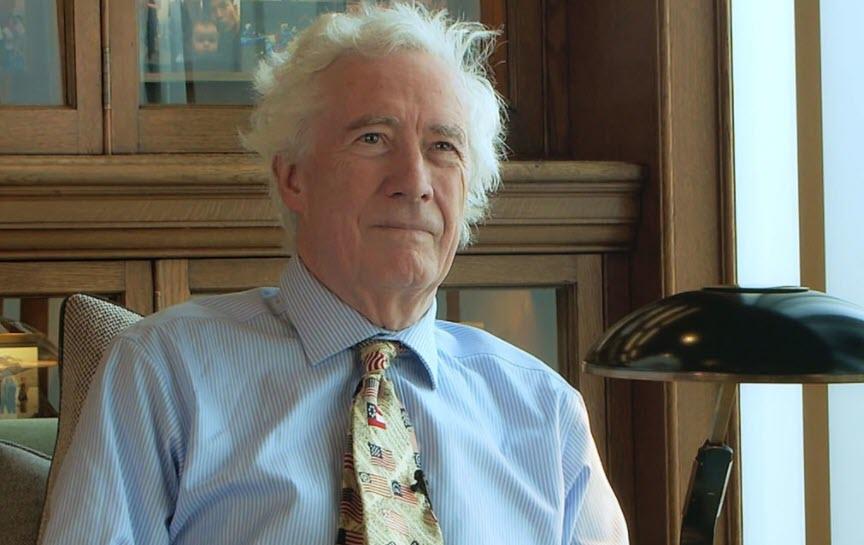
Lord Sumption Warns Civil Disobedience Has Begun Amid Lockdown Lunacy

ORIGINAL LINK
Lord Sumption Warns Civil Disobedience Has Begun Amid Lockdown Lunacy

Authored by Freddie Sayers via Unherd.com,

Jonathan Sumption was once the epitome of the Establishment - a brilliant barrister who represented the Government in the Hutton enquiry, Supreme Court Justice, supporter of the Remain campaign and esteemed historian of the Hundred Years’ War. But then Covid happened.

Over the past year, his unabashed criticism of lockdown policies has turned him into something of a renegade. It is a development that mystifies him; as he sees it, his views have always been mainstream liberal, and it is the world around that has changed.

In the course of our conversation, the retired judge doesn’t hold back. He asserts that it is becoming morally acceptable to ignore Covid regulations, and even warns that a campaign of “civil disobedience” has already begun.

You can read what he really thinks below. And watch our interaction on Lockdown TV - it was a fascinating conversation.

ON CIVIL DISOBEDIENCE:

“Sometimes the most public spirited thing that you can do with despotic laws like these is to ignore them. I think that if the government persists long enough with locking people down, depending on the severity of the lockdown, civil disobedience is likely to be the result. It will be discrete civil disobedience in the classic English way — I don’t think that we are likely to go onto the streets waving banners. I think we will just calmly decide that we are not going to pay any attention to this. There are some things you have to pay attention to: you can’t go to a shop if it’s closed. On the other hand, you can invite friends round for a drink, whatever Mr Hancock says. People are doing that to some extent already.

“Everyone will have their own different threshold. But I think that in the eyes of many people who disapprove of the lockdown, and some people who approve of it, we’ve reached that point quite a long time ago.”

ON THE ETHICS OF LAW-BREAKING:

“I feel sad that we have the kind of laws which public-spirited people may need to break. I have always taken a line on this, which is probably different from that of most of my former colleagues. I do not believe that there is a moral obligation to obey the law… You have to have a high degree of respect, both for the object that the law is trying to achieve, and for the way that it’s been achieved. Some laws invite breach. I think this is one of them.”

ON SACRIFICING CIVIL LIBERTIES:

“[Thomas] Hobbes believed in the absolute state — it didn’t have to be a monarchy, but it had to be absolute. He said that there was nothing short of the state actually killing people that the state should not be entitled to do. He was not, let us say, a believer in liberty. This is because of his experience of the anarchy which flowed from the civil war in England. Hobbes believed that we resign our freedoms unconditionally and permanently into the hands of the state, in return for security. Now, this is a model which ever since the rise of a recognisable form of modern Liberalism in the middle of the 19th century, has been almost universally rejected. But we have tended to revert to it during the current crisis. And I think that that is a very striking and very sinister development.

ON THE DANGERS OF PUBLIC FEAR:

“John Stuart Mill regarded public sentiment and public fear as the principal threat to a liberal democracy. The tendency would be for it to influence policies in a way that whittles away the island within which we are entitled to control our lives to next to nothing. That’s what he regarded as the big danger. It didn’t happen in his own lifetime; it has happened in many countries in the 20th century, and it’s happening in Britain now.”

ON THE FRAGILITY OF DEMOCRACY:

“Democracy is inherently fragile. We have an idea that it’s a very robust system. But democracies have existed for about 150 years. In this country, I think you could say that they existed from the second half of the of the 19th century — they are not the norm. Democracies were regarded in ancient times as inherently self-destructive ways of government. Because, said Aristotle, democracies naturally turn themselves into tyranny. Because the populace will always be a sucker for a demagogue who will turn himself into an absolute ruler…

“Now, it is quite remarkable that Aristotle’s gloomy predictions about the fate of democracies have been falsified by the experience of the West ever since the beginning of democracy. And I think one needs to ask why that is. In my view, the reason is this: Aristotle was basically right about the tendencies, but we have managed to avoid it by a shared political culture of restraint. And this culture of restraint, which because it depends on the collective mentality of our societies, is extremely fragile, quite easy to destroy and extremely difficult to recreate.”

ON BEING A LIBERAL:

“I regard myself as a liberal with a small L. Until the Covid outbreak, that was a very middle of the road position to be in. Since the outbreak, it’s become controversial, even in some people’s minds extreme. This is, I think, some indication of how far our national conversation has moved.”

ON WHAT THE GOVERNMENT SHOULD LEARN:

My first proposal is that governments should not treat information as a tool for manipulating public behaviour. They should be calmer than the majority of their citizens; they should be completely objective. My second lesson would be that governments dealing with scientific issues should not allow themselves to be influenced by a single caucus of scientists. They should always test what they are being told in a way that, for instance, judges test expert opinion by producing a counter expert, and working out which set of views stacks up best.”

ON HIS CRITICS:

“I would very much have preferred the kind of points that I have been consistently making for the last year to have been made by just about anybody else. Those colleagues or former colleagues who disapprove of what I’ve been doing have got a perfectly good point. But there are some issues which are so central to the dilemmas of our time, which are so important, where I think that you have to be prepared to stand up and be counted.

Tyler Durden Fri, 03/05/2021 - 06:30

via IFTTT
InoreaderURL: SECONDARY LINK